

The best lighter for bowls is, for most people, a refillable butane lighter with an adjustable flame, like a Clipper. If your piece has a deep bowl, a long-reach lighter such as the BIC EZ Reach keeps your fingers out of the heat. If you smoke outside or pack your bowls tight, a jet torch earns its place. If you want no fuel at all, a USB plasma arc or hot-coil lighter does the job.
A bad lighter costs you more than a burned thumb. The wrong flame scorches the top layer of the bowl, dies in a light breeze, or can't reach the bottom of a deep piece. That wastes herb and flattens the flavor. Three things decide the right pick: flame type, reach, and how the lighter is fueled.
Below are five lighters, each covered the same way: how it works on a bowl, who it suits, what to check before you buy, and roughly what it costs. At Green Blazer we spend our days around RAW cones and smoking accessories, so we know that the flame matters as much as the herb or paper. Use this list to match a lighter to the way you actually smoke.
1. Clipper refillable butane lighter
The Clipper is the best all-round lighter for bowls because it is refillable, cheap, and gives you a soft flame you can control. For most pipe and small bong smokers, it is the safest default.
How it works on a bowl
A Clipper burns butane through an open flame. Many models have a small wheel at the base that turns the flame down, which matters because a low flame toasts the top of the bowl instead of scorching it. The flint is removable, and the flat top lets you stand the lighter upright between hits.
To light a bowl, hold the flame to one edge and pull, so only a corner burns first. This is called cornering the bowl, and it leaves fresh herb for the next hit. The same soft flame is also the best lighter for joints, since a torch is overkill on paper.
A Clipper gives you control, and control matters more than raw heat when you light a bowl.
Who it suits and what to check
Choose it if you smoke most days and would rather refill a lighter than throw one away. Its weak spot is a short neck, so a very deep bowl puts your fingers close to the flame.
- Flame wheel: confirm the model you buy has an adjustable flame.
- Flint: make sure it sits firmly and sparks on the first few clicks.
- Cost: a single lighter typically costs a few dollars, and a butane refill can lasts through many refills.
2. BIC EZ Reach long-reach lighter
The BIC EZ Reach is the best pick for deep bowls and tall pieces because its extended nozzle delivers the flame where a standard lighter can't. It is a disposable, so you trade refillability for reach.
How it works on a bowl
The EZ Reach is a standard soft-flame BIC with a longer neck. You tilt the piece less and keep your thumb well back from the heat. On a deep glass bowl, you can reach the herb without angling the whole pipe or bong sideways.
Because the flame is the usual BIC size, you still have to corner the bowl rather than blast the whole surface. The long neck solves a geometry problem, not a heat problem.
If your bowl is deep, reach matters more than flame power.
Who it suits and what to check
It suits anyone with a deep bowl, a tall water pipe, or a shared session where several pieces go around. It is also a good backup lighter because it costs only a few dollars.
- Fuel window: pick a model where you can see the fuel level.
- Child-resistant button: check that it clicks smoothly and doesn't stick.
- Buying in packs: multipacks bring the per-lighter cost down if you go through them quickly.
3. Refillable butane jet torch
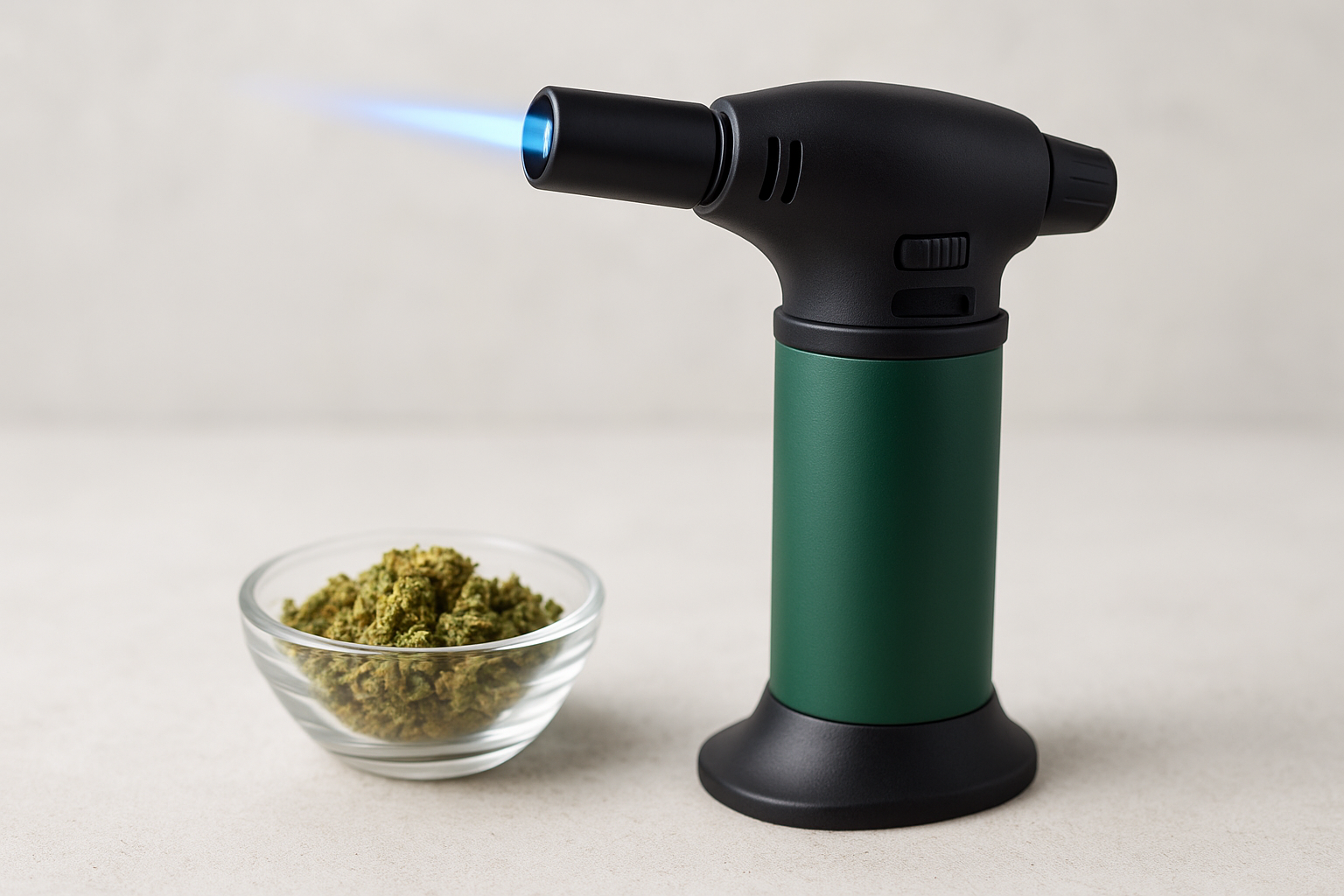
A refillable jet torch is the best lighter for bowls if you smoke outdoors or pack tightly. It throws a pressurized flame that stays lit in wind and works at any angle.
How it works on a bowl
A torch forces butane through a narrow jet, producing a hot, focused flame instead of a soft, open one. That makes it quick to light a dense bowl, and it works upside down or sideways. If wind is your problem, a butane torch is also a better fix than a fluid-based windproof lighter, which can leave a petrol taste.
The risk is overheating. Held too close, a torch scorches the top of the bowl in a second and turns the hit harsh. Use the lowest flame setting, hold the jet an inch or so away, and move it in small circles.
A torch is worth buying for wind and tight packs, but only if you keep the flame back from the herb.
Who it suits and what to check
Choose a torch if you often light outdoors, use large bowls, or hate relighting. Expect to refill it more often than a standard lighter.
- Single jet: a single adjustable jet is usually enough, and triple jets burn fuel faster than a bowl needs.
- Fuel window and safety lock: both should be easy to see and use.
- Cost: a decent torch typically runs about $10 to $30. After filling, let it rest for a minute so the gas settles.
4. USB plasma arc lighter
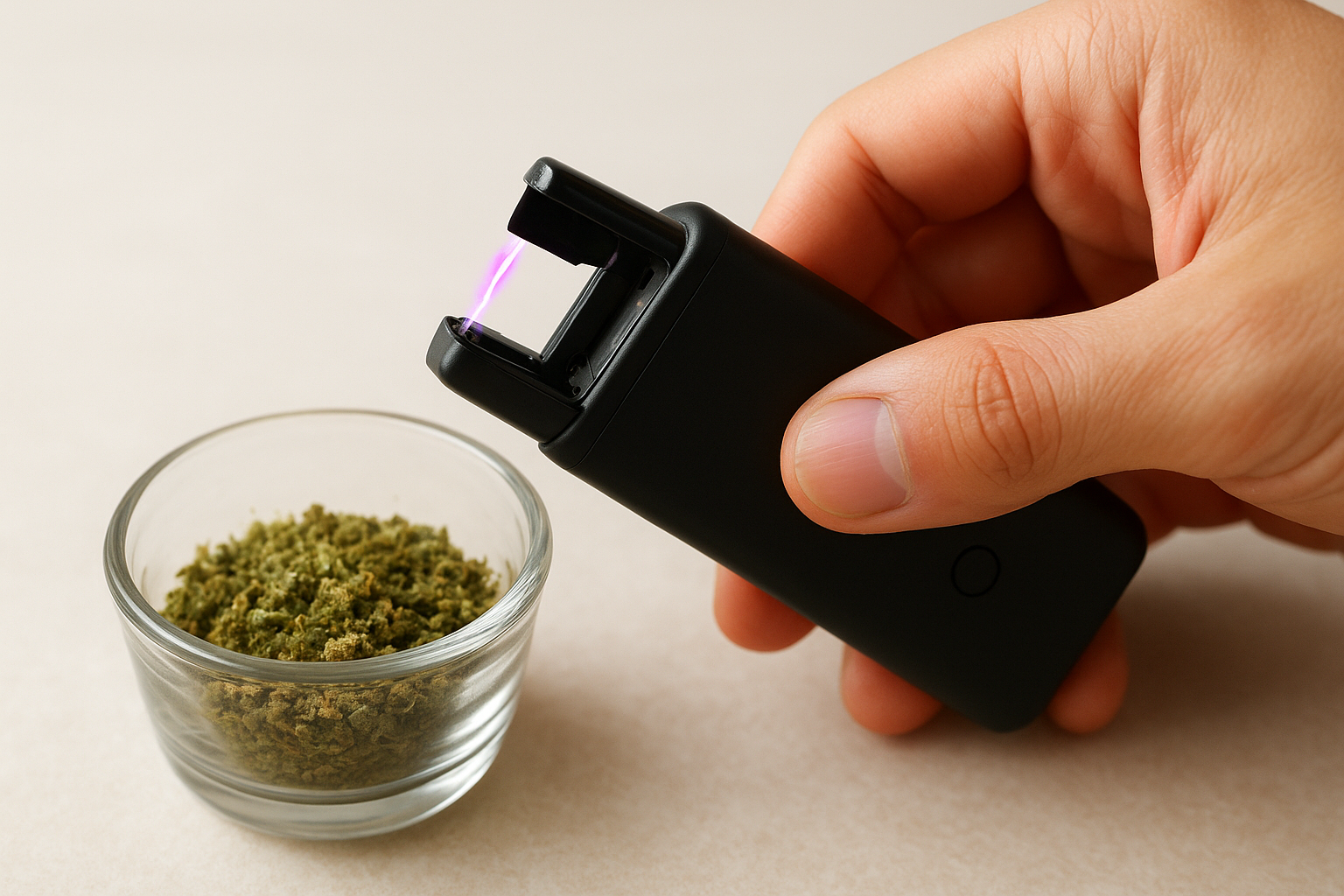
A USB plasma arc lighter is the best electric option for bowls, because it needs no butane and no flame. Yes, you can use an electric lighter for a bowl, as long as you accept a different technique.
How it works on a bowl
Two electrodes create a small electric arc between them, and that arc heats the herb. There is no open flame to blow out, so wind is much less of a problem than with a soft-flame lighter. You charge it over USB, and one charge usually covers a lot of lights.
Hold the arc against the surface of the herb while you pull, and keep it still for a moment. An arc heats a smaller spot than a flame, so a tightly packed bowl may light unevenly. A looser pack works better, and it is easiest on small bowls and pipes.
A plasma lighter removes fuel from the equation, but you pay for that with a slower, more deliberate light.
Who it suits and what to check
It suits people who are tired of running out of butane or who travel with a pouch and want fewer fuel cans. It is a poor fit if you want to light a big bong bowl in seconds.
- Arc guard: look for a model with a protective cover over the electrodes.
- Battery size: a larger battery means fewer charges.
- Cost: typical prices run about $10 to $30, with no fuel to buy afterward.
5. Hot-coil flameless lighter
A hot-coil flameless lighter is the best choice for people who want a taste-neutral, fuel-free way to light a bowl. It heats a metal coil until it glows, and you touch the coil to the herb.
How it works on a bowl
When you activate the coil, it heats red in seconds. You hold it against the edge of the bowl as you draw, and the herb catches from direct contact, with no flame or butane involved. How much heat you get depends on how long the coil is on, so the user sets the result.
Contact lighting is gentle, which helps a clean, even burn and keeps the flavor intact. The tradeoff is that the coil takes a moment to heat before every light, and the coil is the part that eventually wears out.
A coil lighter is the gentlest way to light a bowl, but it asks you to slow down.
Who it suits and what to check
Choose one if you care most about flavor and don't want fuel or open flame near your setup. It is a bad pick if you light in a hurry or share a piece with a crowd.
- Coil durability: read reviews on how long the coil lasts before you buy.
- Power source: check whether it charges by USB or uses replaceable batteries.
- Cost: prices vary widely by brand, so compare on the product page rather than assuming.
Pick the flame that fits your bowl
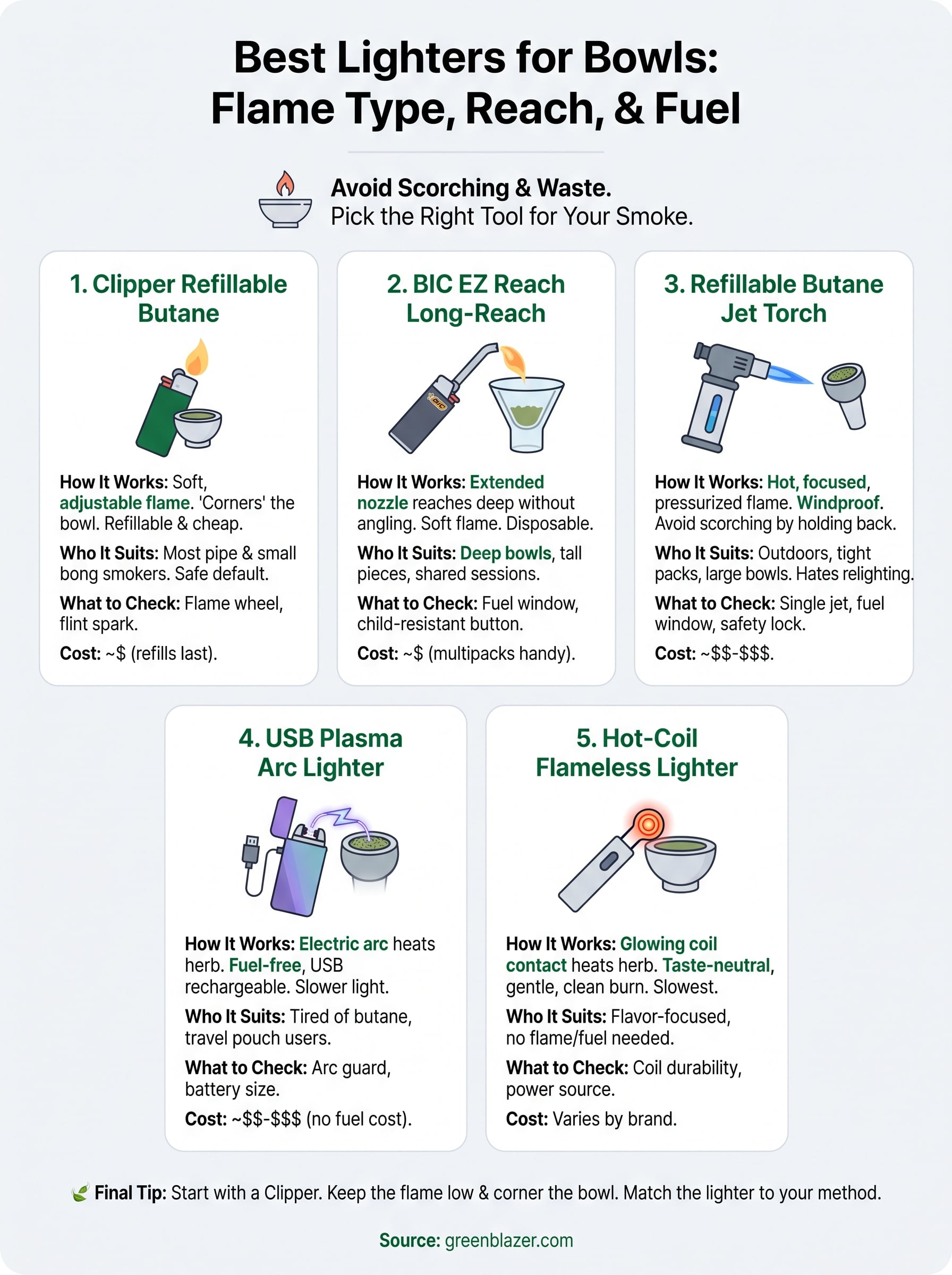
Start with a refillable Clipper, because it covers most bowls, joints, and budgets. Move to the BIC EZ Reach when the bowl is deep, a jet torch when wind or dense packing is the problem, and a plasma arc or hot-coil lighter when you want to skip butane. Whatever you choose, keep the flame low and corner the bowl.
If you are building out your smoking setup, a good lighter is only one piece of it. You can browse RAW cones and smoking accessories at Green Blazer to round out the rest.
