

Ask five smokers to explain the blunt vs joint vs spliff debate and you'll get five different answers, half of them wrong. Some people use the terms interchangeably, which only muddies the water when you're trying to figure out what to actually roll up for tonight's session. The confusion usually comes down to one thing: what's wrapping your herb.
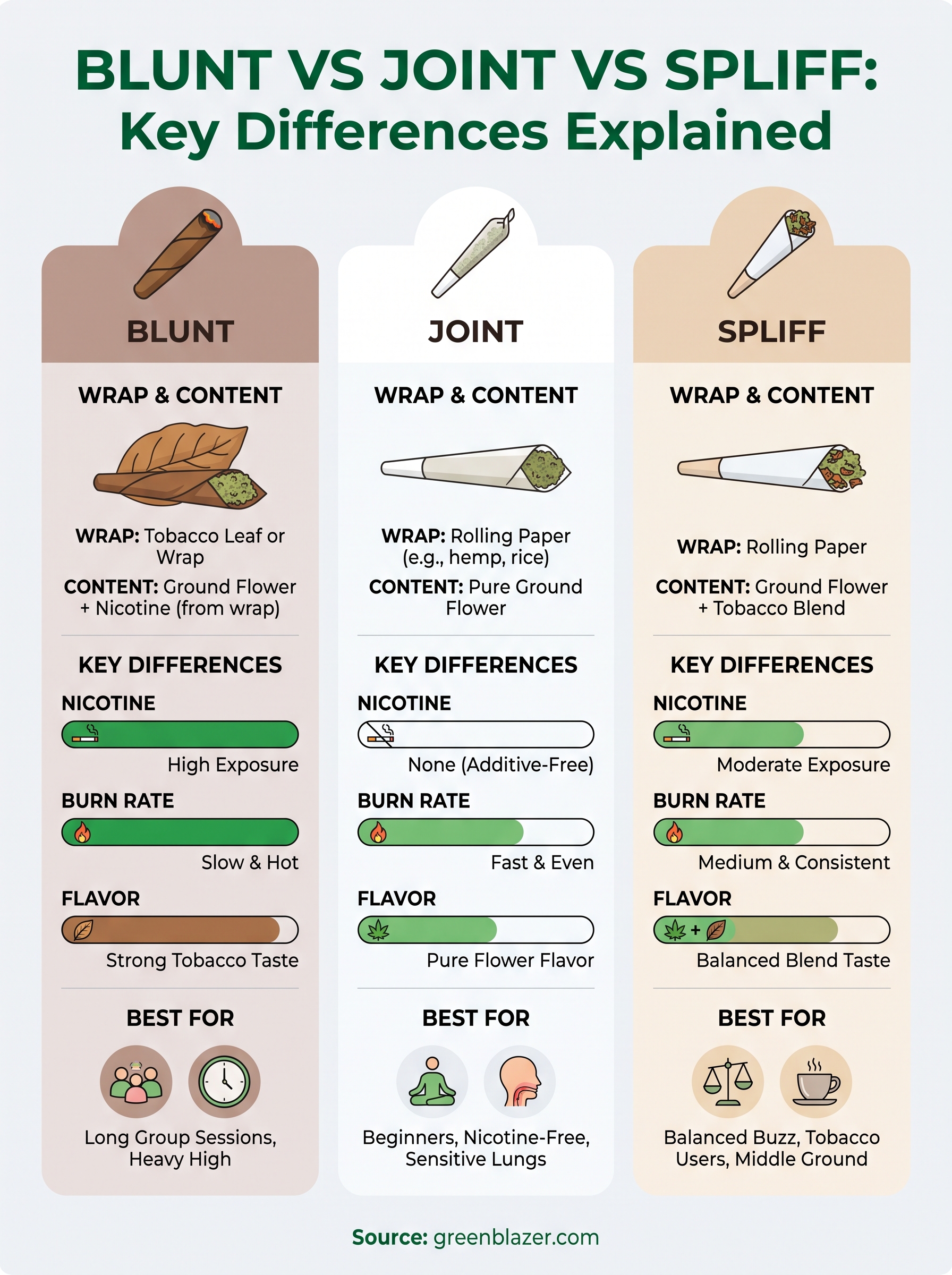
Here's the short version: a joint is pure ground flower rolled in thin paper, a blunt swaps that paper for tobacco leaf or a tobacco-leaf wrap, and a spliff mixes flower with tobacco inside a paper cone. Each choice changes the burn rate, the flavor, and how the effects hit you, since tobacco adds nicotine into the mix while pure rolling paper keeps things additive-free.
In this guide, we'll break down exactly what goes into each one, how they differ in taste and strength, and which format tends to suit beginners versus seasoned smokers. We'll also cover why paper quality and cone construction matter more than most people realize, especially if you're used to hand-rolling and dealing with uneven burns or canoeing.
Why the differences matter for your health and high
The biggest reason people argue about blunt vs joint vs spliff isn't taste, it's what you're actually putting into your lungs. Each wrap material changes your nicotine intake, your burn temperature, and even how the high feels once it kicks in. If you've only ever smoked one of the three, switching to another can feel like a completely different experience, not just a different flavor.
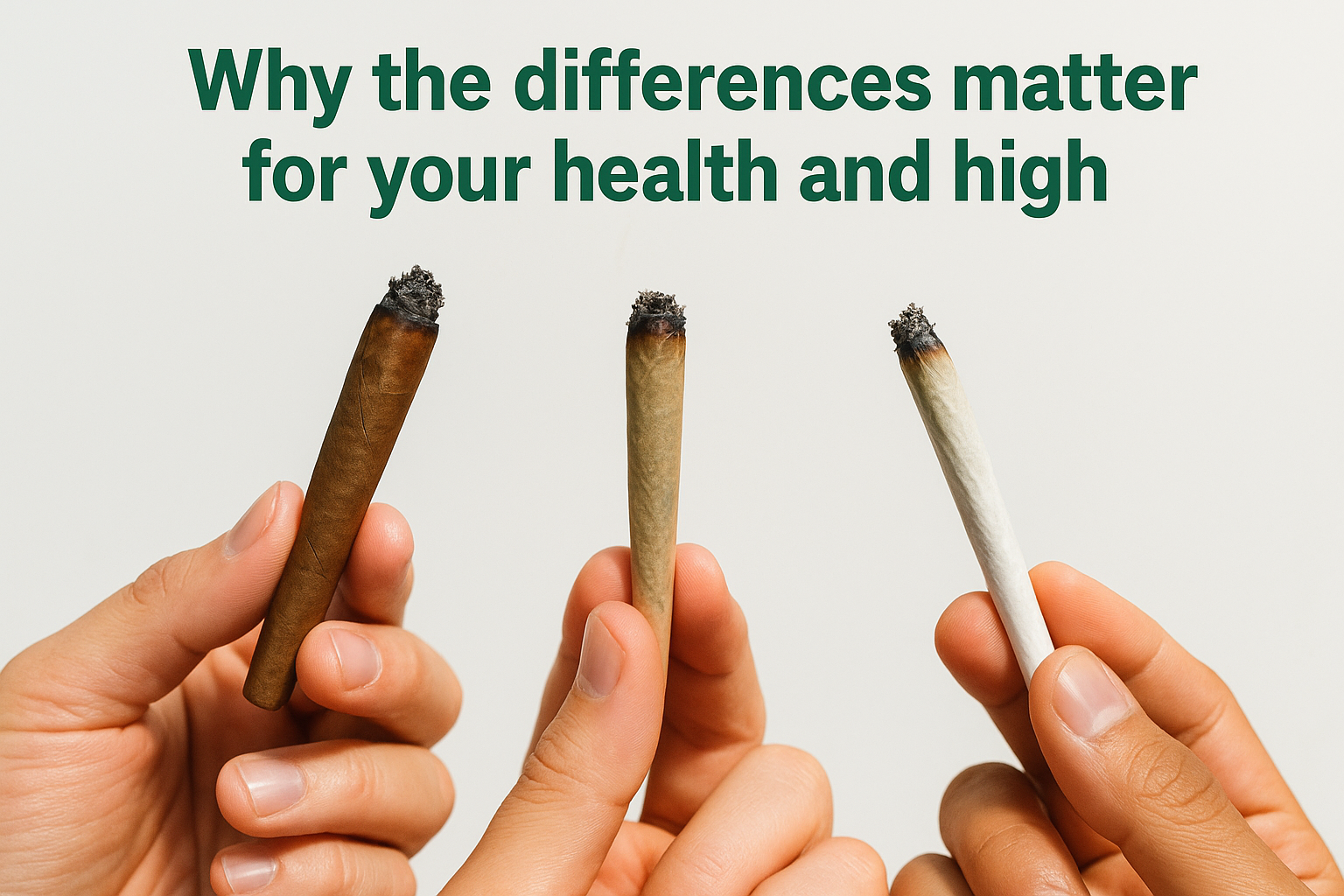
Nicotine changes the equation
Nicotine is the single biggest variable separating these three options, and it's not a minor detail. A blunt wrap is literally tobacco leaf, so you're getting nicotine exposure with every hit on top of whatever's in the flower. A spliff cuts that exposure down by blending tobacco with flower inside a paper cone, but you're still adding a stimulant that a straight joint never touches. Joints rolled in pure rolling paper, like RAW's unbleached organic hemp cones, skip nicotine entirely, so what you taste and feel comes only from the herb itself.
The only nicotine-free option of the three is a joint rolled in pure paper.
Burn rate and what you're inhaling
Beyond nicotine, the wrap material changes how much smoke you're pulling in and how fast it burns. Tobacco leaf is thicker and denser than rolling paper, so blunts tend to burn slower and hotter, which means more smoke volume per hit and more plant material combusting alongside the flower. Rolling papers, especially ultra-thin cones with a natural gum line instead of chemical sealant, burn faster and cleaner, which cuts down on the extra combustion byproducts you inhale compared to a blunt. Spliffs sit in the middle, since paper does the wrapping but tobacco is mixed directly into the herb, which shifts both burn speed and smoke density compared to flower alone.
| Format | Wrap Material | Nicotine | Burn Speed | Extra Additives |
|---|---|---|---|---|
| Joint | Rolling paper | None | Fast, even | None (unbleached paper) |
| Blunt | Tobacco leaf/wrap | High | Slow, hot | Tobacco compounds |
| Spliff | Paper + tobacco blend | Moderate | Medium | Tobacco compounds |
The high itself: head vs body effects
Smokers consistently describe the effects differently depending on which one they rolled. Blunts often produce a heavier, more sedating body high, partly from the nicotine and partly from the sheer smoke volume you're pulling in with each hit. Spliffs tend to land somewhere between a stimulating nicotine buzz and the herb's own effects, which some people like for balance and others find distracting. Joints, without tobacco in the mix, let the flower's effects come through cleanest, whether that's a cerebral head high or a mellow body feeling, since nothing else is competing for your attention chemically.
Understanding these differences matters most if you're managing nicotine intake, dealing with a sensitive throat, or just trying to get a consistent, predictable experience out of your smoking sessions. None of the three is objectively "better," but knowing what's actually in your hand before you light it changes how you'll feel twenty minutes later.
How to choose between a blunt, joint, or spliff
Picking the right roll comes down to your tolerance for nicotine, how much time you've got, and what kind of high you're chasing. There's no universal winner in the blunt vs joint vs spliff debate, just a better fit for your situation on any given night.
If you're avoiding nicotine
Stick with a joint. Anyone managing nicotine sensitivity, quitting cigarettes, or just wanting the flower's flavor untouched should skip blunts and spliffs entirely. A clean paper cone, especially an unbleached hemp cone, lets you taste the terpenes without a tobacco aftertaste competing for attention.
If nicotine isn't part of the plan, a joint is the only format that guarantees it stays that way.
If you want a slower, heavier session
Blunts make sense when you're settling in for a while and don't mind the extra smoke volume. The tobacco wrap burns slower, so a single blunt often outlasts a joint of the same size, though an extra-long cone for group sessions closes that gap if you want fewer breaks between rounds.
If you want a middle ground
Spliffs suit smokers who like a slight nicotine edge without going full blunt. This format is common outside the US, particularly in Europe, where mixing tobacco with flower is standard practice rather than an alternative.
Quick decision checklist
- No nicotine, cleanest flavor: joint
- Longest burn, group session, heavier high: blunt
- Balanced buzz, familiar with tobacco: spliff
- Sensitive throat or lungs: joint, since it skips the extra combustion from tobacco leaf
- Rolling for beginners: joint, since pre-rolled cones make the process foolproof
Your own tolerance matters more than any general rule here. If you've never tried tobacco in your smoke, start with a spliff before committing to a full blunt wrap, since the nicotine hit can catch new smokers off guard fast.
What you need to roll each type
Getting the right gear before you sit down to roll saves you from a lopsided, canoeing mess. Each format needs different supplies, and skipping the right tools is usually why a first attempt at a blunt or spliff goes sideways compared to a straightforward joint.
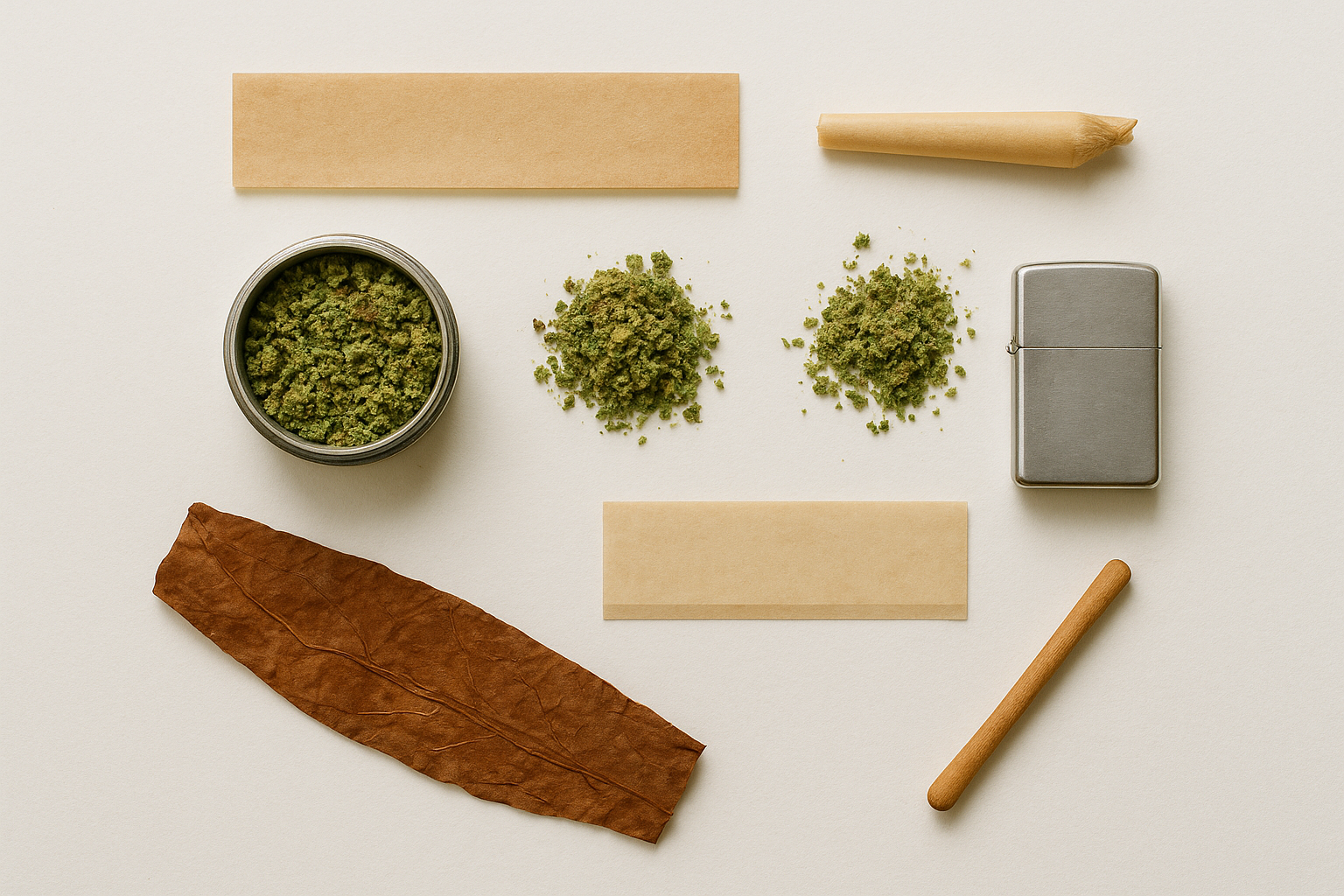
Rolling a joint
Joints need the least gear of the three, which is part of why beginners gravitate toward them. Ground flower, a grinder, and a quality paper or pre-rolled cone are really all you need, and grabbing a 50 or 100 pack of RAW cones skips the folding and tucking that trips up new rollers entirely. A packing tool or stick helps you get an even fill without air pockets, which is what causes uneven burns in the first place.
A pre-rolled cone turns a ten-minute rolling job into a two-minute fill.
Rolling a blunt
Blunts require more prep work since you're handling a whole tobacco leaf or wrap instead of thin paper. You'll need a blunt wrap, a razor blade to split and flatten a cigar if you're using one, ground flower, and often a lighter with a wider flame since tobacco leaf takes more heat to seal properly. Some smokers steam or warm the wrap first to make it pliable enough to roll tight without tearing.
Rolling a spliff
Spliffs sit between the two in terms of gear, since you're using paper but blending in tobacco. Grab RAW Classic 1-1/4 rolling papers, ground flower, loose tobacco, and a grinder that can handle mixing both materials evenly before you pack the cone.
| Format | Core Supplies | Extra Tools |
|---|---|---|
| Joint | Paper or cone, ground flower | Grinder, packing stick |
| Blunt | Tobacco leaf/wrap, ground flower | Razor blade, wide-flame lighter |
| Spliff | Paper, flower, loose tobacco | Grinder, packing stick |
Whichever direction you go, using unbleached, additive-free paper keeps the extra chemical exposure out of your session regardless of which format you're comparing in the blunt vs joint vs spliff decision.
Common questions about blunts, joints, and spliffs
A few questions come up constantly whenever people compare a blunt vs joint vs spliff, usually from smokers switching formats for the first time. Here are the ones worth clearing up before you roll.
Does a blunt get you higher than a joint?
Blunts often feel more intense, but that's not because the flower is stronger. The nicotine buzz stacks on top of the herb's effects, and the extra smoke volume from a slower burn means you're inhaling more per hit. Milligram for milligram of flower, a joint delivers the same cannabinoid dose, it just doesn't come with tobacco's added kick.
Is a spliff healthier than a blunt?
Comparatively, yes. A spliff uses less tobacco than a full blunt wrap since it's mixed with flower rather than being the entire wrapping material. That means lower nicotine exposure and less tobacco leaf combusting per hit, though it's still not nicotine-free the way a joint is.
A spliff cuts tobacco exposure compared to a blunt, but only a joint removes it completely.
Can you make a blunt without tobacco?
Some smokers use hemp wraps instead of actual tobacco leaf to get the blunt's thicker, slower burn without the nicotine. It's a reasonable middle ground if you like the format's burn characteristics but want to skip tobacco entirely.
Why do spliffs canoe more than joints?
Mixing loose tobacco with ground flower creates an uneven density inside the cone, and uneven packing is exactly what causes canoeing. Grinding both materials together thoroughly before you pack helps, but a straight flower joint in a quality paper cone still burns more predictably since there's only one material to distribute evenly.
Which format lasts longest?
Blunts typically burn the longest thanks to the thicker tobacco wrap, followed by spliffs, with pure paper joints burning fastest since the wrap itself is thinnest and most combustible.
Rolling with what works for you
At the end of the day, the blunt vs joint vs spliff question isn't about which format wins, it's about matching your gear to your night. Want nicotine out of the picture entirely? Roll a joint. Settling in for a long session with friends? A blunt's slow burn has you covered. Craving something in between? A spliff splits the difference. What matters most is knowing exactly what you're lighting up, from the wrap material down to the burn rate, so nothing catches you off guard twenty minutes in.
Once you've picked your format, the paper or cone you use matters just as much as the choice itself. Skip the canoeing, the uneven burns, and the chemical aftertaste by shopping every size and paper type of RAW pre-rolled cones, built for a clean, even burn every time you roll.
