

For most kitchens, stainless steel wins the glass bowl vs metal bowl question. It is light, very hard to break, chills fast, and nests into a compact stack. Glass wins in three situations: you want to use the microwave, you need to see through the bowl, or you want a heavy bowl that stays put on the counter. Most home cooks end up owning both, and that works well once you know which job goes to which bowl.
Here is what the terms mean. A glass mixing bowl is usually tempered glass, made to survive everyday knocks and moderate temperature swings. A metal mixing bowl is almost always stainless steel, though aluminum and copper bowls exist for specific jobs. Both materials are non-porous, so neither soaks up odors and flavors the way plastic can.
Green Blazer is a Las Vegas distributor of RAW cones, and the people we supply spend a lot of time blending and portioning dry ingredients by hand. That makes us care about which bowl sits on the bench. This guide covers why the material matters, how to choose, how each one handles durability, weight, nesting, heat, and microwaves, how they behave with a stand mixer, and how to keep them in shape.
Why the choice of mixing bowl material matters
The material changes what you can safely and comfortably do with the bowl, not just how it looks. A bowl that cannot go in the microwave, or one that breaks when it hits tile, limits your recipes and your patience. Choosing between a glass bowl and a metal bowl is really choosing which limits you can live with.
Where glass and metal bowls actually differ
Most differences come down to three properties: weight, thermal behavior, and transparency. Glass is heavy, insulates, and lets you see inside. Stainless steel is light, conducts heat fast, and is opaque. Everything else in the table below follows from those traits.
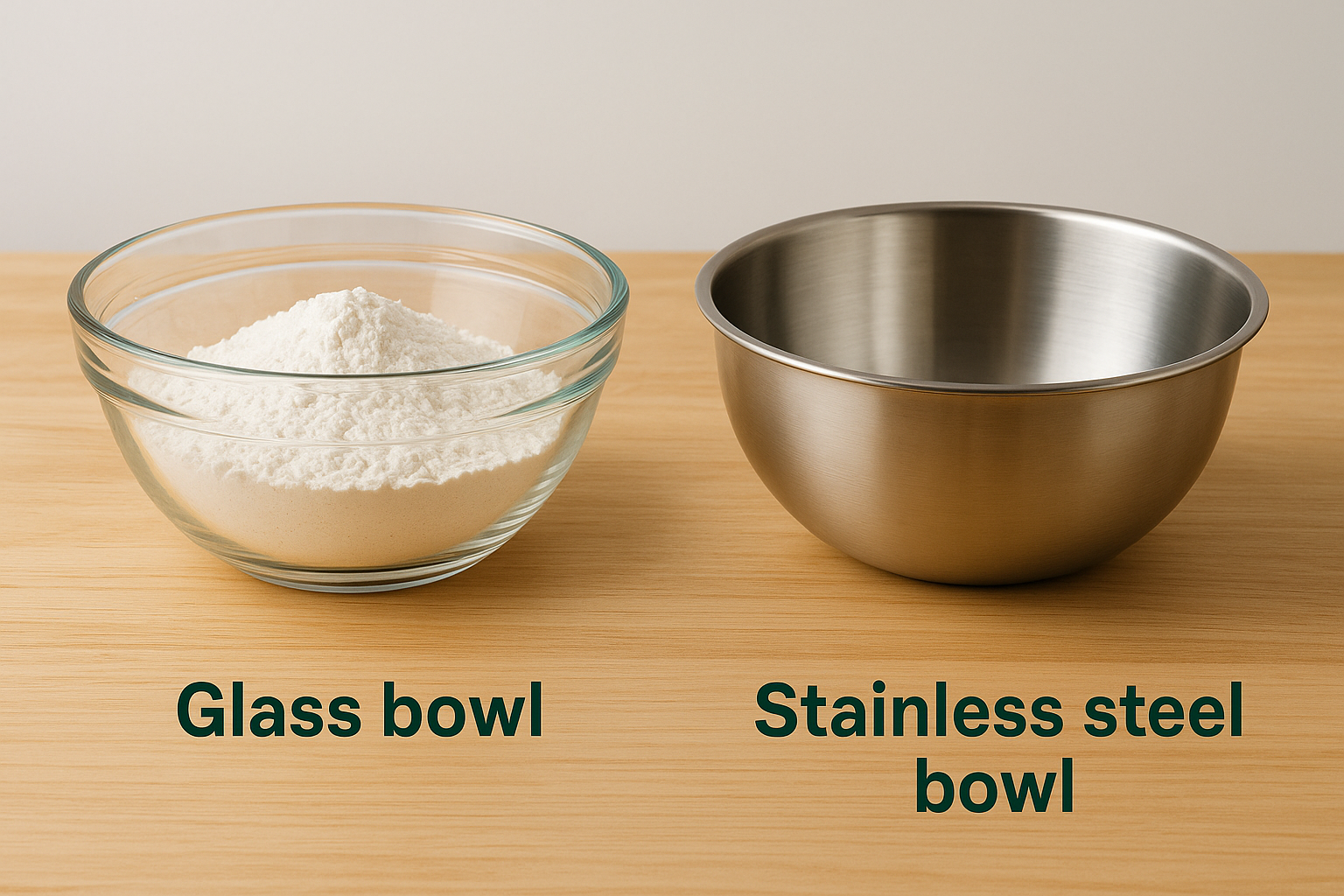
| Feature | Glass bowl | Stainless steel bowl |
|---|---|---|
| Weight | Often two to three times heavier at the same size | Light, easy to lift when full |
| Breakage | Can chip, crack, or shatter | Dents at worst |
| Microwave | Yes, if the label says so | Never |
| Chilling in fridge or freezer | Works, but cools slowly | Cools quickly |
| Holding heat | Stays warm longer | Loses heat quickly |
| Seeing the contents | Clear view from the side and below | None |
| Nesting | Bulky stacks | Compact stacks |
| Stability on the counter | Stays put | Slides without a damp towel under it |
| Noise with a whisk | Quiet | Clanky |
The microwave and the see-through wall are what glass offers that metal can't, and nearly everything else favors stainless steel.
Which is healthier, glass or stainless steel?
Both are safe for food, and neither is meaningfully healthier for everyday mixing. Glass is fully inert, so it never adds anything to food. Quality stainless steel is also stable, and it does not react with citrus, vinegar, or tomatoes during normal prep.
The one caution is for people with a diagnosed nickel allergy, because stainless steel contains nickel. If that is you, ask your doctor, and use glass for long-term storage of acidic foods. Aluminum bowls are a different case. Aluminum can react with acidic ingredients and affect taste and color, so keep it for dry tasks.
What picking wrong costs you
The mistakes are predictable. Someone buys a pretty stainless set, then discovers that melting chocolate means pouring it into a different bowl. Someone else buys a big glass bowl, then dreads lifting it full of bread dough with wet hands.
Each mistake is small, but it adds up over hundreds of uses. A bowl you reach for every day should fit your hands, your appliances, and the way you cook. The next section turns that into a simple process.
How to choose between a glass bowl and a metal bowl
Start with the task you do most often, then check your kitchen's constraints, then buy the material that matches both. If your answers are mixed, buy a stainless set first and add one or two glass bowls. That order covers the widest range of cooking for the least money.
Match the bowl to your most common job
The list below assigns each common job to the material that handles it best. Use it as a default, not a rule.
- Whipping cream, egg whites, and meringue: stainless steel. It chills fast, and a cold bowl helps cream whip. Copper is the classic choice for egg whites if you bake a lot.
- Melting butter or chocolate: glass in the microwave, or stainless over simmering water.
- Proofing bread dough: glass. You can watch the dough rise from the side.
- Tossing salad, marinating, and big batches: stainless steel. It is light even at 8 quarts.
- Double boiler: stainless steel. It sits on a pot and heats evenly.
- Serving at the table: glass. It looks better and keeps dips and layered desserts visible.
- Blending dry ingredients, such as ground herbs before filling cones: either works. A wide stainless bowl is easy to tilt and pour from, and a glass bowl shows you any clumps.
Ask four questions before you buy
Run through these in order.
- Do you use the microwave for cooking prep? If yes, you need at least one glass bowl.
- Who uses the bowls, and where? Kids, shaky hands, or a tile floor push you toward stainless steel.
- Do you own a stand mixer? Check which bowl types fit your exact model before buying anything.
- How much cabinet space do you have? Tight storage favors stainless steel's compact nesting.
Your answers will usually point the same way. If they split, count how many of your weekly recipes touch the microwave. That number settles most debates.
What a sensible starter set looks like
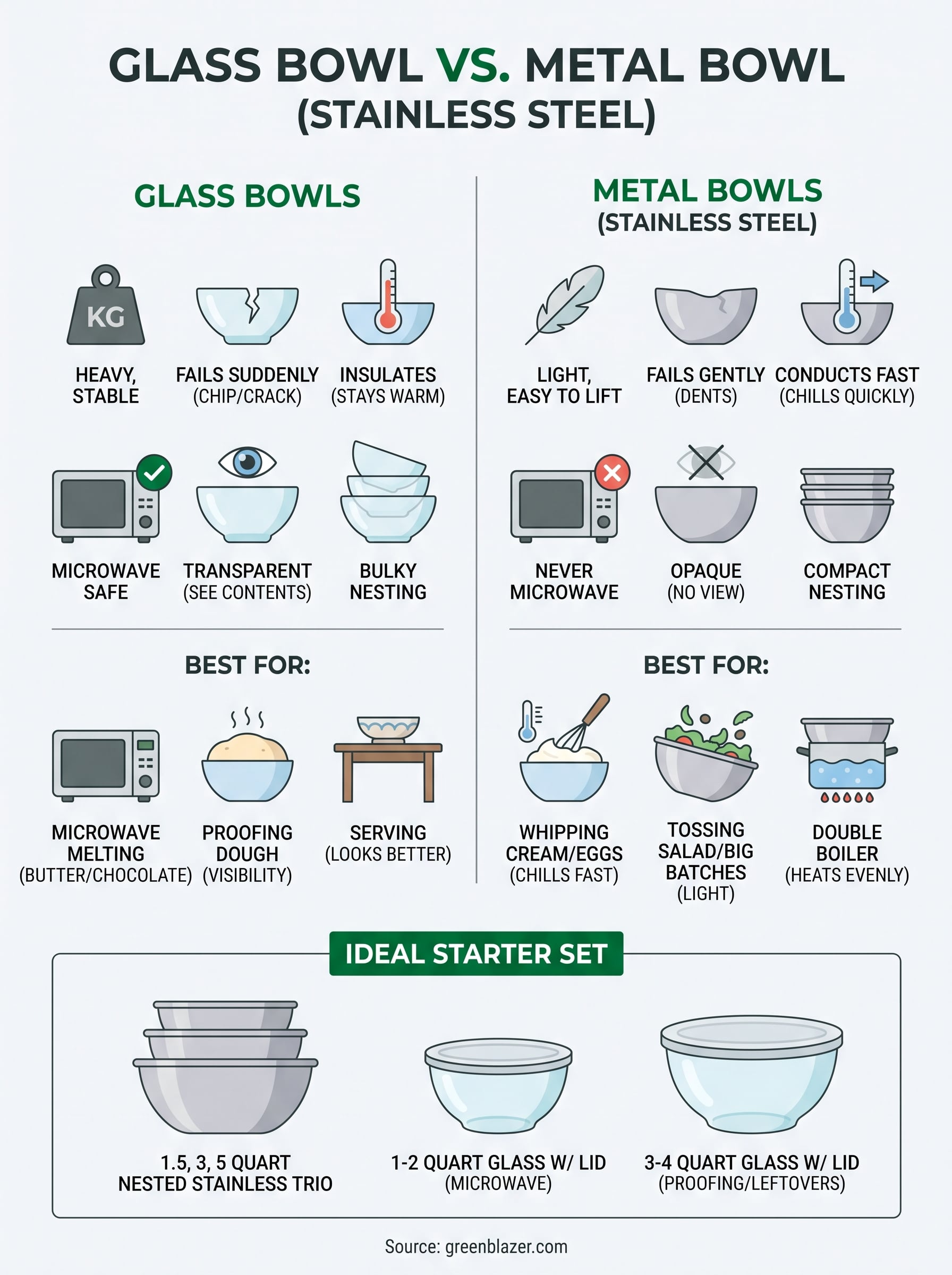
A practical setup is a nested stainless trio, roughly 1.5, 3, and 5 quarts, plus two glass bowls with lids in the 1 to 2 quart and 3 to 4 quart range. The stainless trio handles everyday mixing, chilling, and big batches. The glass pair handles microwave work, proofing, and leftovers.
If you also blend non-food or sticky ingredients, such as dry herbs for rolling, keep a separate bowl for that job. Resin and oils cling to surfaces, and you do not want them in your cookie dough. Stainless steel is the easier material to wipe down for that role.
If you can only buy one material first, buy stainless steel and add glass when the microwave starts to matter.
Durability, weight, and nesting in daily use
Stainless steel is the more durable and the lighter option, and it stores better. Glass is stable and pleasant to use, but it demands more careful handling. If you cook fast and put dishes away in a hurry, those differences show up every week when you compare a glass bowl vs metal bowl side by side.
How each material fails
Stainless steel fails gently. A drop leaves a dent, and the bowl still works. Thin, cheap steel dents more easily and can warp, so the thickness of the walls is the main thing separating a good set from a flimsy one.
Glass fails suddenly. Tempered glass resists impact better than plain glass, but a hard knock on a sink edge can chip the rim. Thermal shock is the other cause. Moving a bowl straight from the freezer to a hot oven, or setting a hot bowl on a wet counter, can crack it. Many US glass bowls are tempered soda-lime glass, which tolerates less temperature change than borosilicate, so treat the label's limits seriously.
If a glass bowl chips or breaks while you are cooking, discard the food in and around it. Tiny shards are hard to see.
Weight, grip, and counter stability
Weight is the difference you feel every day. A large stainless bowl full of dough is easy to lift and pour with one hand. A large glass bowl is often two to three times heavier empty, so it can tire your wrist during a long mixing session.
The trade-off is stability. Heavy glass stays put while you beat thick batter, but a light stainless bowl will spin and creep. Fix that by setting it on a damp towel or a silicone trivet. That costs you five seconds and removes the only real downside of lightweight steel.
Nesting and storage
Stainless steel nests best. Bowls in a set are made to sit inside each other, and a five-piece set takes about as much space as the largest bowl. Glass sets also nest, but the thick walls leave less clearance, so the stack is taller and heavier.
Never nest bowls while they are wet. Trapped water can create suction that makes bowls stick together, and forcing them apart is how glass gets chipped. Dry each one fully, and keep lids in a separate bin so the stack stays steady.
Stainless steel forgives rough handling, while glass rewards careful handling with a heavier, steadier bowl.
Heat retention, microwave safety, and chilling
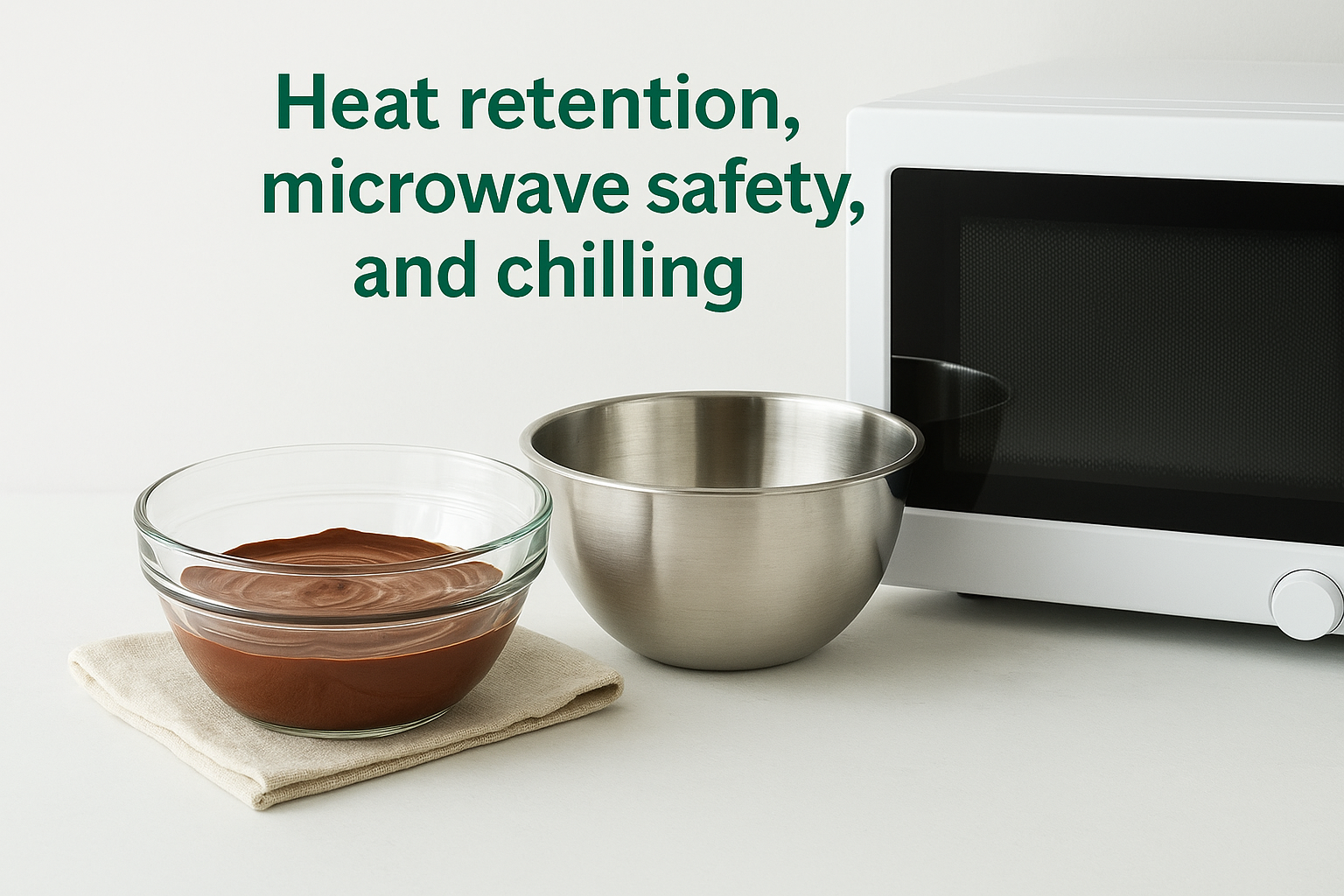
Glass handles microwaves and holds heat, while stainless steel handles the freezer and chills quickly. This is the area where a glass bowl vs metal bowl choice matters most, because the wrong pick can ruin an appliance or a recipe.
Microwave use
Glass is microwave-safe when its label says so. Stainless steel never is. Metal reflects microwaves and can cause arcing, which means sparks that damage the oven and create a fire risk.
For glass in the microwave, use short bursts. Melt chocolate or butter in 15 to 30 second intervals, and stir between each one. Use a vented lid or a loose plate on top. Handle the bowl with a towel, since the food can heat the glass enough to burn your hand.
Holding heat versus chilling fast
Glass is a poor conductor of heat, so it keeps warm food warm longer. That helps when you mix warm ingredients, such as bloomed yeast or softened butter, and want them to stay in range. It also helps when you serve something warm at the table.
Stainless steel is the opposite. It moves heat quickly, so a bowl from the freezer chills cream, butter, and pastry dough almost immediately. A chilled stainless bowl also keeps a salad crisp until serving. The same trait makes it a poor choice if you need the contents to stay warm.
Oven and stovetop limits
Stainless steel suits the double boiler. Set the bowl over a pot of simmering water with the bottom not touching the water, and you can melt chocolate or build a custard gently. Many plain stainless bowls also tolerate oven heat, but check the manufacturer's rating, especially for bowls with plastic or silicone parts.
Glass is more conditional. Follow these rules:
- Use the bowl in the oven only if its label says oven-safe.
- Never go straight from freezer to oven, or oven to cold water.
- Do not set a hot glass bowl on a wet or cold surface.
- Preheat the oven with the bowl inside instead of adding a cold bowl to a hot oven.
- Skip direct stovetop heat entirely.
Match the material to the temperature: glass for the microwave and warm holding, stainless steel for the freezer and the double boiler.
Using glass and metal bowls with a stand mixer
Either material works with a stand mixer as long as the bowl is made for your specific model. Glass lets you see the bottom of the bowl, and stainless steel is lighter and sturdier. Compatibility matters more than material.
Fit comes first
Stand mixers use specific bowl shapes and attachment systems, and tilt-head and bowl-lift models are not interchangeable. Check your model number and the manufacturer's list before buying a replacement or a second bowl. A bowl that almost fits can wobble, strike the beater, or fail to lock in place.
Capacity also matters. Do not fill the bowl past what the manual recommends, especially with heavy bread dough, which can strain the motor in either material.
How each material performs
Glass gives you a clear view of unmixed flour on the bottom, which saves you from stopping the mixer to scrape. It is also quieter. Its weight keeps the bowl steady under a hard-working beater, though it is heavy to carry to the sink.
Stainless steel is easier to lift and handle, and many bowls have a handle on the side. The common problem is scratching. If the beater sits too close to the bottom, it can scrape the metal. Adjust the beater-to-bowl clearance following your manual, and use the accessories that came with the mixer.
A stand mixer bowl is only as good as its fit, so match the model first and pick the material second.
Care, stains, and when to replace a bowl
Both materials are easy to clean, but each has its own failure signs. Stainless steel needs to be dried and kept away from harsh chlorine cleaners. Glass needs gentle handling and gradual temperature changes. Good care is what makes a stainless set last for decades and a glass set last for years.
Cleaning each material
For stainless steel, wash with warm soapy water and dry right away to prevent water spots. A mix of equal parts white vinegar and water removes mineral spots. Avoid long soaks in bleach or salty water, and skip steel wool, which scratches the finish and can leave particles that rust.
For glass, let the bowl cool before washing. Use a non-abrasive sponge and a baking soda paste for stuck-on residue. Both materials are usually dishwasher-safe, but hand washing keeps finishes and handles in better shape.
If you used a bowl for sticky resin or oil-heavy blends, wipe it with isopropyl alcohol first, then wash with dish soap and hot water. Keep that bowl out of your food rotation if you can.
Signs it is time to replace a bowl
Some damage is cosmetic, and some is a safety issue. Use this list to decide.
- Chipped glass rim: replace it. Chips grow, and fragments can end up in food.
- Cracked glass: replace it immediately.
- Deep pitting or rust-colored spots in steel: replace it. The metal has likely been damaged by chlorides or low-grade alloy.
- Dents in steel: keep it. They are cosmetic unless the bowl no longer nests or sits flat.
- Loose handle or warped rim: replace it if the bowl feels unsafe to hold.
Glass should retire at the first chip, while stainless steel can usually keep working through dents and scratches.
Pick the bowl that fits the job
The glass bowl vs metal bowl choice comes down to one question: what will you do with the bowl most often? If it is mixing, chilling, and big batches, buy stainless steel. If it is microwave work, proofing, and serving, buy glass. If it is all of those, buy a stainless set and add two glass bowls.
Take care of whichever you buy. Dry steel, let glass cool, and retire any chipped glass. A small, well-chosen set will serve you better than a cabinet full of mismatched bowls.
If you also blend, grind, or portion dry ingredients, the ultimate guide to filling RAW cones shows what to do with them next, and you can find the cones, trays, and tools for that work at Green Blazer.
