

A grinder does one job well until a screen clogs, the teeth dull, or half your kief ends up stuck in the corners. Then it starts costing you flower and time. The right weed grinder accessories fix those problems for a few dollars, and most of them fit the grinder you already own.
Here is the short answer. Most grinders need a kief catcher or pollen screen, replacement screens and teeth, and a cleaning brush or pick. A travel case and a storage solution are worth it if you carry your grinder or buy flower in volume. The rest depends on your grinder's size and how often you use it.
Below, you'll find seven add-ons and replacement parts, what each one does, and which signs tell you it's time to buy. At Green Blazer, we sell RAW cones, papers, trays, and grinders from our Las Vegas base, so we know what a good grind does for a clean, even pre-roll. Use the list to match each part to your setup.
1. Kief and pollen catchers
What it does
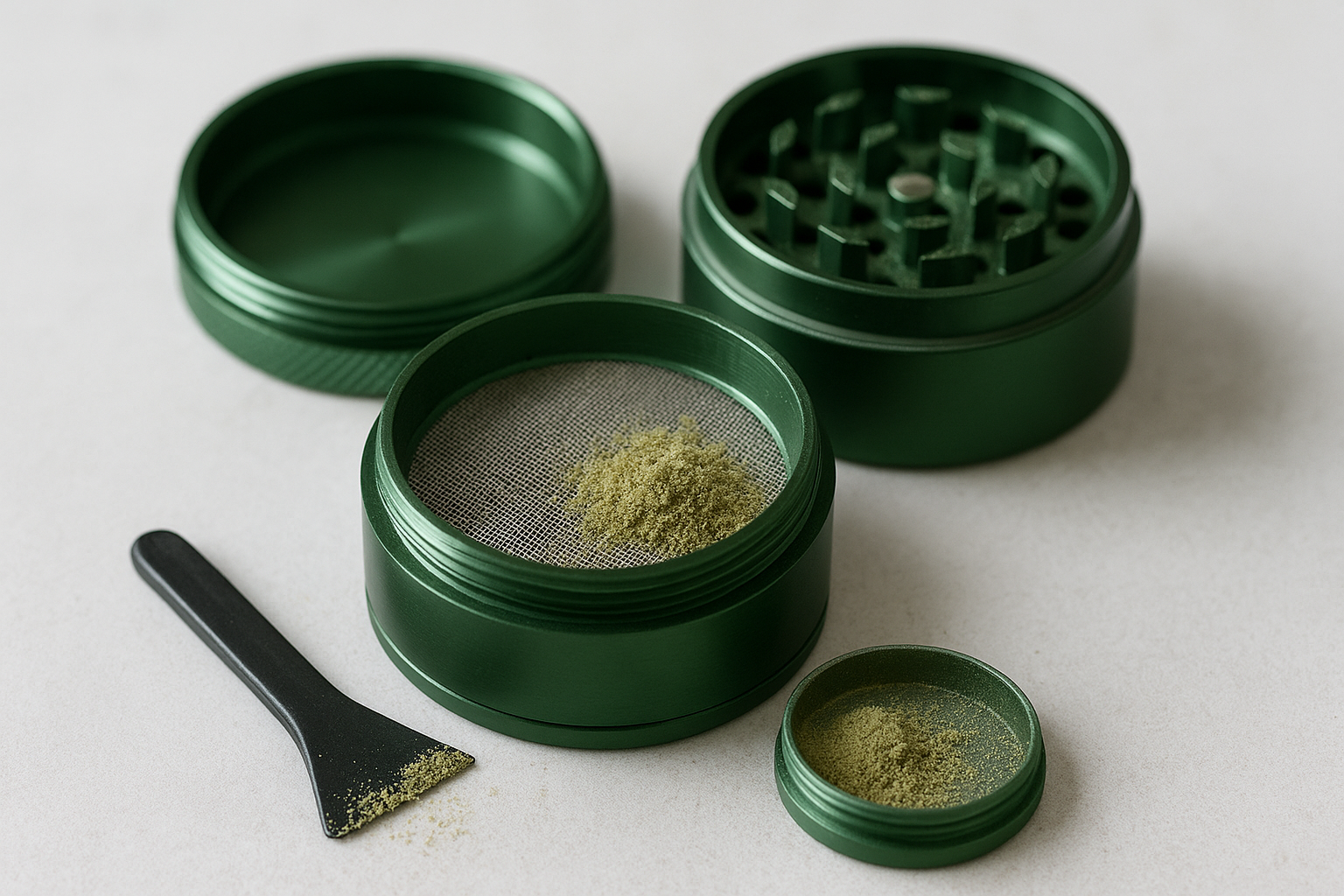
A kief catcher is the bottom chamber of a four-piece grinder. A fine mesh screen sits above it, so trichome crystals fall through while the ground flower stays in the middle chamber. Some brands call it a pollen catcher. Of all the weed grinder accessories on this list, it is the one that saves something you would otherwise lose.
If your grinder has no third chamber, a standalone pollen tray does a similar job. You sift ground flower over it and the fine powder collects underneath.
Every grind leaves kief behind, so the only question is whether you catch it or lose it.
Who needs it
Start here if you own a two-piece grinder, or a four-piece with a cracked or missing catcher. Kief adds up fast, and a few weeks of grinding can leave you with a decent pinch.
Skip the upgrade if you grind small amounts now and then. Your existing screen still works fine without a dedicated catcher.
What to look for
Size and fit come first. Measure your grinder's diameter before you buy, because catchers rarely swap between brands and a loose fit leaks powder. Then check these details:
- Tight, evenly woven mesh, with no stretched or wavy spots
- Aluminum, zinc alloy, or stainless steel instead of plastic
- Threads that turn smoothly without grinding or sticking
- A flat or gently sloped floor, so a scraper can reach every corner
How to use and care for it
Grind as usual, then tap the grinder on its side so the powder settles. Unscrew the base and scrape the kief out with a flat tool. Don't let it pack down. Empty the chamber every few weeks, because sticky kief gums up the threads and makes the grinder hard to open.
Wipe the mesh with a dry brush after each session. Save isopropyl alcohol for deeper cleans, which we cover in item 5.
2. Replacement screens
What it does
A replacement screen is the mesh disc between your grinding chamber and the kief chamber. It lets trichome crystals drop through while it holds back plant matter.
When the mesh clogs or tears, kief stops falling and flower bits slip into the catcher. That makes it one of the cheapest weed grinder accessories to swap.
A torn screen turns your kief catcher into a second flower chamber.
Who needs it
Buy one if your mesh is torn, bent, or clogged with resin that alcohol won't clear.
Check your grinder's brand and diameter first, because many four-piece models only take their own screen. If the mesh just looks dirty, clean it before you spend anything.
What to look for
Match the size exactly, then compare these details:
- Stainless steel mesh instead of nylon, which warps and holds odors
- An even weave with no wavy spots
- A rigid rim that sits flush in the groove
- Multi-packs, since screens wear out at different rates
How to use and care for it
Pop the old screen out with a pick or pin, then seat the new one flush in its groove. Don't press on the center, because that stretches the mesh.
Brush it dry after every session. Soak it in isopropyl alcohol only when it clogs, and let it dry fully before you put it back.
3. Replacement teeth and grinding plates
What it does
Teeth are the pointed pegs that shred flower when you twist the lid. The grinding plates are the halves that hold them. When the points dull, flower tears instead of shredding, and you get uneven chunks that burn badly in a pre-roll.
Most grinders have the teeth machined into the lid and body, so you often replace a whole half. Of all the weed grinder accessories here, this is the one you'll buy least often.
Sharp teeth give you an even grind, and an even grind gives you an even burn.
Who needs it
Buy replacements if the teeth are bent, chipped, or worn flat, or if the lid feels gritty and hard to turn. Plastic and wood grinders wear out first, and daily users see wear sooner.
Check whether your brand sells parts at all, because many don't. If a replacement half costs more than a new grinder, buy the new grinder.
What to look for
- An exact model and diameter match
- CNC-machined aluminum, zinc alloy, or stainless steel
- Uniform, sharp teeth with no burrs
- Threads or magnets that close flush with no gap
How to use and care for it
Swap the part, then twist the grinder a few times empty to confirm the halves line up and turn smoothly.
Brush the teeth after each session, and keep stems and seeds out of the chamber. They dull teeth faster than flower does.
4. Kief scrapers and cleaning brushes
What it does
A kief scraper is a small flat blade, usually metal, that lifts packed kief out of the catcher chamber. A cleaning brush sweeps ground flower and loose powder off the teeth, screen, and threads. Together they are the simplest weed grinder accessories on this list, and most cost only a few dollars.
Many grinders ship with a scraper. Check yours, because plastic scrapers bend and leave a film of kief behind, which is why a metal blade is worth the small upgrade.
Scrape and brush every session, and your grinder never needs rescuing.
Who needs it
Anyone with a four-piece grinder needs a scraper, since kief packs into corners a fingernail can't reach. Heavy users also need a brush, because resin builds on teeth and threads within days. If you grind once a week, an old toothbrush does the job.
What to look for
- A thin, flat stainless steel or aluminum blade
- An edge that matches the curve of your catcher floor
- Soft nylon or boar bristles, not wire, which can scratch screens
- A handle that doubles as a pick for clogged mesh holes
How to use and care for it
Scrape in short strokes toward the center of the chamber, then tap the powder onto a tray. Brush the teeth, lid, and threads after every session, before the resin hardens.
Wash the brush in warm soapy water once a week and let it dry fully. A damp brush spreads grime instead of removing it.
5. Cleaning solutions and tools
What it does
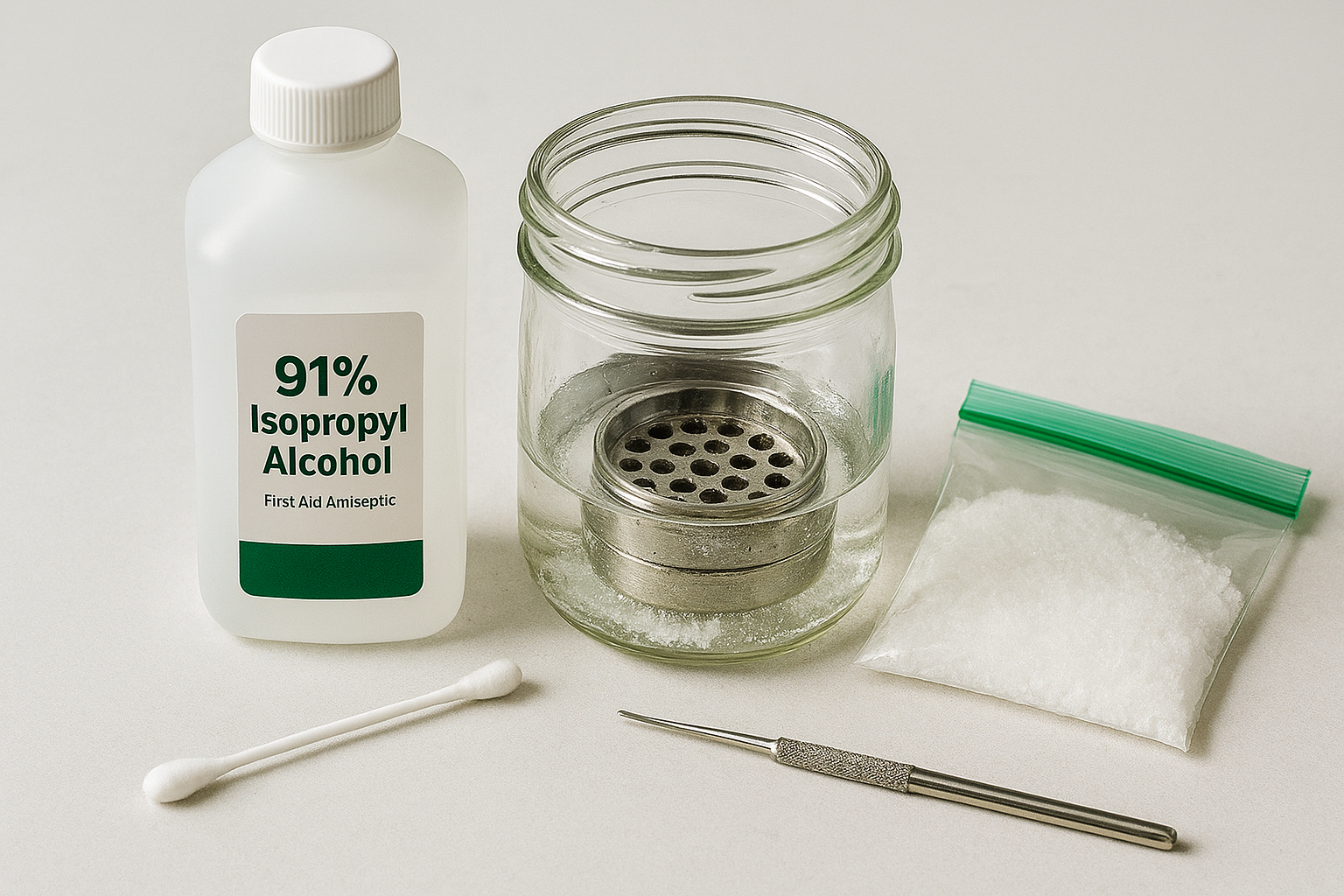
Cleaning solutions dissolve the resin that brushes and scrapers can't reach. The standard is isopropyl alcohol, with coarse salt as a gentle abrasive. Cotton swabs and a pick handle the threads and teeth. Among weed grinder accessories, this is the one that restores a grinder instead of just maintaining it.
Resin you can't brush away needs alcohol, and nothing else works as fast.
Who needs it
Heavy users should deep clean monthly. If your grinder is hard to twist or open, or kief won't fall through the screen, sticky resin is the cause. Light users can get by with a deep clean every two or three months.
What to look for
- Isopropyl alcohol at 91% or higher, since weaker mixes carry more water and dry slowly
- Coarse kosher or sea salt
- A sealable jar or zip bag for soaking
- Cotton swabs and a pick for the threads
How to use and care for it
Deep cleaning takes about 30 minutes, and most of that is waiting:
- Take the grinder apart and drop the metal parts in a jar.
- Add alcohol to cover them, plus a spoonful of salt.
- Shake for a minute, then soak 15 to 30 minutes.
- Rinse with warm water and dry every part fully before you reassemble.
Keep plastic and wood out of the jar, because alcohol clouds plastic and warps wood. Work in a ventilated room, away from flames.
6. Travel cases and smell-proof pouches
What it does
A travel case is a padded or hard-shell holder that keeps your grinder from getting dented in a bag. A smell-proof pouch adds a sealed, carbon-lined layer that traps odor. These weed grinder accessories protect the grinder itself, not the flower.
A dented grinder never threads right again, so protect it before it travels.
Who needs it
Buy one if your grinder rides in a bag, pocket, or car, or if you share a living space and want odor control. Homebodies can skip it, because a drawer does the job.
Carry cannabis only where it's legal, and never across state lines.
What to look for
- An interior sized to your grinder, with a snug fit
- A hard shell or thick padding
- Activated carbon lining and a real seal, like a zipper or roll-top
- A wipeable or washable interior
How to use and care for it
Start with a clean, dry grinder, because leftover resin is the main source of smell. Pack it snug so it can't rattle against keys or a lighter.
Wash the pouch as the label says, and replace carbon lining every few months, since it fades with use. Keep the case out of hot cars, where heat softens resin and spreads odor.
7. Seals, O-rings and magnets
What it does
Small rubber O-rings seal the lid and chambers, and magnets hold the lid shut so it doesn't pop open in your bag. Together they keep flower and kief inside the grinder. Some models also use a thin gasket around the catcher. These are the smallest weed grinder accessories on this list, and most cost a couple of dollars.
A grinder that won't stay shut loses more than it grinds.
Who needs it
Check yours if the lid pops open, powder leaks from the threads, or the magnet no longer grabs. Magnetic-lid grinders wear out here first, and a lost magnet is easy to miss. If your grinder has no ring or magnet, skip this item.
What to look for
- Exact diameter and thickness for your model
- Food-grade silicone or Viton, since cheap rubber cracks
- Neodymium magnets, which hold stronger than ferrite
- Polarity that matches your lid, so the halves attract instead of repel
How to use and care for it
Lift the old ring out with a pick and clean the groove with a cotton swab. Seat the new ring flat without twisting it. Test each magnet's polarity before you glue it in with a drop of epoxy.
Replace O-rings about once a year, or when they flatten or crack. Take them out before an alcohol soak, because alcohol can dry out rubber and shorten its life.
Choosing the add-ons your grinder needs
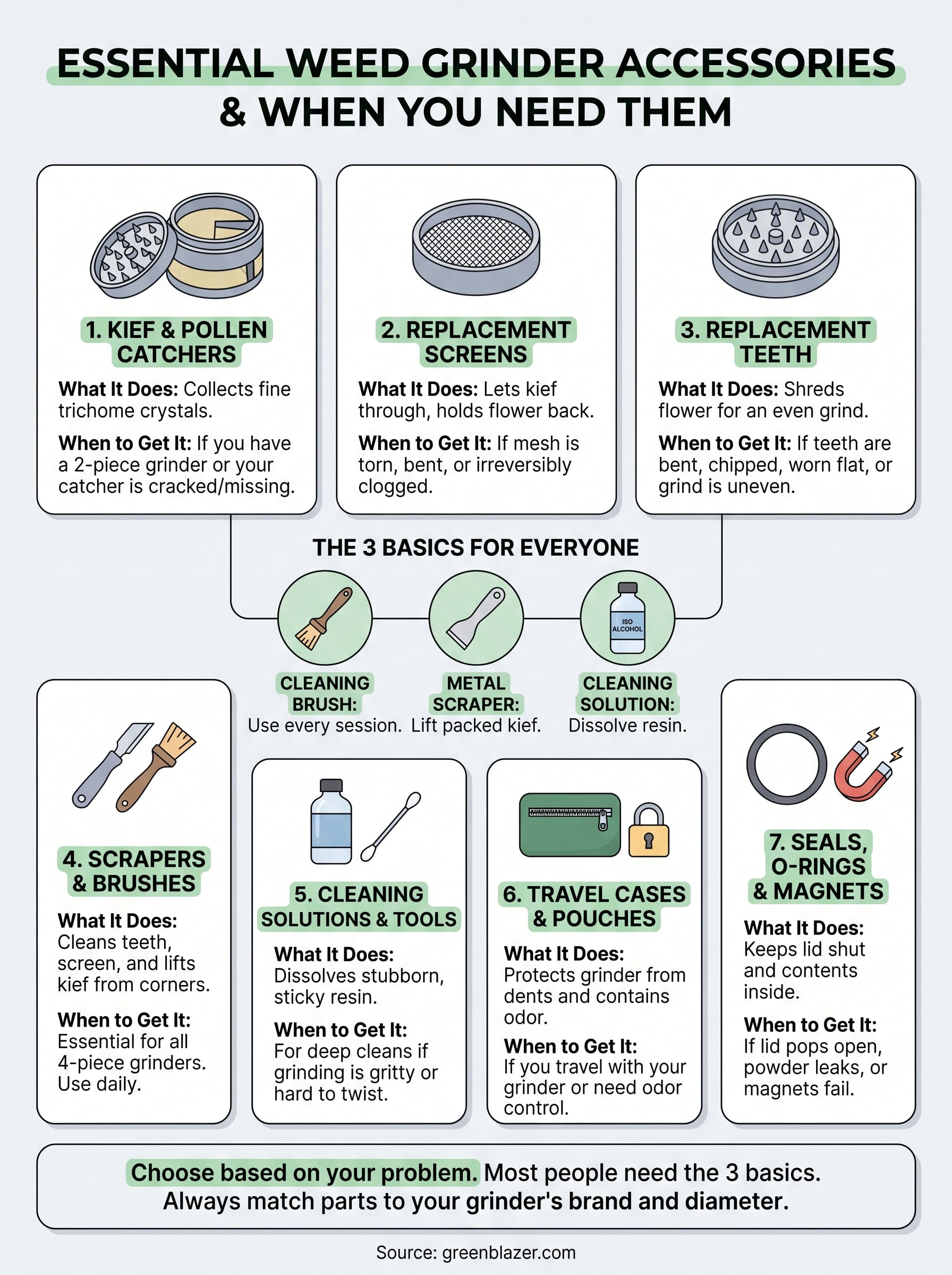
Start with the problem you actually have. A two-piece grinder needs a kief catcher, a torn mesh needs a new screen, and a gritty twist usually means a deep clean before any part swap. Teeth, seals, and magnets only matter when they fail, so check them when the lid feels loose or the grind turns uneven.
Most people can get by with three basics: a metal scraper, a brush, and a bottle of isopropyl alcohol. Add a case if your grinder travels. Buy everything else as parts wear out, and always match them to your grinder's brand and diameter. The right weed grinder accessories cost little and keep a good grinder working for years.
A consistent grind pays off most when you follow the best grinder settings for filling RAW cones, because evenly ground flower packs well and burns slow and clean. Browse authentic RAW cones, papers, and accessories at Green Blazer and finish your setup in one order.
