

Hash and flower come from the same cannabis plant, but they deliver noticeably different experiences once lit. If you've been curious about hash vs weed effects, you're asking the right question, because the gap between them in potency, duration, and overall feel is significant enough to change your session entirely. Whether you're packing a cone with ground flower or layering in some hash, knowing what to expect matters before you spark up.
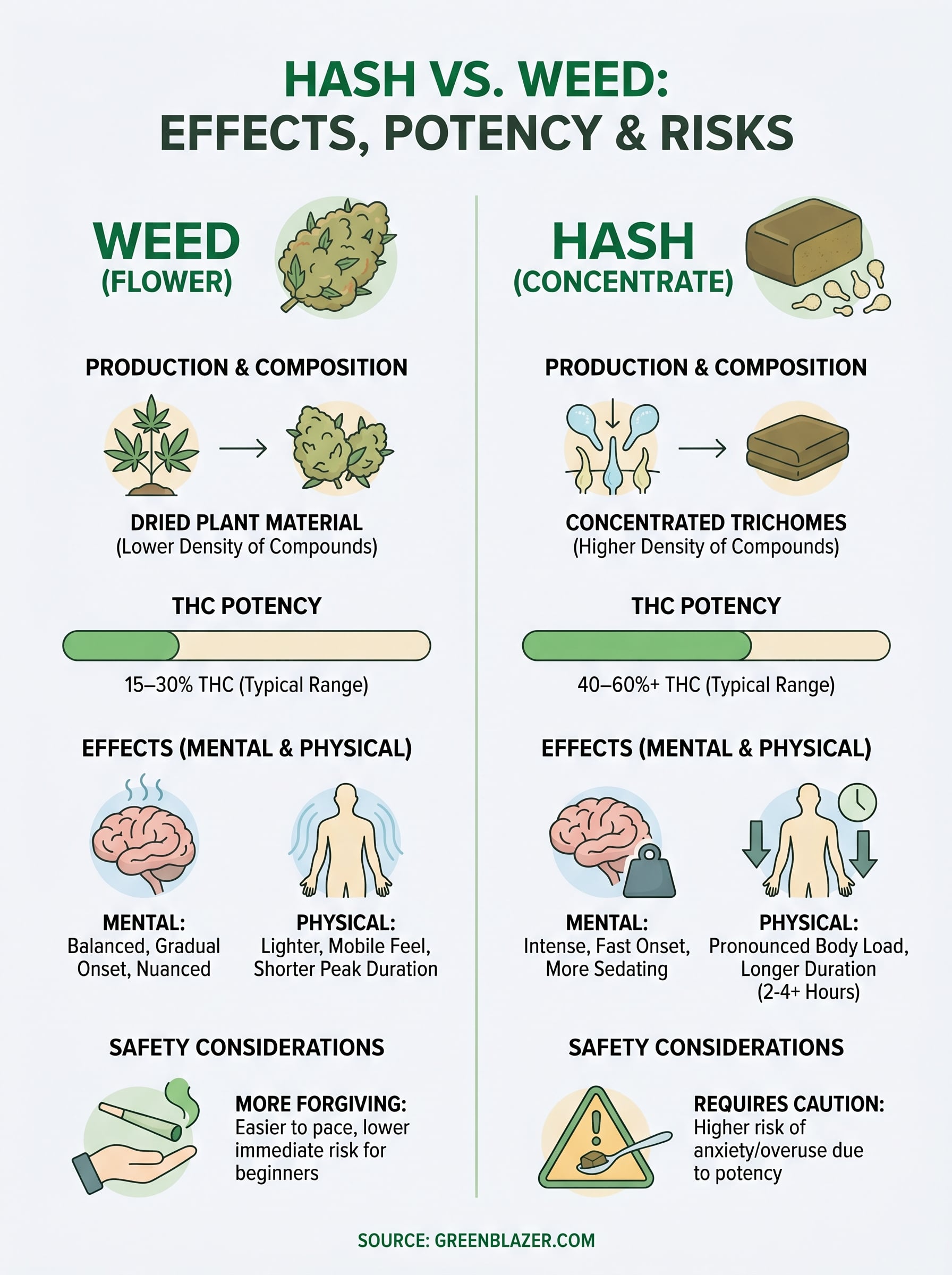
Hash is a concentrated form of cannabis made by collecting and compressing trichomes, those tiny, resin-rich glands covering the surface of the bud. Weed, or flower, is the dried plant material itself. That distinction sounds simple, but it drives major differences in THC concentration, how the high sets in, how long it lasts, and what the body and mind actually feel. Hash typically ranges from 40–60% THC, while most flower sits between 15–30%. That alone should tell you these aren't interchangeable experiences, and the health considerations shift accordingly.
At Green Blazer, we sell RAW pre-rolled cones that people use to smoke flower, hash-topped bowls, and everything in between. We're the largest authorized RAW retailer in the U.S., based right here in Las Vegas, and our customers range from first-time smokers to licensed commercial producers filling thousands of cones a day. We hear questions about hash versus flower constantly, so this article breaks down the real differences in potency, the type of high you can expect, and the potential health risks tied to each, backed by what's actually known rather than guesswork.
Why hash and weed can feel so different
The core reason hash vs weed effects diverge so sharply comes down to concentration. When you smoke flower, you're combusting plant matter, chlorophyll, waxes, and a mix of cannabinoids and terpenes all bundled inside the plant's physical structure. When you smoke hash, you're burning a product stripped down primarily to trichome resin, meaning the ratio of active compounds per gram is dramatically higher. That difference in density changes how quickly the effects hit, how intense the peak feels, and how long your body and mind stay under the influence.
The role of trichomes in intensity
Trichomes are the tiny crystalline structures that coat cannabis flowers and sugar leaves. They produce THC, CBD, CBG, and dozens of other cannabinoids, along with the terpenes responsible for aroma and flavor. When you smoke flower, you get all of these compounds embedded in plant fiber. Hash is essentially a concentrated collection of trichomes, either pressed together or further processed, which means you're delivering a much higher density of psychoactive compounds in a smaller volume of material.
The more concentrated the trichome content, the faster and harder the effects hit, which is why even a small amount of quality hash can outpace a full bowl of strong flower.
Your body's endocannabinoid system processes hash and flower through the same receptors, but the sheer cannabinoid load arriving at once drives the difference in intensity. Experienced smokers often describe hash as producing a heavier, more sedating body effect, while flower tends to feel more balanced and gradual, giving you time to gauge where you are before the peak arrives. That pacing matters, especially if you're new to either form or mixing them in the same session.
Why terpenes shift the experience
Terpenes do more than smell good. They interact with cannabinoids in what researchers refer to as the entourage effect, a process where terpenes modulate how THC and other cannabinoids bind to your receptors. Fresh flower typically carries a fuller terpene profile than most traditional hash forms, partly because heat and mechanical processing during hash production can degrade volatile terpenes before they ever reach you.
That terpene loss helps explain why hash and flower often feel qualitatively different even at similar THC levels. You might smoke a high-THC flower strain and notice an energetic, cerebral effect largely shaped by terpenes like limonene or pinene. The same concentration of THC in a pressed hash block could feel far heavier and more sedating because the terpene compounds that would have brightened the experience are no longer present in meaningful amounts. The cannabinoid-to-terpene ratio shifts significantly depending on the form you choose, and that shift shapes the entire session.
How hash and weed are made and why it matters
When you understand how each product is produced, the differences in hash vs weed effects start making a lot more sense. Flower is the raw, dried bud of the cannabis plant, ready to grind and smoke with minimal processing. Hash goes through several additional steps that concentrate the plant's most active compounds, which is why even a small amount can hit harder than a much larger volume of flower.
How flower reaches your cone
Flower is harvested from the cannabis plant and dried and cured over several weeks to reduce moisture and develop its cannabinoid and terpene profile. After curing, the bud is ready to grind and pack. Because flower retains its full plant structure, including fiber, waxes, and the full terpene spectrum, the smoking experience is relatively gradual and the effects build predictably.
Growing conditions, genetics, and curing technique all influence the final potency and aroma of the flower you pack into a cone, which is why two strains at the same THC percentage can still feel quite different.
How hash is produced
Hash production starts by separating trichomes from the plant material. Traditional methods include dry sifting, where the plant is rubbed across a fine screen, and hand-rolling, which produces the sticky resin known as charas. Water-based methods use ice water agitation to knock trichomes free and collect them through filtration bags, then the collected resin is pressed or dried into blocks, coins, or slabs.
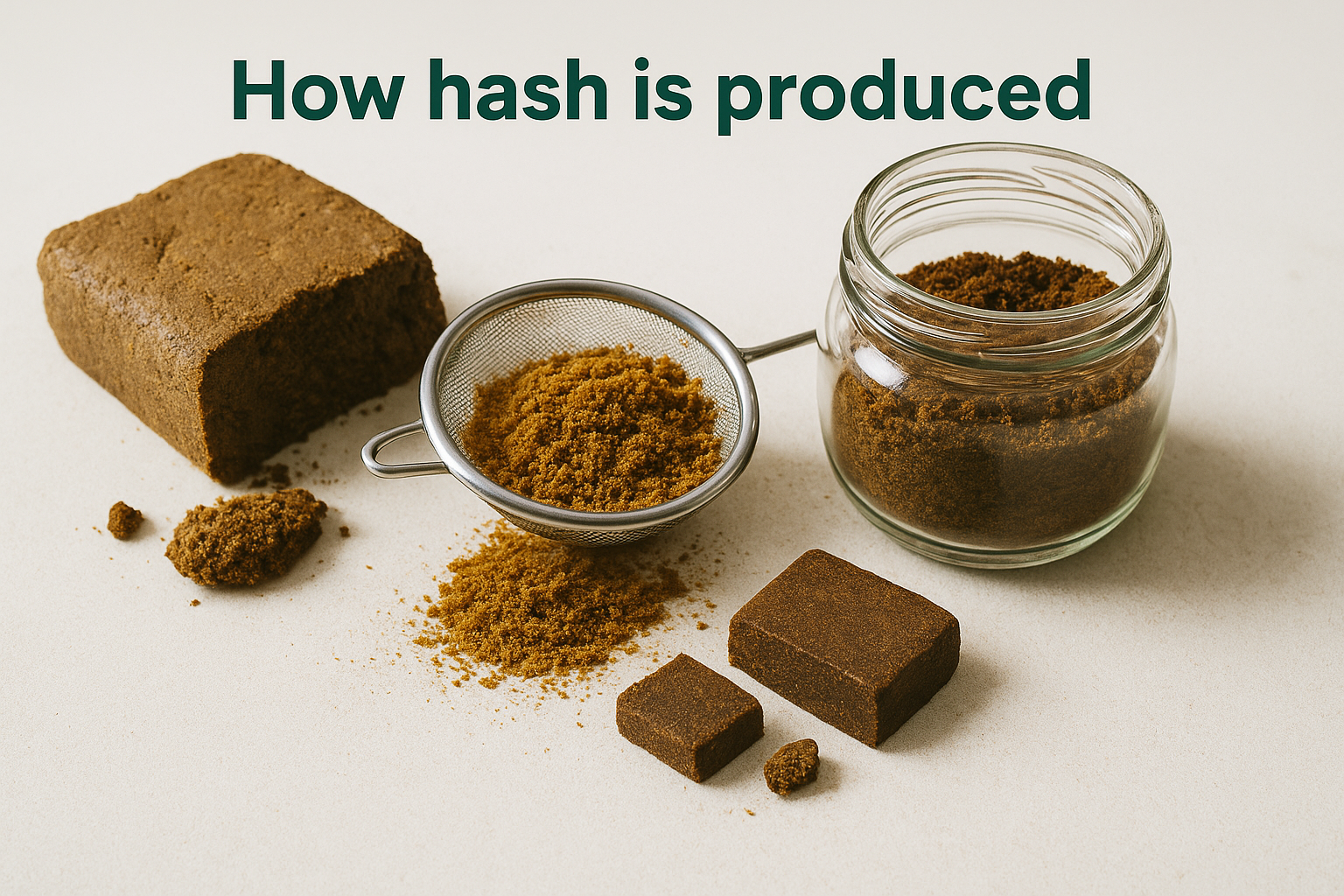
The production method directly determines the purity, potency, and terpene content of the final hash product, which is why two hashes can feel completely different even at the same THC percentage.
Each method strips away varying amounts of plant fiber and terpenes. Dry-sift and hand-rolled hash tends to retain more of the plant's original flavor compounds, while water-extracted hash can achieve higher purity but sometimes at the cost of some aromatic complexity. Understanding the method helps you predict what you're actually putting in your cone before you light it.
Potency basics: THC, cannabinoids, and terpenes
THC is the primary driver behind psychoactive intensity, but treating it as the only variable that matters will give you an incomplete picture. When you compare hash vs weed effects, the full cannabinoid and terpene profile shapes your experience just as much as the THC number on the label.
What THC percentages actually tell you
Most cannabis flower sold in legal markets tests between 15% and 30% THC, depending on the strain and growing conditions. Traditional hash forms, such as dry-sift or hand-pressed blocks, typically land in the 40% to 60% THC range, while modern solventless extracts like rosin can climb even higher. That gap matters because a single gram of hash delivers far more THC per puff than the same weight in flower, which means your tolerance, session pacing, and cone-filling choices all need to account for that difference.
Treating hash like flower when you load your cone is one of the fastest ways to overshoot your comfort zone, even for experienced smokers.
| Product type | Typical THC range |
|---|---|
| Cannabis flower | 15–30% |
| Traditional hash | 40–60% |
| Rosin / modern solventless | 60–80%+ |
Why CBD and minor cannabinoids matter
CBD and minor cannabinoids like CBG and CBN work alongside THC rather than independently. CBD, in particular, can soften THC's more anxious or overwhelming qualities by competing at the same receptor sites. Flower strains often carry more detectable CBD than concentrated hash forms, which partly explains why high-potency hash can feel more one-dimensional or intense to some users.
Minor cannabinoids contribute to the overall texture of the experience, influencing sedation, clarity, appetite, and mood in subtle but real ways. When hash production strips away plant fiber and terpenes, it can also reduce the concentration of these minor compounds, narrowing the cannabinoid spectrum you receive with each session.
Hash vs weed effects on the mind and body
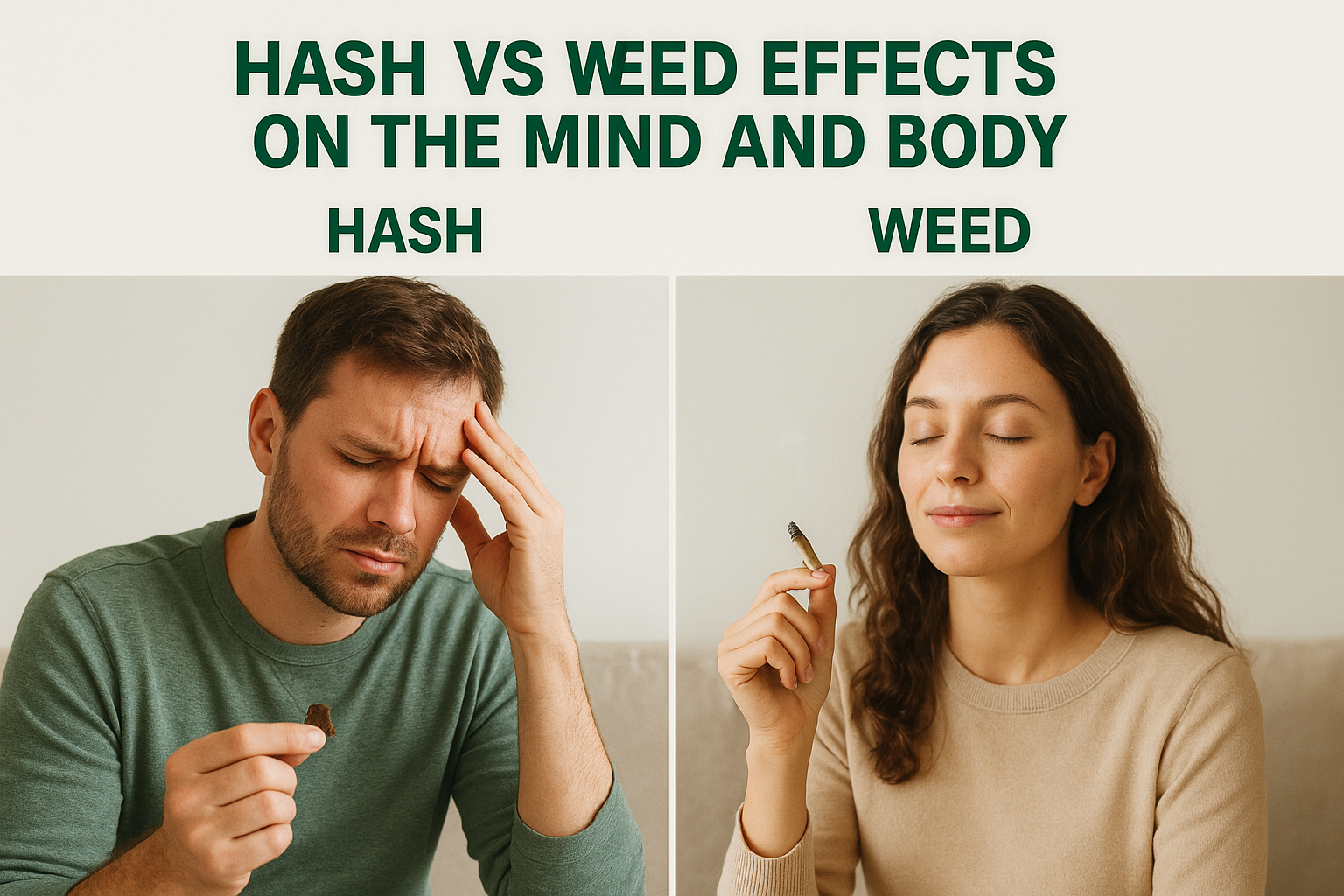
Understanding hash vs weed effects on both your mind and body helps you make smarter choices before you load your cone. The differences go beyond simple potency numbers. Hash tends to produce a more compressed, intense experience that arrives faster and can feel harder to dial back, while flower gives you a more gradual onset that lets you stay in control of where the session goes.
Mental effects: clarity, anxiety, and intensity
Hash delivers a heavier psychoactive punch because its concentrated THC load floods your endocannabinoid receptors quickly, especially when smoked. Many users report feeling a strong initial rush followed by deep mental sedation, reduced focus, and in some cases heightened anxiety or paranoia if the dose exceeds their tolerance. Flower tends to produce a more nuanced mental effect, partly because its fuller terpene and cannabinoid profile shapes a broader, more balanced high.
If anxiety is a concern for you, flower's slower onset gives you more opportunity to stop before you overshoot your comfort level.
Your mindset, setting, and baseline tolerance all influence how either product lands mentally. A relaxed environment and a clear intention going into the session reduce the likelihood of a difficult experience with either hash or flower, but that caution matters more with hash given how little room for error its potency allows.
Physical effects: body load and duration
Hash typically produces a pronounced body effect that many users describe as heavy, warm, or sedating. That physical weight tends to settle in quickly and can last several hours longer than what you'd experience from a comparable session with flower. Flower, by contrast, often produces a lighter, more mobile body sensation that allows you to stay functional throughout the session without feeling pinned down.
Duration matters when you're planning your day. Hash sessions frequently extend two to four hours at peak intensity, while flower peaks tend to resolve more quickly, giving you more predictable timing overall.
How to reduce risks and choose what fits you
Understanding hash vs weed effects is only useful if you apply that knowledge to your actual sessions. Both products carry real risks when used carelessly, and those risks scale with potency. Flower gives you more control over pacing, while hash demands more deliberate decision-making before you ever light up. Your experience level, tolerance, and goals should all factor into which one you reach for and how much you use.
Start with dose awareness
Your first line of defense is simple: use less than you think you need, especially with hash. Because hash concentrates THC far beyond what flower delivers, a portion the size of a grain of rice can easily match or exceed the effect of a full cone packed with flower. Start small, wait for the effects to settle, and only add more once you understand where your tolerance sits with that particular product.
Treating your first hash session like a flower session is where most people run into trouble, so give yourself time between each addition before you decide you need more.
Keeping your sessions in a familiar, low-pressure environment also reduces the chance of anxiety or disorientation, particularly when you're trying a new hash type or potency level for the first time.
Match your choice to your experience level and goals
If you're newer to cannabis or sensitive to THC's more intense effects, starting with flower gives you a much more forgiving experience. The slower onset lets your body signal when you've reached a comfortable level, and the fuller terpene profile tends to produce a less overwhelming result than concentrated hash at high doses.
For experienced users seeking longer duration or a deeper body effect, hash can be a deliberate, informed choice rather than a casual one. Pack your RAW cone with ground flower first, then add a small amount of hash on top to keep the burn even and give yourself a consistent, controlled baseline for the session.
Key takeaways
Understanding hash vs weed effects comes down to one core difference: concentration. Hash delivers a far higher THC load per gram than flower, which means faster onset, longer duration, and less room for error if you push past your tolerance. Flower gives you a fuller terpene and cannabinoid profile that paces the experience and keeps the effects more predictable.
Your production method, dose, and experience level all shape what actually happens when you light up. Hash demands more careful handling, while flower rewards beginners and experienced users alike with a more forgiving, dialed-in session. Both products carry real risks when you ignore your limits, so starting low and building slowly is always the right call.
Choosing the right smoking setup matters just as much as choosing the right product. RAW pre-rolled cones from Green Blazer give you a clean, consistent burn whether you're packing flower, topping with hash, or combining both in a single session.
