

Nothing ruins a session faster than reaching for your stash and finding dry, crumbly herbs that have lost all their flavor. If you've ever wondered how to keep herbs fresh longer, you're not alone, it's one of the most common storage questions among smokers. Moisture, temperature, and airflow each affect how quickly your herbs degrade, and getting even one of those factors wrong can cost you potency and taste in a matter of days.
At Green Blazer, we're all about the full experience, from the authentic RAW cones we distribute to the quality of what goes inside them. A perfectly packed cone means nothing if your herbs are dried out or stale, which is why proper storage matters just as much as the products you use. We've seen firsthand how the right techniques can make a real difference in keeping your herbs at peak freshness.
Below, you'll find seven straightforward methods for storing your herbs in the fridge to extend their shelf life. Each technique is simple to set up with items you likely already own, and they all focus on controlling moisture and airflow, the two biggest factors in herb preservation. Whether you're storing a small personal supply or managing larger quantities, these methods will help you get the most out of every purchase.
What you need and why herbs spoil fast
Understanding why your herbs go bad quickly puts you in control of preventing it. Most herbs spoil within three to seven days in the fridge because of three main factors: moisture loss, excess moisture, and ethylene gas from nearby produce. When herbs lose water too fast, they wilt and dry out. When they sit in standing water or a sealed bag with no airflow, mold and bacterial growth kick in fast. Getting that balance right is the whole game.
Why herbs lose freshness so quickly
Fresh herbs are still living plant tissue after you cut them, and they continue to respire and release moisture. Ethylene gas, produced naturally by fruits like apples, bananas, and avocados stored nearby, accelerates cell breakdown in herbs and causes them to yellow and wilt faster than they otherwise would. Temperature swings inside the fridge add another layer of stress, especially when you store herbs near the back wall where cold spots form and can freeze tender leaves. Even the plastic bag herbs come in from the grocery store traps moisture and speeds up decay rather than slowing it down.
The single biggest mistake most people make is storing herbs in the original grocery store bag with no airflow and no moisture management.
What you need before you start
You don't need specialized equipment to figure out how to keep herbs fresh longer. Most of the supplies are already in your kitchen. Here's what covers all seven methods in this guide:
| Item | Purpose |
|---|---|
| Glass jar or mason jar | Water storage for tender herbs |
| Plastic zip-lock bags | Airtight storage for hardy herbs |
| Paper towels | Absorb excess moisture |
| Plastic wrap or cling film | Seal in humidity for tender herbs |
| Small rubber bands | Bundle herbs before storing |
| Sharp kitchen scissors or knife | Clean-cut stems to improve water uptake |
| Airtight container | Long-term storage option |
Sharp scissors or a knife matter more than most people expect. A clean cut on the stem allows tender herbs to draw up water efficiently, the same principle used when storing cut flowers. Crushing or tearing the stem closes off the water channel and speeds up wilting even when you do everything else right. Paper towels appear in almost every method in this guide because they absorb drips without pulling moisture directly from the herb leaves themselves.
Gather these supplies before you start, and you'll be ready to apply whichever method fits your herb type without any mid-process interruptions.
Methods 1 to 3 for tender herbs
Tender herbs include cilantro, parsley, mint, dill, tarragon, and chives. These herbs have soft stems and delicate leaves that wilt quickly without consistent moisture. All three methods below work by maintaining hydration at the stem while protecting the leaves from direct water contact.
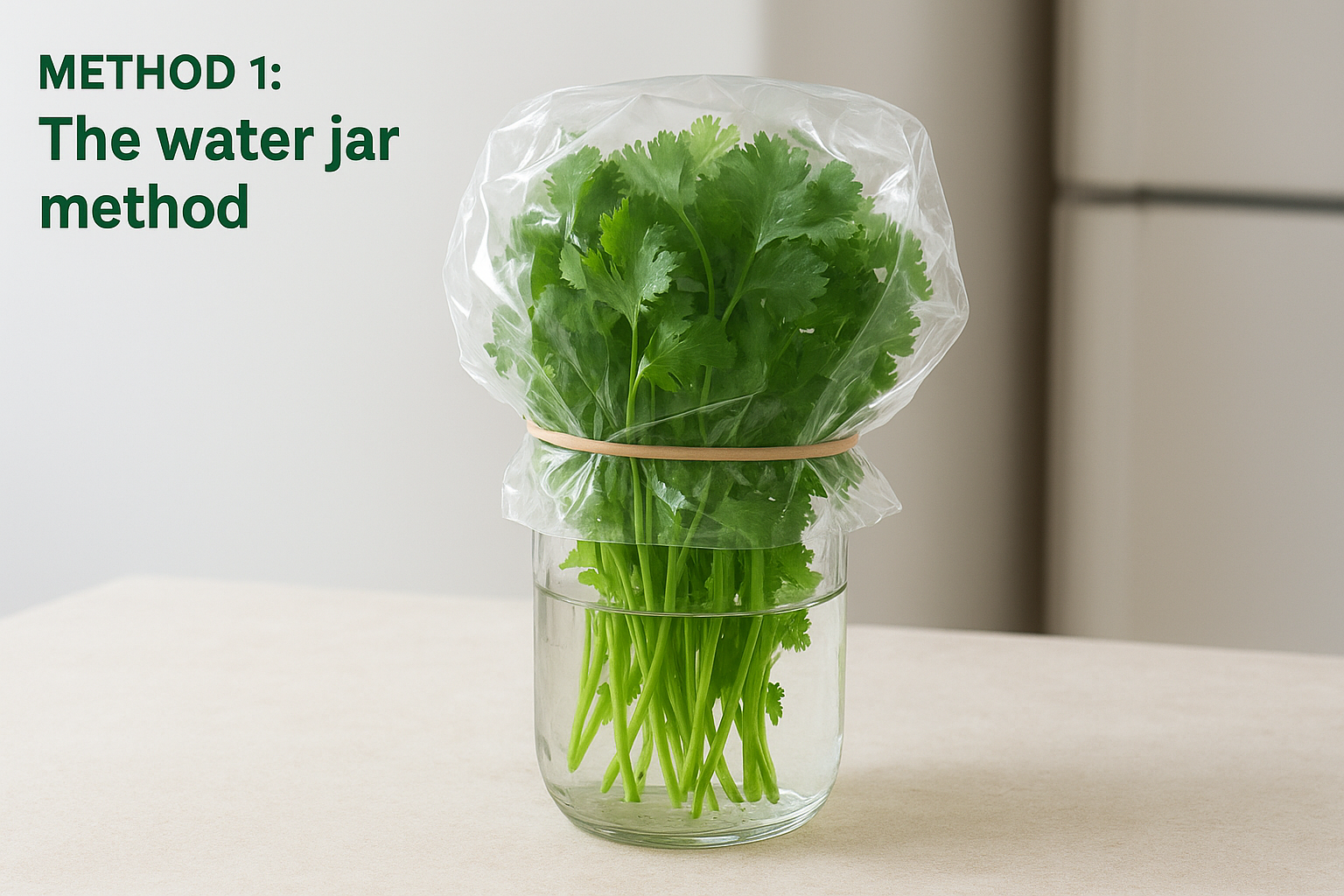
Method 1: The water jar method
Cut the bottom half-inch off each stem at a slight angle, then place your herbs upright in a jar with one to two inches of water covering the stems. Loosely cover the leaves with a plastic bag and secure it around the jar with a rubber band. Store the jar in the fridge door, which stays slightly warmer and avoids the freezing temperatures near the back wall. Change the water every two days to prevent bacterial buildup. Parsley and cilantro stored this way can stay fresh for up to three weeks.
Method 2: The damp paper towel wrap
Lay your herbs flat on a damp (not soaking wet) paper towel, roll them up like a loose bundle, and slip the roll into a zip-lock bag. Leave the bag slightly open to allow a small amount of airflow. This method works well for mint and dill, which benefit from the consistent ambient humidity the paper towel creates without sitting in standing water.
Damp, not wet: if you can wring water out of the paper towel, it's too wet and will cause mold within two days.
Method 3: The container and paper towel method
Line an airtight container with a dry paper towel, add your herbs in a single layer, then place a lightly damp paper towel on top before sealing the lid. The dry base absorbs drips while the damp top layer keeps humidity stable around the leaves. This is one of the most reliable approaches for learning how to keep herbs fresh longer with chives and tarragon, which bruise easily when bundled tightly.
Methods 4 to 5 for hardy herbs
Hardy herbs include rosemary, thyme, sage, and oregano. These herbs have woody stems and thick, waxy leaves that hold moisture better than tender herbs, which means they need less humidity management and more focus on preventing moisture buildup that leads to mold. The fridge works well for them as long as you keep the storage environment dry and airtight.
Method 4: The dry paper towel and zip-lock bag
Lay your hardy herbs on a completely dry paper towel and roll them into a loose bundle. Slide the bundle into a zip-lock bag, press out most of the air, and seal it fully. Unlike tender herbs, hardy herbs do not need ambient moisture from a damp towel. The dry paper towel pulls away any condensation that forms inside the bag, which is what causes woody herbs to turn slimy when stored without it. Rosemary and thyme stored this way stay usable for two to three weeks in the fridge without wilting or discoloring.
Pressing out the air before sealing reduces the oxygen available inside the bag, which slows down the oxidation that degrades flavor and aroma.
Method 5: The airtight container with a dry liner
This method gives you a reliable way to understand how to keep herbs fresh longer when you have larger bunches of sage or oregano that do not bundle neatly. Line a hard-sided airtight container with a dry paper towel on both the bottom and the top of the herbs before sealing the lid. The paper towels work as buffers on both sides, absorbing any moisture that settles during temperature changes in the fridge. Check the container every four to five days and replace the paper towels if they feel damp. Sage stored this way can last up to four weeks before the leaves start to lose their potency.
Methods 6 to 7 for basil and long-term
Basil and long-term preservation both need a different approach than what works for other herbs. Basil is cold-sensitive and turns black within 24 hours in a standard fridge, so it needs to stay at room temperature. Long-term storage, by contrast, means moving beyond the fridge entirely and using your freezer to lock in flavor and potency for months.
Method 6: The countertop water jar for basil
Treat your basil like a bouquet of flowers. Trim the stems at a slight angle, stand the bunch upright in a jar with one inch of water covering only the cut stems, and leave it on your counter away from direct sunlight or heat sources. Do not seal or cover it tightly. Basil needs airflow, and a loose plastic bag placed over the leaves works well enough to retain some humidity without trapping ethylene gas. Change the water every two days and remove any yellowing leaves as soon as you spot them. Kept this way, fresh basil stays vibrant for up to two weeks at room temperature.
Cold air below 50°F damages basil cells, which is why refrigerating it causes blackening rather than preservation.
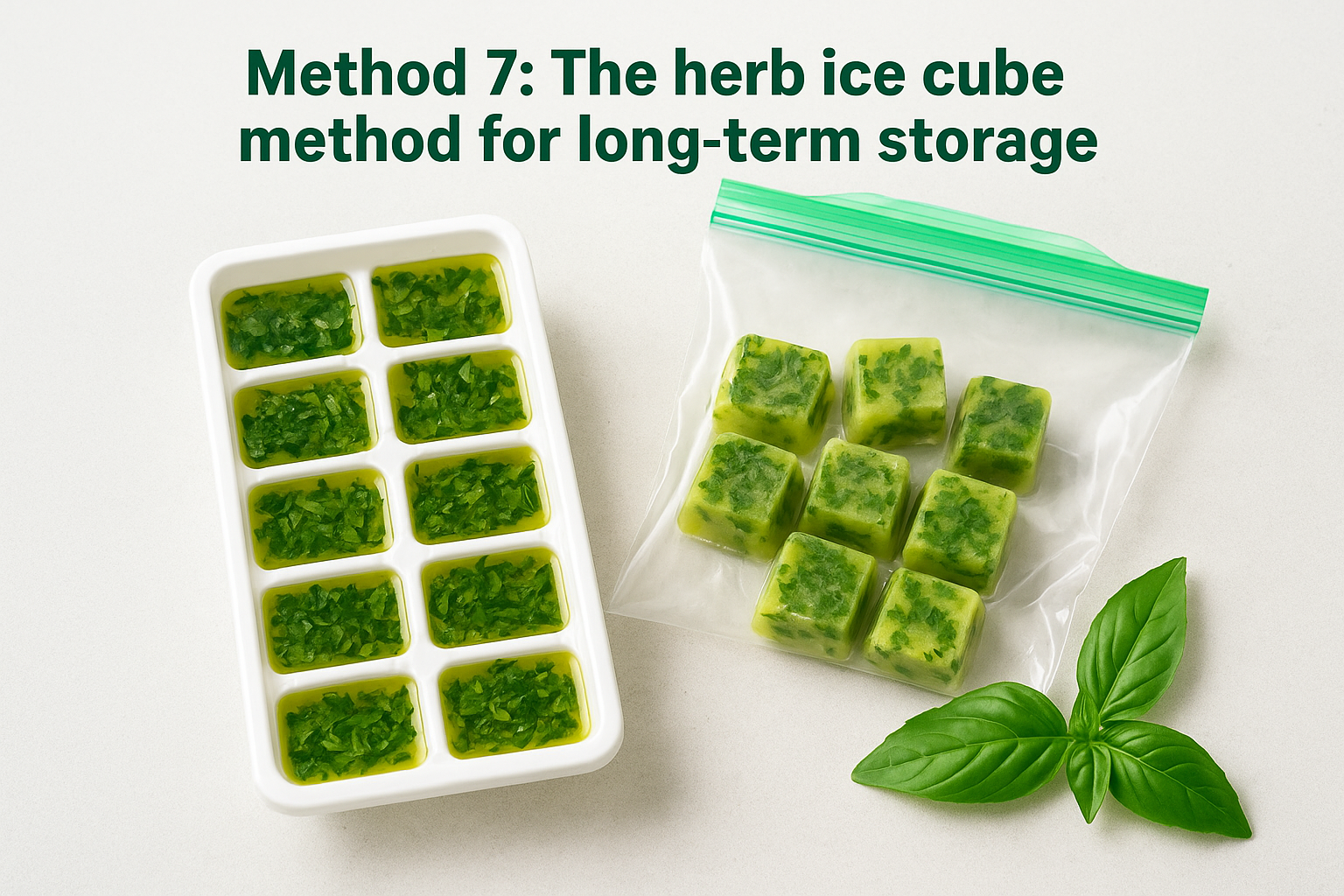
Method 7: The herb ice cube method for long-term storage
When you have more herbs than you can use within a few weeks, the freezer gives you the best option for figuring out how to keep herbs fresh longer over months instead of days. Finely chop your herbs, pack them into ice cube trays, and cover each compartment with olive oil or water before freezing. Once solid, pop the cubes into a labeled zip-lock freezer bag. Each cube holds roughly one tablespoon of chopped herbs, which makes portioning easy when you cook. Frozen herb cubes retain full flavor and color for up to six months without any noticeable degradation in taste when used in cooked dishes.
Fix common problems and choose the best method
Even when you follow the right method, small mistakes can still cause herbs to wilt, mold, or lose flavor before you expect them to. Most problems trace back to moisture imbalance or the wrong storage environment for the herb type. Fixing these issues is usually simple once you know what to look for.
Troubleshoot the most common storage problems
If your herbs develop slime or mold within a few days, the paper towel you used was too wet, or you sealed the bag or container too tightly without enough airflow. Replace the paper towel immediately with a dry one and leave the container slightly less sealed. If your herbs dry out and shrivel faster than expected, the opposite is happening: not enough moisture is reaching the leaves, or they are sitting too close to a cold spot at the back of the fridge. Move them to the fridge door and add a lightly damp paper towel.
Yellowing leaves almost always mean ethylene gas exposure, so store your herbs away from apples, bananas, and avocados.
If your basil turns black, it went into the fridge, and cold damage is irreversible once it sets in. Start fresh with a new bunch and keep it on the counter using Method 6.
Choose the right method for your herbs
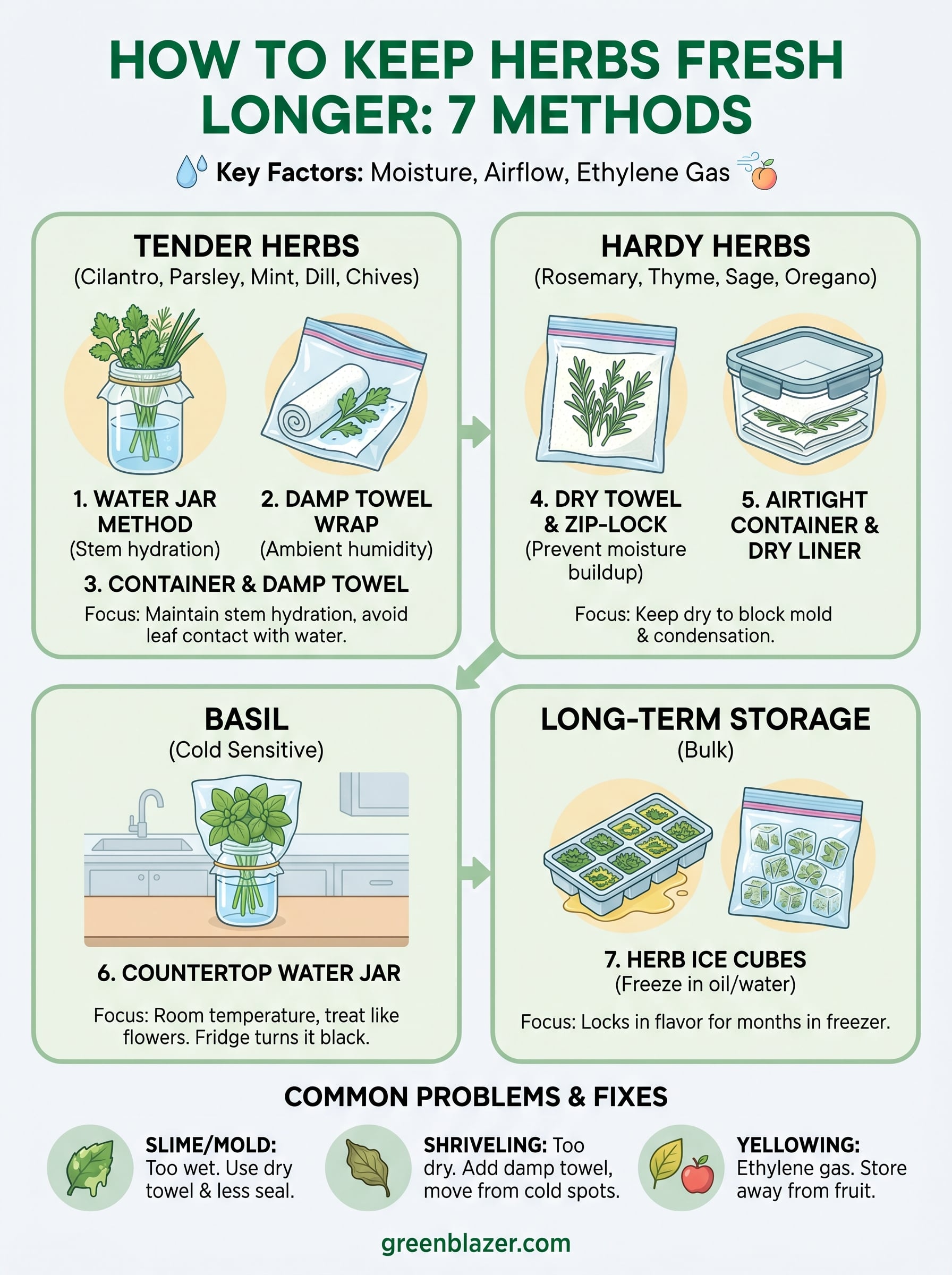
Knowing how to keep herbs fresh longer comes down to matching the method to the herb. Use this quick reference to pick the right approach:
| Herb | Best Method | Expected Freshness |
|---|---|---|
| Cilantro, parsley | Water jar (Method 1) | Up to 3 weeks |
| Mint, dill | Damp paper towel wrap (Method 2) | 1 to 2 weeks |
| Chives, tarragon | Container and paper towel (Method 3) | 1 to 2 weeks |
| Rosemary, thyme | Dry paper towel and zip-lock (Method 4) | 2 to 3 weeks |
| Sage, oregano | Airtight container with dry liner (Method 5) | Up to 4 weeks |
| Basil | Countertop water jar (Method 6) | Up to 2 weeks |
| Any herb, bulk | Herb ice cubes (Method 7) | Up to 6 months |
Pick the method that fits your herb, check it every few days, and swap out paper towels before they get damp enough to cause problems.
Keep your herbs fresh with less waste
Knowing how to keep herbs fresh longer is a straightforward skill once you match the right method to the right herb. Tender herbs need consistent hydration at the stem, hardy herbs need dry storage that blocks condensation, basil stays on the counter, and anything you cannot use within a few weeks belongs in the freezer as herb ice cubes. Check your stored herbs every three to four days, swap out damp paper towels before they cause mold, and keep your herbs away from ethylene-producing produce like apples and bananas.
Small adjustments like these add up fast. You waste less, spend less on replacements, and get full flavor out of every bunch you bring home. The same attention to quality applies to everything in your smoking routine. If you want to pair fresh herbs with a reliable, clean-burning setup, explore the full range of products at Green Blazer and see what makes the difference.
