

You picked up a pre-rolled cone, packed it with something a budtender recommended, and the experience was nothing like what you expected. Maybe you wanted to unwind but ended up reorganizing your entire kitchen. Or you hoped for a creative spark and got glued to the couch instead. Understanding sativa vs indica effects is the difference between getting exactly what you want from a session and rolling the dice on your evening.
Sativa strains are known for producing a cerebral, energizing high that keeps you alert and social. Indica strains lean the opposite direction, a heavy body high that melts tension and pulls you toward sleep. But the reality is more nuanced than that simple split, and knowing where each strain actually shines helps you make smarter choices at the dispensary counter.
Here at Green Blazer, we supply the RAW pre-rolled cones that thousands of smokers and commercial producers fill every day. What goes inside that cone matters just as much as the cone itself, which is why we put together this breakdown. Below, we'll walk through how sativa and indica affect your mind and body differently, cover the role terpenes and cannabinoids actually play, and help you match the right strain type to your specific goals, whether that's daytime focus, evening calm, or better sleep.
Why indica vs sativa labels still matter
The indica vs sativa distinction started as a botanical classification, not a guide to getting high. Swedish botanist Carl Linnaeus named Cannabis sativa in 1753, and Jean-Baptiste Lamarck later described Cannabis indica in 1785 to distinguish the stockier, resin-heavy plants he found in India from the taller European varieties. Neither man was thinking about user experience when he drew that line, which is why some scientists today argue the labels are more marketing than science. Despite that criticism, the terms haven't gone anywhere.
The plant structure behind the labels
Sativa plants grow tall and narrow, with thin, light-green leaves, and they take longer to flower. Indica plants stay short and bushy, with wide, dark leaves, and they flower faster. If you've ever seen a cannabis plant, you can spot the difference quickly. These physical differences reflect real genetic variation between the two plant types, which is part of why growers and breeders still use the terms when they're developing new cultivars.
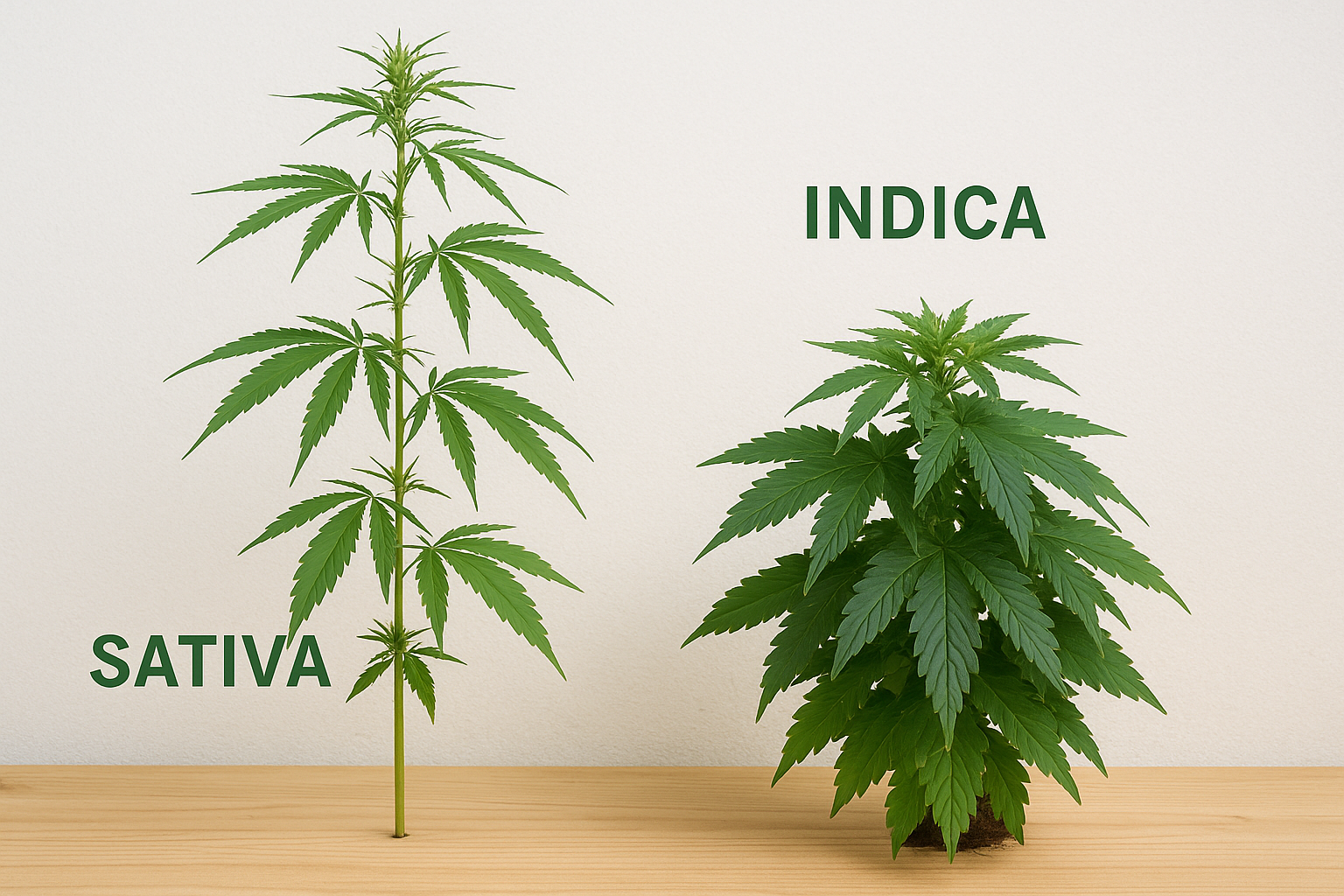
The plant's physical traits don't dictate the high you get, but they do signal something real about its genetic background and chemical tendencies.
Why the labels work as a consumer guide
The commercial cannabis market has run with indica and sativa as shorthand because, for most users, the categories deliver a reasonably consistent experience. When you walk into a dispensary and say you want something uplifting for a hike, the budtender reaches for sativas. When you say you want to sleep, they grab indicas. That pattern holds up often enough that the labels remain the fastest, most accessible way to start narrowing down your options.
Most strains on today's market are almost entirely hybrids, with very few pure indicas or sativas left. Still, understanding sativa vs indica effects gives you a useful mental model and a shared language to communicate what you actually want from a session. The labels are imperfect, but they are not meaningless.
How indica and sativa tend to feel
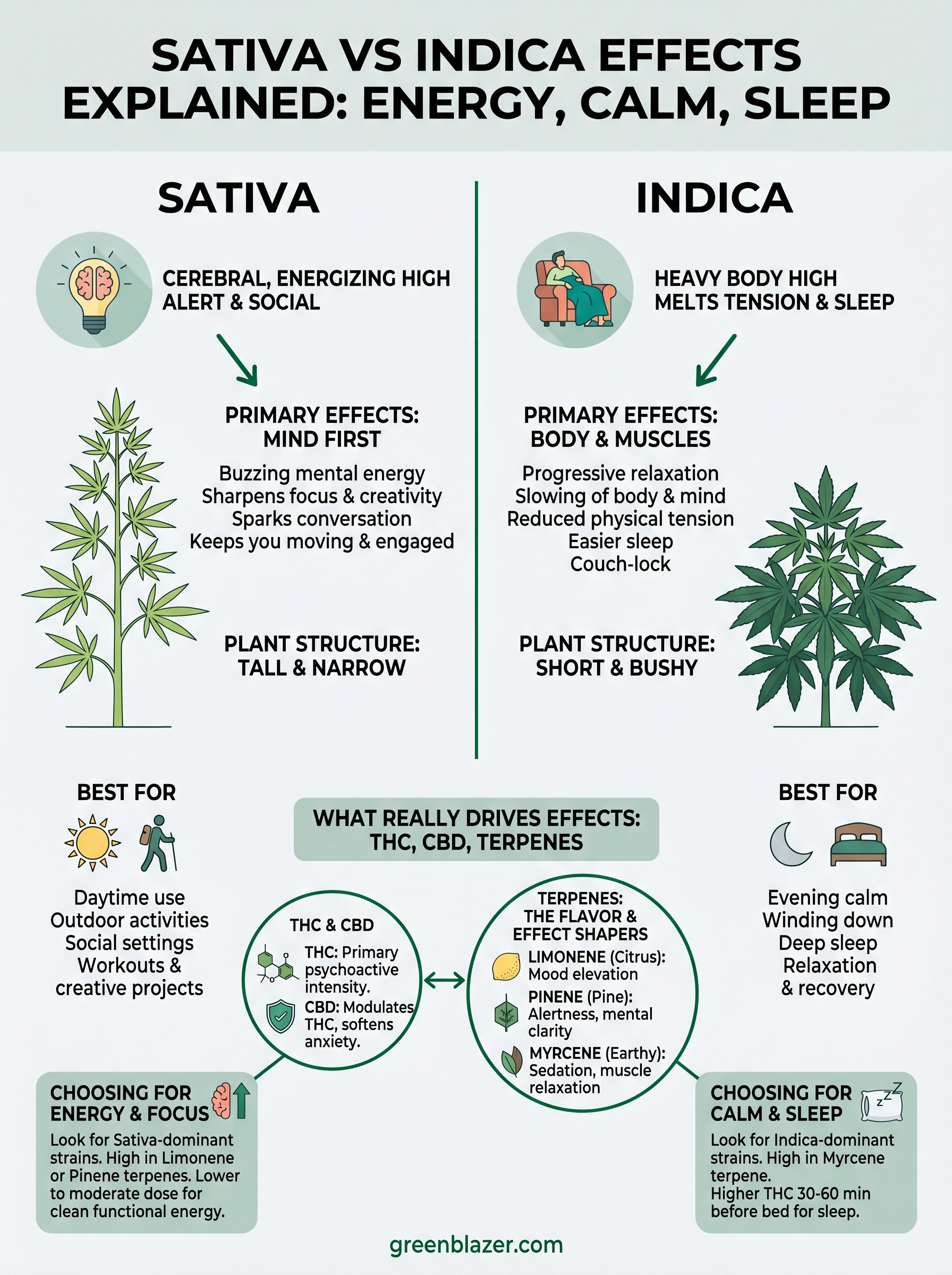
When you actually use these strains, the reported differences between sativa vs indica effects are fairly consistent across users. Sativas tend to hit your mind first, producing a buzzing mental energy that sharpens focus, sparks conversation, and keeps you moving. Indicas tend to settle into your body and muscles, producing a heavy warmth that slows you down and makes the couch feel like the obvious destination for the rest of the night.
What a sativa session feels like
Most people describe a sativa high as uplifting and mentally stimulating. Your thoughts tend to move faster, creative connections come more easily, and you stay engaged with your surroundings rather than retreating inward. Sativas fit naturally into daytime use, outdoor activities, and social settings where you want to stay sharp and present.
That mental lift is exactly why many users reach for a sativa before a workout, a creative project, or a long walk.
What an indica session feels like
Indica effects land in a noticeably different place. You feel a progressive relaxation spread through your muscles and a general slowing of both body and mind. Many users report reduced physical tension and easier sleep after an indica session. The experience is sometimes called couch-lock, where moving feels far less urgent than simply staying still and letting the high run its course through the evening.
What really drives effects: THC, CBD, terpenes
The indica vs sativa labels give you a starting point, but the actual chemistry inside the plant determines how your session feels. When you dig into what really drives sativa vs indica effects at the molecular level, three compounds come up consistently: THC, CBD, and terpenes.
THC and CBD ratios
THC is the primary psychoactive compound in cannabis, and it drives most of the mental and physical intensity you feel. CBD doesn't produce a high on its own, but it modulates how THC affects you, often softening anxiety and reducing the edge of an intense psychoactive response.
A strain with high THC and low CBD tends to hit harder and faster. Balanced THC-to-CBD ratios typically produce a smoother, more controlled experience that newer users often find easier to manage without feeling overwhelmed.
Terpenes: the real flavor and effect shapers
Terpenes are the aromatic compounds found in cannabis and many other plants, and they do far more than give each strain its distinct smell. Research suggests terpenes interact with cannabinoids to shape your overall experience. Here are three common ones and what they tend to produce:
- Myrcene: common in indicas; linked to sedation and muscle relaxation
- Limonene: found in uplifting sativas; associated with mood elevation
- Pinene: connected to alertness and mental clarity
The strain label on the package matters less than the actual THC, CBD, and terpene profile listed on the lab results.
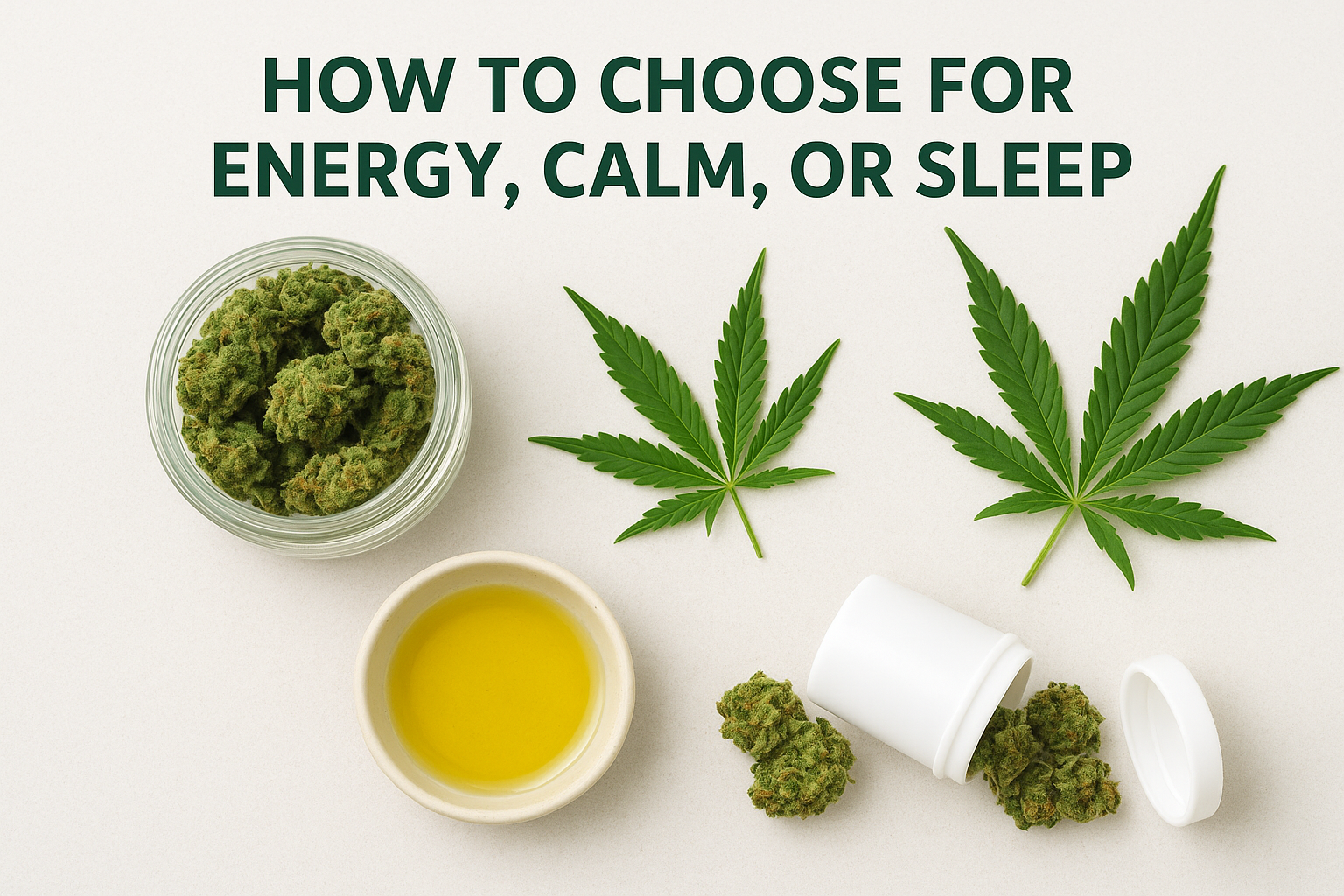
How to choose for energy, calm, or sleep
Matching sativa vs indica effects to your actual goal saves you from sessions that miss the mark. Before you pick a strain, identify what you need from the experience: sustained energy, reduced anxiety, or deep sleep. That single question narrows your options faster than any other factor.
Choosing for energy and focus
When you want to stay productive or social, look for a sativa-dominant strain with a terpene profile high in limonene or pinene. These combinations support mental clarity without pulling you toward sedation. Keep your dose on the lower side, since a THC-heavy sativa at a high dose can tip from energizing into anxious and counterproductive.
A moderate dose of a sativa-dominant strain tends to deliver the cleanest, most functional energy without the mental spiral that comes from overdoing it.
Choosing for calm or sleep
Indica-dominant strains with myrcene as the dominant terpene are your best starting point for winding down. For pure calm without heavy sedation, look for a balanced THC-to-CBD ratio. For sleep specifically, a higher THC indica taken 30 to 60 minutes before bed tends to shorten the time it takes to fall asleep and deepen relaxation through the first part of the night. Pay attention to lab-tested terpene and cannabinoid data on the package, since that tells you far more than the strain name alone.
Side effects, risks, and safer use tips
Knowing sativa vs indica effects helps you choose the right strain, but it also helps you avoid sessions that go sideways. Both strain types carry real risks, and understanding them lets you stay in control of your experience from the first inhale.
Common side effects to watch for
Sativa-dominant strains can trigger anxiety, racing thoughts, or mild paranoia, especially at higher doses or in users who are new to cannabis. Indica-dominant strains carry their own downsides: heavy sedation, dry mouth, and short-term memory interference are common complaints. Both types raise your heart rate temporarily, which matters if you have any underlying cardiovascular concerns.
Your risk of an uncomfortable experience drops significantly when you start with a low dose and give the effects 15 to 30 minutes to settle before taking more.
Tips for safer use
You reduce most risks by controlling dose and timing. Start low, go slow, and track how specific strains affect you across multiple sessions before assuming you know your tolerance. Keep water nearby to manage dry mouth, and avoid mixing cannabis with alcohol, since the combination amplifies impairment unpredictably. If you're new to a strain or a new product batch, treat it like your first time regardless of prior experience. Store your cannabis in sealed, childproof containers away from heat and light to maintain potency and prevent accidental access.
Key takeaways and next steps
Sativa vs indica effects come down to one core distinction: sativas tend to energize your mind, while indicas tend to relax your body. That split gives you a useful starting point, but the terpene and cannabinoid profile on the lab results tells you far more about what to expect than the strain label alone. Myrcene points toward sedation, limonene points toward mood lift, and your THC-to-CBD ratio controls how intense the ride gets. You reduce the risk of a bad session by starting low, tracking what works across multiple uses, and choosing your strain based on a clear, specific goal rather than a general mood. Whether you want daytime focus, evening calm, or deeper sleep, there is a strain profile that fits. Once you know what you want inside the cone, make sure the cone itself delivers a clean, even burn. Shop RAW pre-rolled cones at Green Blazer and put the right session together from start to finish.
