

The best herb grinder accessories are the ones that fix a specific problem with your grinder: a worn screen, a sticky build-up, a slow cone fill, a bag that leaks smell, or hand-grinding too much at once. If you roll often, start with a cone loader. If you grind daily, buy replacement screens and a cleaning kit. If you travel, get a sealed case. If you grind in volume, look at electric add-ons.
Most shop pages dump hundreds of small parts in front of you with no guidance on what fits or what matters. A seal costs a couple of dollars, a smell-proof bag costs eighty, and neither helps if it does not match your grinder or your habits. Compatibility is where most people waste money.
This guide ranks five accessory types, each with the same three checks: what it does, what to look for, and what it costs. It covers dry herb only. Fresh culinary herbs need a chopper or mortar, not a kief screen. Green Blazer is a Las Vegas distributor of RAW cones, so the cone loaders come first.
1. Cone loaders for filling pre-rolled cones
A cone loader packs ground herb into a pre-rolled cone in well under a minute, which makes it the best accessory for anyone who grinds and then fills cones. Green Blazer sells two kinds of RAW loaders, so this item draws on products we handle ourselves.
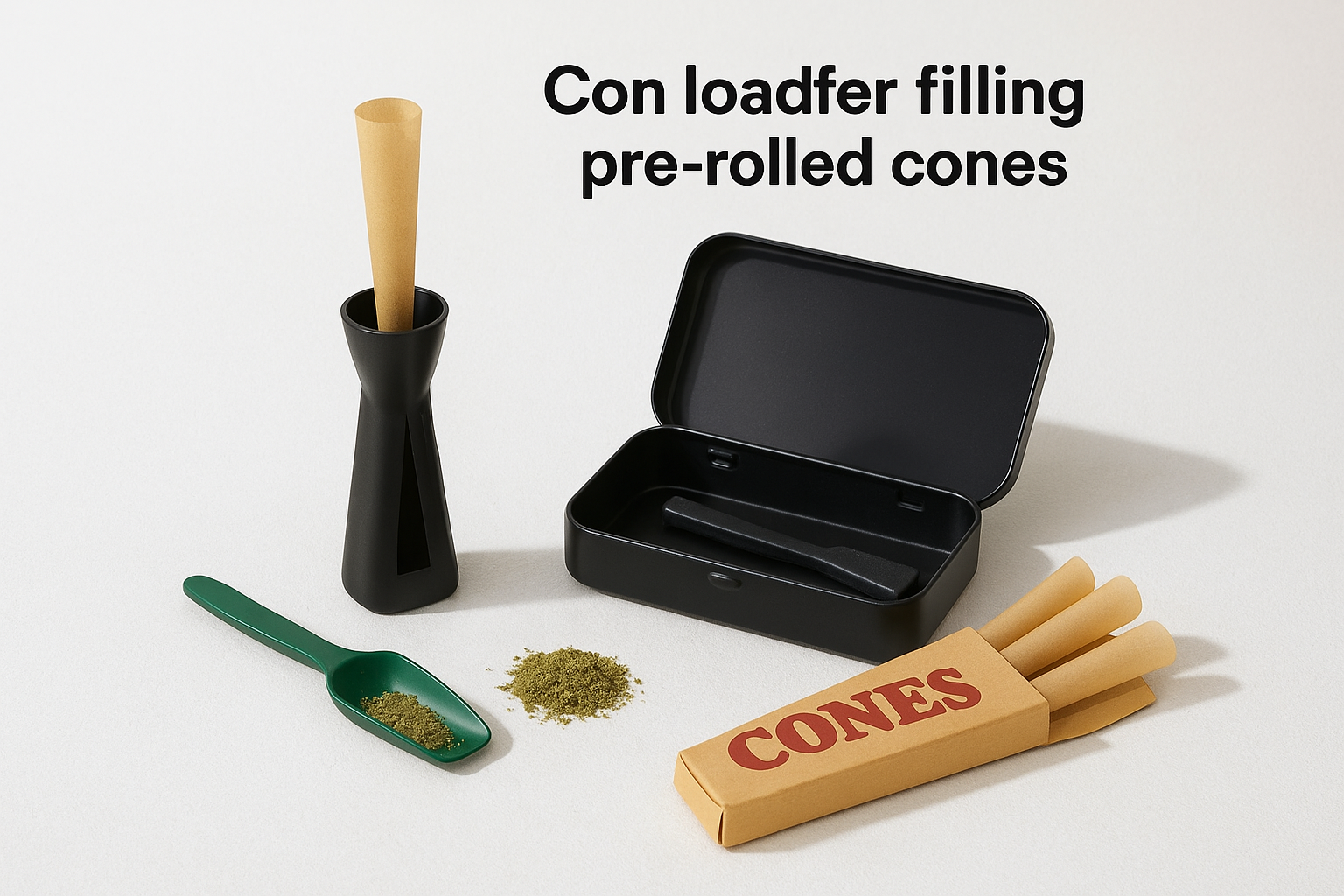
What it does
A loader holds the cone upright while you pour or scoop in ground herb. You pack the cone lightly and twist. Nothing spills, and the fill stays even, which is the point of getting a consistent grind from your grinder in the first place.
The RAW Cone Loader is an all-in-one kit with a funnel, packer tool, scoop card, screw-top storage tin and carrying case. A slotted guard ring controls how much material goes in, so you avoid overstuffing. The RAW Six Shooter for King Size cones fills up to six at once and doubles as cone storage.
What to look for
Check three things before you buy:
- Cone size: King Size cones are about 109mm and 1 1/4 cones about 84mm. A King Size Six Shooter with 1 1/4 cones sits too low and fills unevenly.
- Cones per pass: A single-cone loader suits casual use. A six-cone model suits batches.
- Included tools: A packer and scoop save you improvising with a pen cap.
Match the loader to your cone size first, because a loader that does not fit fills nothing well.
Cost and who it suits
Prices are low compared with most grinder add-ons. If you fill 12 cones for a group, a six-cone loader does it in two passes. Green Blazer backs its products with a 100% satisfaction guarantee, including free returns and replacements, and sells to buyers 21 and older.
| Loader | Price | Cone fit | Availability |
|---|---|---|---|
| RAW Cone Loader | $9.99 | King, 1 1/4, Lean, Special | In stock |
| RAW Six Shooter, King Size | $19.99 | King Size, 109mm | In stock |
| RAW Six Shooter, 1 1/4 | $19.99 | 1 1/4, 84mm | Currently out of stock |
2. Replacement screens, teeth and seals
Replacement parts are the cheapest way to extend a grinder's life, and a fresh screen often makes an old grinder work like new. Buy them when the original wears out, not before.
What it does
The screen on a 4-piece grinder filters kief into the bottom chamber. Once it clogs or tears, fine material stops passing through and the grind gets patchy. Teeth or grater discs dull over time and start crushing herb instead of shredding it. Seals and O-rings keep lids snug on models that use them.
Some brands call the grinding plates "mill plates," which is the same part under a different name. Wooden grinders have their own upkeep: a wood balm keeps the surface from drying out.
What to look for
Compatibility decides everything here. Use this checklist:
- Brand and model: Manufacturer parts fit best. Generic parts sometimes fit but can change how the grinder performs.
- Diameter: Match the grinder's size, such as 2 or 2.5 inches.
- Piece count: A 4-piece screen will not suit a 3-piece body.
- Mesh: Stainless 60 mesh is common. Too coarse lets plant matter through, and too fine clogs fast.
Replace the screen before you replace the grinder.
Cost and who it suits
Seals and O-rings run a couple of dollars. Screens and replacement plates usually land between about $10 and $13. If you own a quality aluminum grinder you use daily, spare parts cost far less than a new unit. If your grinder is cheap plastic, replace the whole thing instead, because teeth that crack or warp are hard to fix.
3. Cleaning brushes and pollen scrapers
A stiff brush and a pollen scraper keep the grinder turning smoothly and recover the kief that would otherwise stay stuck in the threads. Buy these first if your grinder feels gummy.
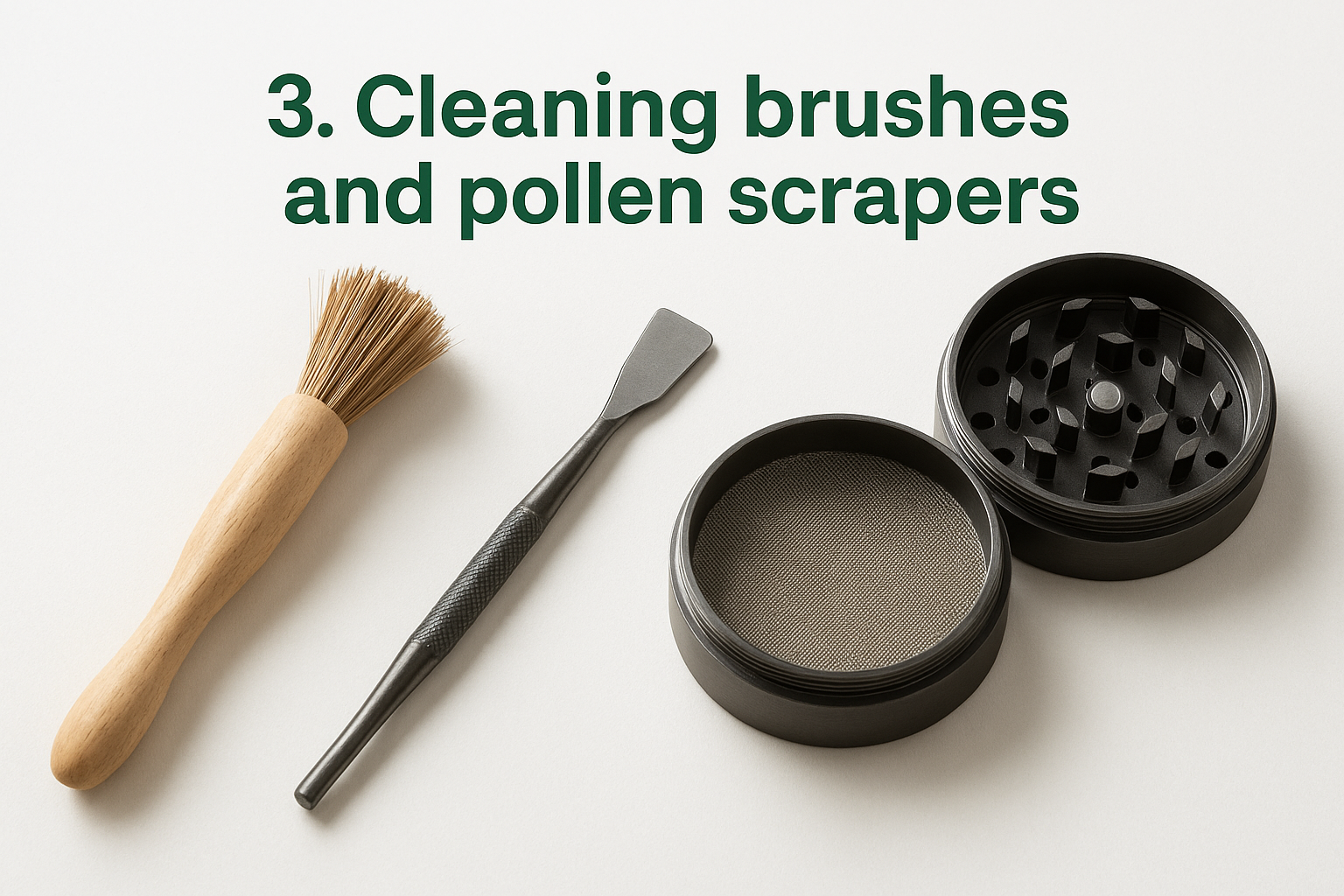
What it does
The brush clears teeth, threads and screen. The pollen scraper is a small flat tool that lifts kief from the bottom chamber so you can use it instead of wasting it. Together they stop resin from building up, which is the main reason grinders seize.
For a sticky grinder, put it in the freezer for 20 to 30 minutes. The resin turns brittle and releases easily. Then brush the screen and threads, and use a toothpick for packed spots.
What to look for
Pick tools that reach the places a grinder traps residue.
- Bristle stiffness: Firm bristles clear resin from teeth. Soft ones just move it around.
- Scraper edge: A flat, slightly flexible edge lifts kief without scratching the chamber.
- Alcohol compatibility: Metal parts can soak in isopropyl alcohol, then get scrubbed and rinsed. Dry them fully before use.
- Wood care: Do not soak a wooden grinder. Wipe it down and use a balm.
Freeze first, brush second, and alcohol only for what is left.
Cost and who it suits
Brushes and scrapers are some of the cheapest accessories on the market, and many 4-piece grinders include them. An all-in-one cleaner sells for around $7. Anyone who grinds sticky flower weekly needs this item. Occasional users can get by with a toothpick and a cotton swab.
4. Storage cases and smell-proof pouches
A storage case protects your grinder from dust, drops and moisture, and a good one holds spare screens and tools so nothing gets lost. It matters most if you carry your grinder out of the house.
What it does
Cases and pouches keep the grinder clean in a bag and shield it from damage. Tubes and pucks hold herb itself. Carbon-lined wallets and bags trap odor, and some have combination locks. Many cases include compartments for screens and cleaning tools, so one pouch carries the whole kit.
If you store herb at home, a child-resistant jar is worth the extra cost. Keep every grinder and stash away from children.
What to look for
Think about how you move around:
- Size: Match the case to your grinder's diameter, including any storage chamber.
- Lining: Carbon-lined fabric reduces smell. Plain pouches do not.
- Closure: Zippers and combination locks beat loose flaps.
- Compartments: Dedicated slots keep spare parts organized.
Buy the smallest case that holds your grinder and one spare screen.
Cost and who it suits
Prices stretch widely. A small keychain stash costs about $10. Storage tubes sit around $13. Carbon-lined wallets start near $25. A full smell-proof bag with a session kit can reach about $80. Travelers and shared-housing users get real value from the pricier options. If your grinder stays on a shelf, a basic pouch is enough.
5. Electric and automatic add-ons
Electric add-ons save the most effort when you grind or fill a lot at a time. They are the least necessary item here for casual users and the most useful for high-volume ones.
What it does
Battery-powered or USB-charged electric grinders do the twisting for you and give a consistent grind in seconds. Automatic cone fillers go further by filling cones mechanically. For commercial output, Green Blazer carries a Pre Roll Machines collection compatible with RAW cones, built for cultivators and pre-roll manufacturers.
What to look for
Concentrate on how it runs and how it cleans:
- Battery: A 450mAh unit is typical for compact electric grinders. Check for USB charging.
- Removable cup: Without one, cleaning gets frustrating.
- Stickiness: Dense, resinous flower can jam motors. Check whether the model handles it.
- Cone compatibility: Automatic fillers must match your cone size.
Electric saves time only if the grinder is easy to clean afterward.
Cost and who it suits
Compact electric grinders sell for about $23. Automatic cone fillers cost more, and commercial machines cost far more. Frequent rollers and people with hand pain benefit most. A manual grinder plus a cone loader covers everyone else for under $30.
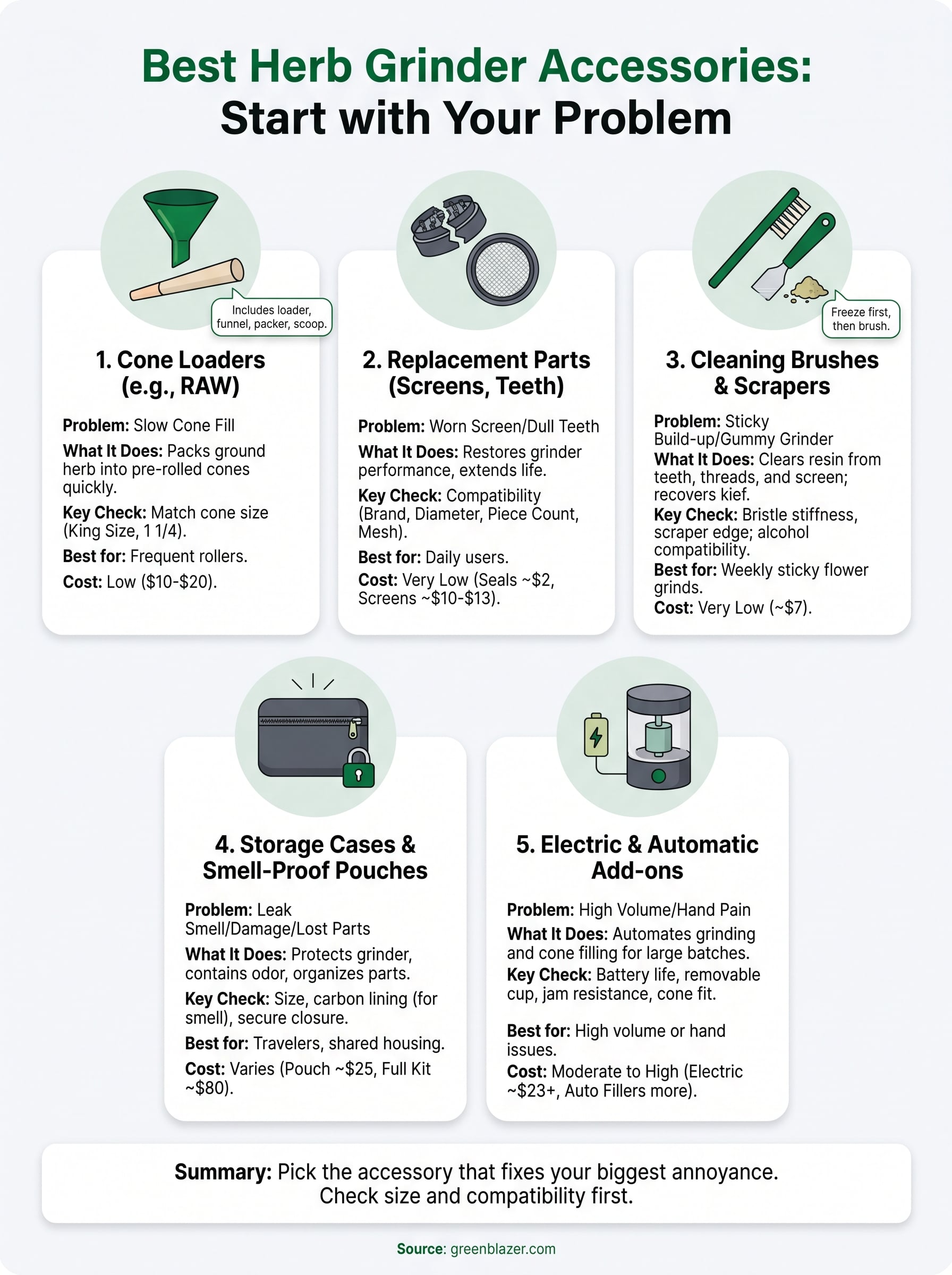
Start with the problem you actually have
Pick the accessory that fixes your biggest annoyance. A cone loader speeds up filling, fresh screens restore a worn grinder, a brush and scraper beat resin, a case protects what you carry, and electric add-ons handle volume. Check size and compatibility before you pay for anything.
If filling cones is your bottleneck, start with the RAW Cone Loader kit from Green Blazer. It ships quickly and discreetly, and it comes with a 100% satisfaction guarantee.
