

Whether you're packing a RAW cone for a weekend session or storing a larger stash for regular use, knowing how long do dried herbs stay fresh matters more than most people think. Herb that's lost its potency or picked up moisture won't burn right, won't taste right, and won't deliver the experience you're after. Freshness directly affects everything from flavor and aroma to how evenly your cone burns.
Most properly dried herbs hold up well for six months to a year when stored correctly, but that window shrinks fast under the wrong conditions. Heat, light, humidity, and air exposure are the usual culprits. At Green Blazer, we spend a lot of time helping customers get the best possible smoke from their RAW cones, and that starts with what you're putting inside them.
This article breaks down the real shelf life of dried herbs, how to tell when they've gone past their prime, and the storage methods that actually work to keep them fresh longer.
Why dried herbs lose freshness over time
Dried herbs don't expire the way perishable food does, but they do degrade steadily. Potency, aroma, and flavor all fade as the active compounds in the plant material break down over time. Understanding what drives that breakdown helps you make smarter choices about storage, which is exactly what determines how long do dried herbs stay fresh in your own setup.
The four main degradation factors
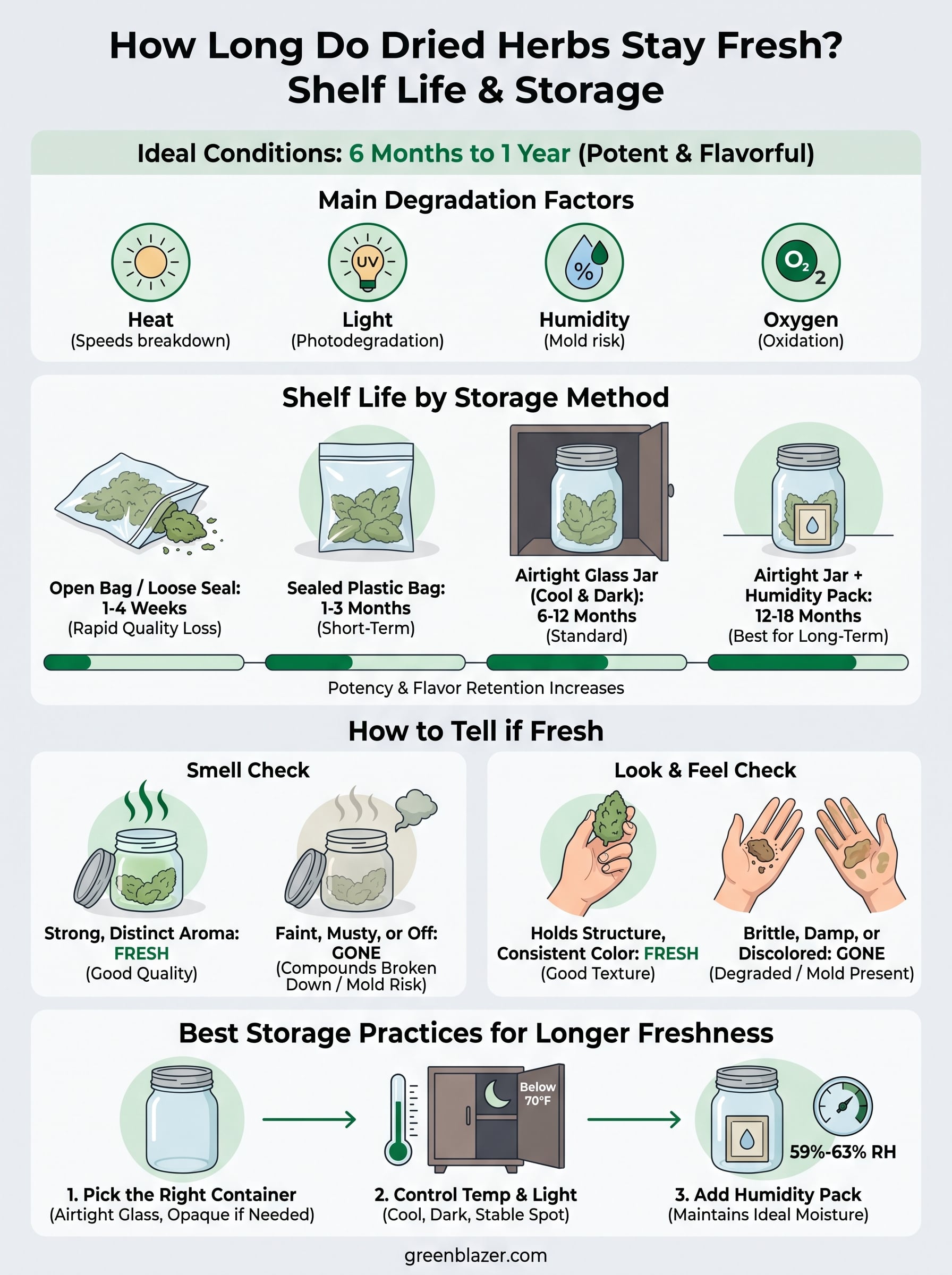
Four specific environmental factors drive most of the freshness loss you'll see with dried herbs, and they often work together. Each one attacks your stash differently, but they all lead toward the same result: a dull, harsh, uneven burn that doesn't deliver the experience you were expecting when you packed your cone.
- Heat speeds up the breakdown of terpenes and cannabinoids, stripping your herb of flavor and potency faster than almost anything else.
- Light (especially UV exposure) triggers photodegradation, which attacks the chemical structure of the compounds responsible for aroma and effect.
- Humidity introduces excess moisture, which encourages mold and mildew growth and causes herb to burn unevenly inside your cone.
- Oxygen causes oxidation, a process that steadily flattens the aroma and weakens the overall quality of your stash over time.
If your storage setup exposes your herb to even two of these four factors consistently, you'll notice a sharp decline in quality within weeks rather than months.
What happens to moisture content over time
Fresh-dried herb performs best when the surrounding environment holds a relative humidity between 59% and 63%. When that balance tips in either direction, problems follow quickly. Too dry, and your herb becomes brittle, burns too hot, and sheds its natural oils. Too moist, and the burn turns sluggish, the flavor goes flat, and you risk mold forming in your stash before you even notice anything looks wrong.
The organic compounds in dried herbs, including terpenes and essential oils, are volatile by nature. They evaporate and break down through repeated air exposure, even at normal room temperature. Every time you open your storage container, you let fresh oxygen in and allow those volatile compounds to escape. Over weeks and months, that constant exchange adds up to real quality loss, even if your stash never sees direct heat or sunlight.
How long dried herbs stay fresh in real life
The actual answer to how long do dried herbs stay fresh depends heavily on your storage setup. Under ideal conditions, most dried herbs remain potent and flavorful for six months to one year. Push that window further with controlled humidity and an airtight container, and some herb holds up well for 18 months or longer without significant quality loss. The problem is that most people don't store herb under ideal conditions.
Shelf life by storage method
Your storage method makes a bigger difference than most people expect. Switching from a loosely sealed bag to an airtight glass jar in a cool, dark location can double or even triple how long your herb stays usable. Here's a realistic breakdown based on common storage approaches:
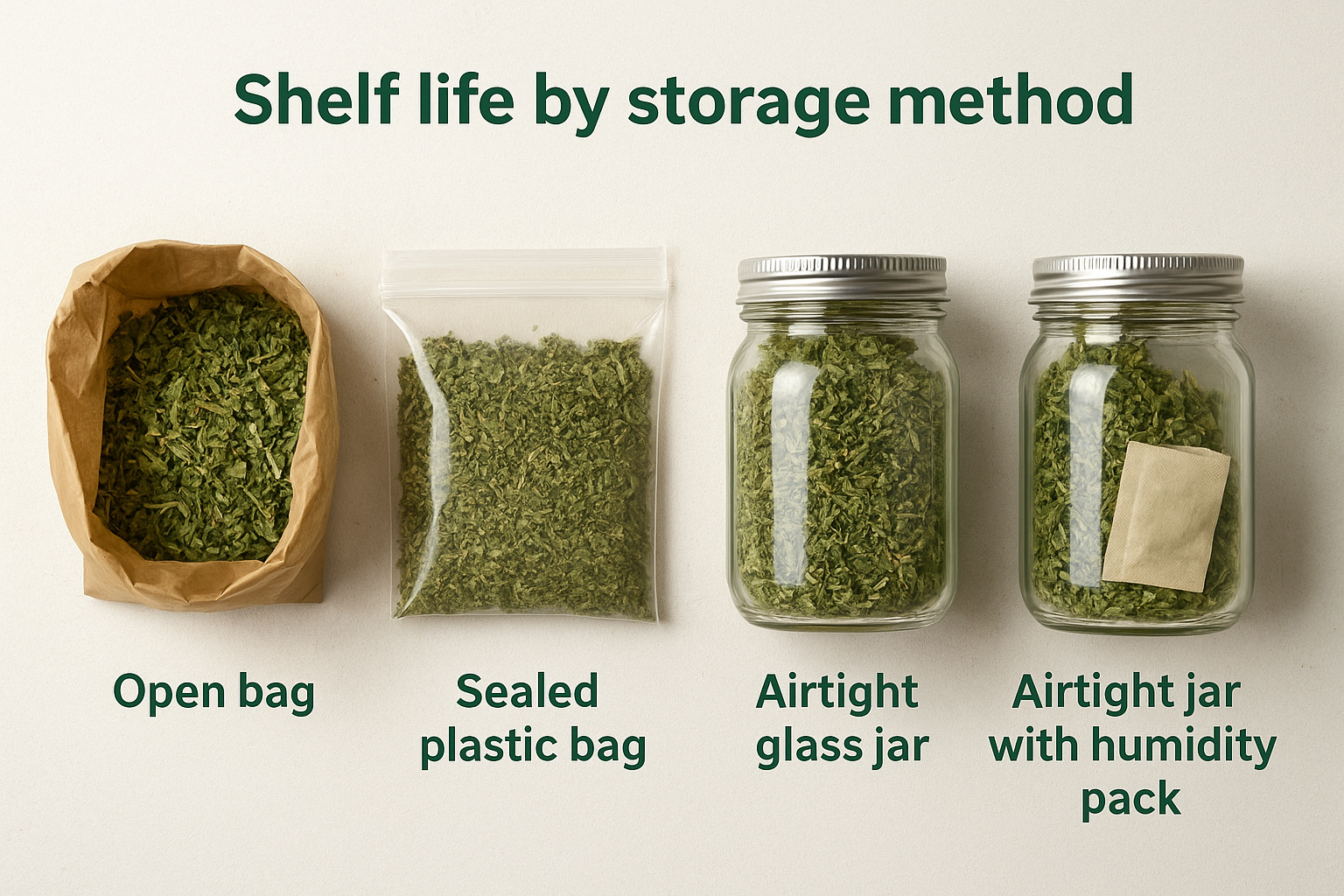
| Storage Method | Estimated Fresh Window |
|---|---|
| Open bag or loosely sealed container | 1 to 4 weeks |
| Sealed plastic bag, room temperature | 1 to 3 months |
| Airtight glass jar, cool dark location | 6 to 12 months |
| Airtight jar with humidity pack, dark location | 12 to 18 months |
The single biggest upgrade you can make is moving from plastic bags to airtight glass jars with a humidity pack inside.
What shortens the timeline
Several common habits cut your freshness window down fast. Leaving your stash near direct sunlight, storing it close to a heat source like a stove or electronics, or reopening your container multiple times daily all accelerate degradation noticeably. If your storage spot runs warm and stays poorly sealed, expect noticeable quality loss within a few weeks, regardless of how well the herb was dried before you ever brought it home.
How to tell if dried herbs are still safe and potent
You don't always need to track dates to know whether your stash is still worth using. Your senses give you the most reliable read on quality, and a quick check before you pack your RAW cone can save you a bad session. Knowing how long do dried herbs stay fresh is useful context, but the actual condition of your herb tells the real story.
Check the smell first
Smell is the fastest and most telling indicator of freshness. Fresh, quality herb carries a strong, distinct aroma with layers you can pick up immediately when you open the container. If the smell is faint, flat, or has shifted to something musty or off, that's a clear sign the volatile compounds have broken down significantly. A musty or damp smell specifically signals mold risk, and you should not use herb that smells that way.
If you open your jar and smell almost nothing, the herb has likely lost most of its useful compounds regardless of how it looks.
Look and feel the herb
Visual and tactile checks confirm what your nose already suspects. Fresh herb holds its structure, shows consistent color, and doesn't crumble to dust when you handle it lightly. Herb that's too dry will fall apart and burn too fast inside your cone, pulling harshly. On the other side, herb that feels damp or sticky may carry mold, even if you can't see visible growth. Look for any white, gray, or unusual discoloration, which indicates mold or mildew growth you should not ignore.
How to store dried herbs so they stay fresh longer
Good storage habits directly extend how long do dried herbs stay fresh in your specific setup. Most people underestimate how much container choice and storage location affect the result, and the fixes are simpler than you might expect.
Pick the right container
Glass jars with airtight lids outperform every other common option. Plastic bags allow air and moisture to pass through over time, and metal containers transfer odors into your herb. Use a wide-mouth Mason jar to keep oxygen out without absorbing smells. Avoid clear glass in any area that receives regular light exposure.
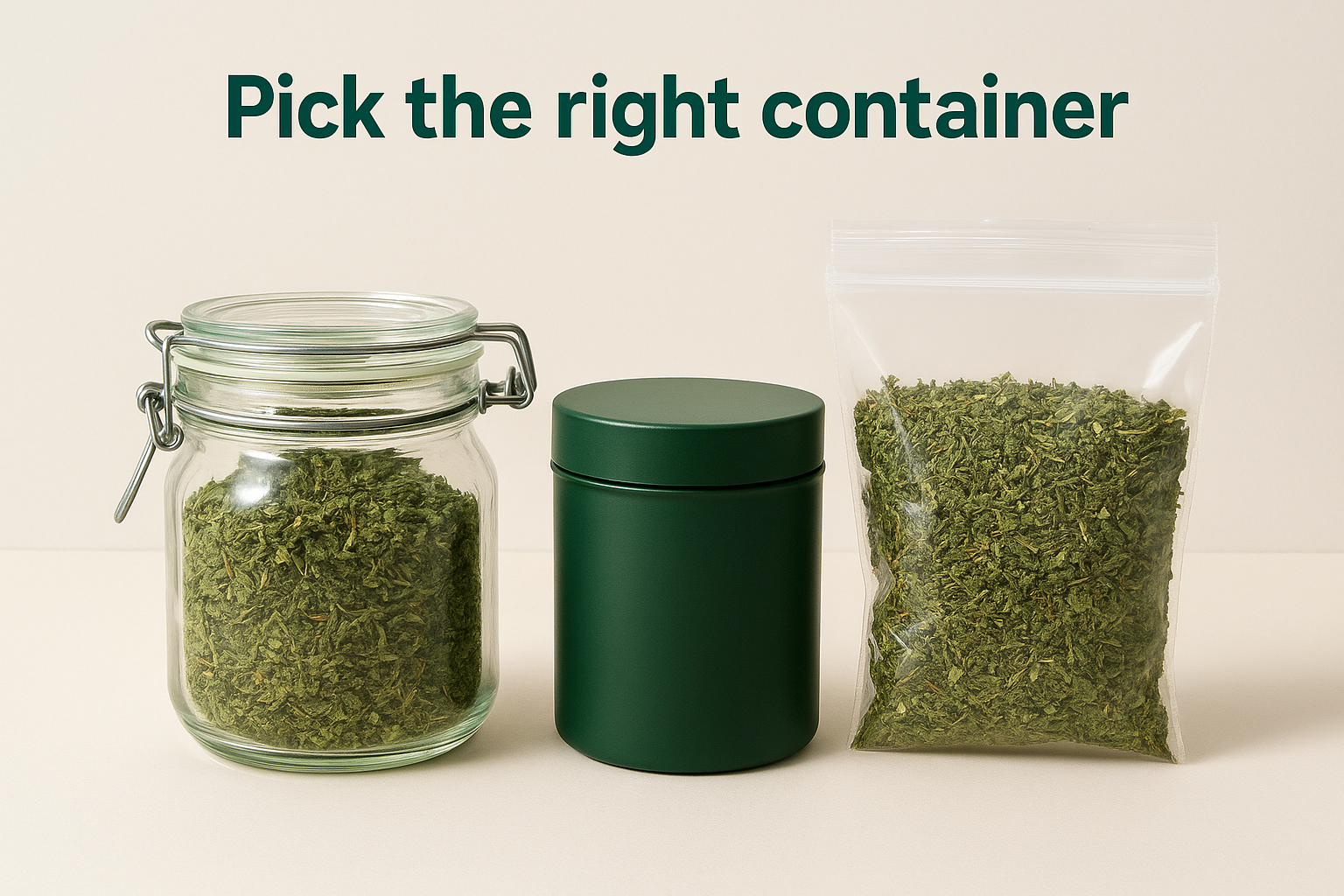
- Airtight glass jar: best overall choice for most setups
- Opaque container: ideal when storing in areas with light
- Plastic bags: avoid for anything beyond very short-term storage
Control temperature and light
Cool, dark storage spots are the most effective tool you have for protecting your stash. A drawer or cabinet away from any heat source works well for most people. Consistent temperature matters more than most expect, because fluctuations between warm and cool create condensation inside your container, which raises humidity and creates conditions where mold can develop quickly.
Keep your herb at a stable temperature below 70°F and away from direct light entirely.
Add a humidity pack
Boveda or similar humidity control packs maintain the 59% to 63% relative humidity range your herb needs without any active effort on your part. Simply place one pack directly inside your jar alongside your stash and let it work passively. Replace it when the pack feels fully rigid, which signals it has exhausted its moisture-regulating capacity.
You can find humidity packs in multiple sizes designed for different container volumes, so match the pack size to the jar you're actually using.
Common questions and mistakes with dried herbs
Even with good information available, a few common mistakes still cut the freshness window short. Understanding what actually works versus what just sounds reasonable is the fastest way to protect your stash. Two questions come up constantly, and both carry misconceptions worth correcting before they cost you quality herb or a bad session.
Can you revive dried-out herb?
If your herb has gone brittle, you can recover some texture by placing a small humidity pack inside your closed jar for 24 to 48 hours. This adds controlled moisture without overdoing it. Avoid orange peels, bread slices, or damp paper towels, which are frequently suggested but introduce bacteria and uneven moisture that cause more problems than they solve.
Rehydrating restores texture but cannot recover terpenes or potency that have already broken down from long exposure.
Recovery only works when your herb is mildly dried out, not when it has degraded completely. If the herb crumbles to powder with light pressure, meaningful recovery is unlikely regardless of what method you try.
Should you refrigerate or freeze your herb?
Refrigerators introduce excess humidity and frequent temperature swings each time you open the door, which accelerates mold growth faster than a simple cabinet would. Freezing carries separate risks. Ice crystals form on trichomes during freezing, and repeated freeze-thaw cycles break them off entirely, removing the compounds that drive potency and flavor. For anyone asking how long do dried herbs stay fresh, these two storage options consistently underperform what a stable cabinet setup delivers.
A cool, dark cabinet with an airtight glass jar and a humidity pack consistently outperforms both options. Your simplest path is always the most stable storage environment you can create without needing specialized equipment.
Next steps for a fresher stash
You now have a clear picture of how long do dried herbs stay fresh and what actually determines where your stash lands within that range. Storage container, location, and humidity control are the three variables that matter most, and improving any one of them extends your freshness window meaningfully. Start with the simplest upgrade first: move your herb into an airtight glass jar and keep it somewhere cool and dark.
From there, add a humidity pack and stop storing your stash near heat sources or in areas with regular light exposure. Small, consistent habits protect potency and flavor better than any single purchase or specialized setup. When you're ready to pack your freshest herb, you want a cone that burns clean and even every time. Shop RAW pre-rolled cones at Green Blazer and get the paper that matches the quality of what you're putting inside it.
