
A perfectly ground flower makes the difference between a smooth, even-burning cone and one that clogs, canoes, or barely stays lit. Whether you've been smoking for years or just packed your first pre-rolled cone last week, knowing how to grind weed the right way is a fundamental skill that directly affects your smoking experience.
The good news? You don't necessarily need fancy equipment. A quality grinder is the gold standard, but there are plenty of effective workarounds when you're caught without one. From classic herb grinders to scissors, shot glasses, and even your bare hands, each method has its pros and cons depending on your situation.
At Green Blazer, we sell millions of RAW pre-rolled cones every year, and we hear the same thing from customers all the time: a consistent grind is the #1 factor in getting a cone that burns slow and smooth. That's why we put together this guide covering eight proven methods to break down your flower, with or without a grinder, so you can load up your next cone with confidence.
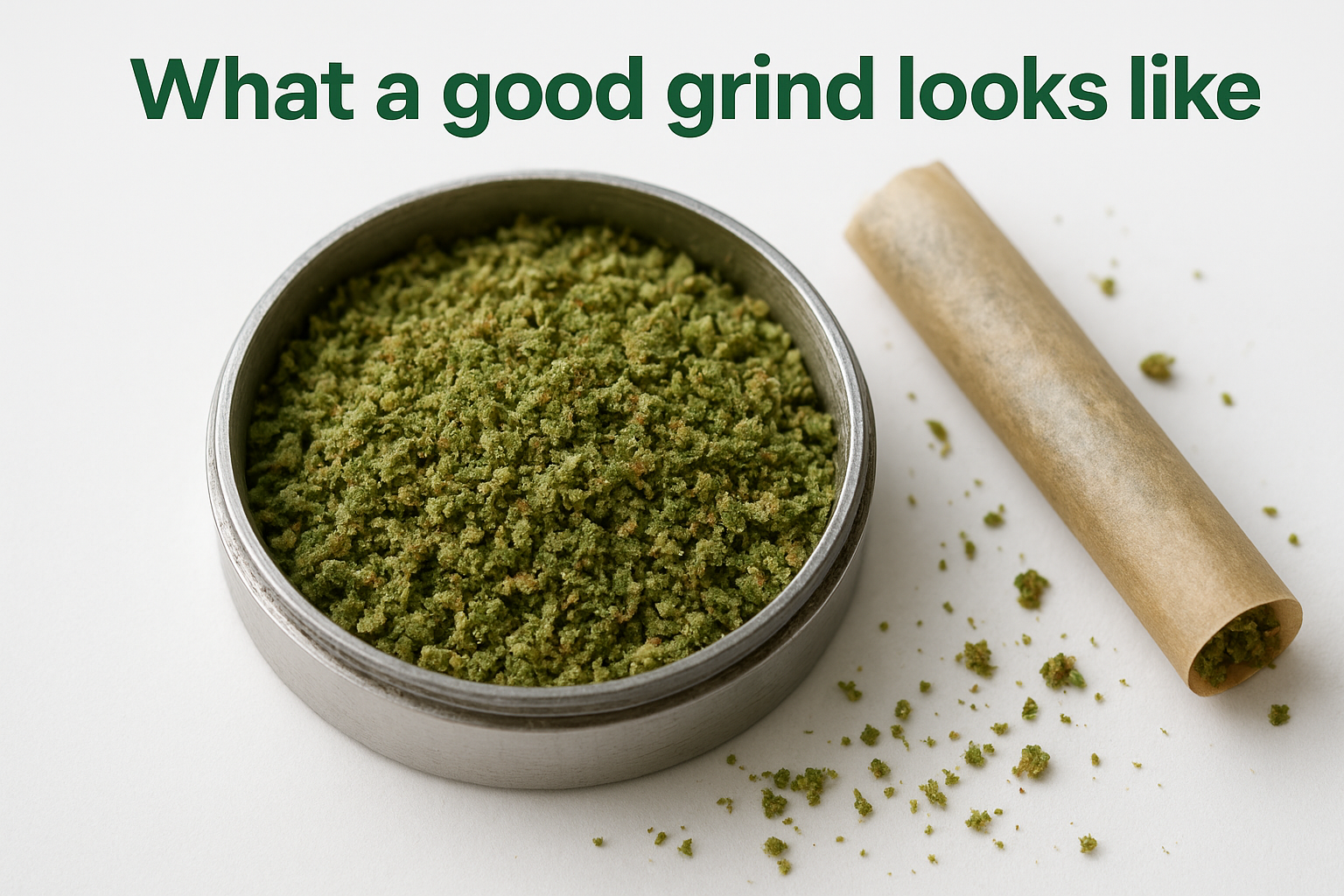
What a good grind looks like
Before you learn how to grind weed with any method, you need to know what you're actually aiming for. A proper grind sits at medium-fine - think coarse sand or table salt rather than powder. You want the flower broken down enough to pack evenly into a cone without being so fine that it turns to dust and chokes your airflow.
Texture and consistency
The texture of your ground flower controls how air moves through your cone and how evenly the whole thing burns. Too chunky, and you'll get air pockets that cause canoeing. Too fine, and you'll fight a tight, restricted draw the entire session. The sweet spot is a consistent, medium grind where every piece is roughly the same size.
Uneven grind is the single most common reason a pre-rolled cone burns unevenly or dies out mid-session.
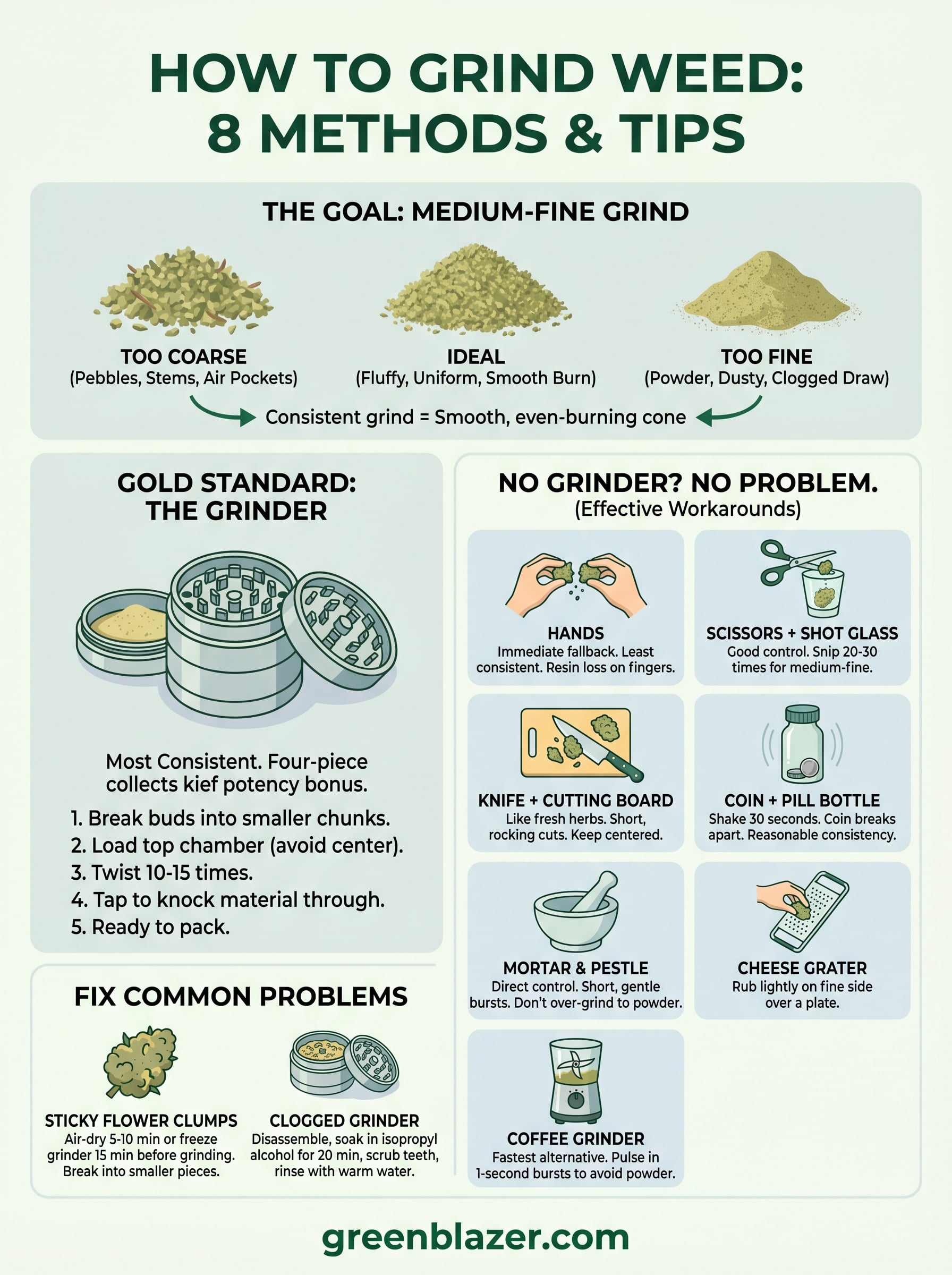
Here's a quick reference for what different grind textures produce:
| Grind texture | What it looks like | Result in a cone |
|---|---|---|
| Too coarse | Pebbles, visible stems | Air pockets, uneven burn |
| Ideal | Fluffy, coarse sand, uniform | Smooth, slow, even burn |
| Too fine | Near-powder, dusty | Clogged draw, harsh hit |
Signs your grind is ready to pack
You'll know your flower is ground correctly when it holds a loose, fluffy shape but still falls apart easily when you touch it. The material should not clump together or stick to your fingers. Dry flower always grinds more evenly than sticky or freshly harvested bud, so if your material feels damp, let it sit in open air for a few minutes before you start.
A well-ground batch should fill a standard king size cone without forcing the material down or needing heavy tamping. If you find yourself pressing hard to get enough in, your pieces are still too large.
Method 1: grind weed with a grinder
A grinder is the fastest and most consistent way to learn how to grind weed properly. Most grinders come in a three or four-piece design, with interlocking diamond-shaped teeth that shred your flower into a uniform grind without bruising or compressing it. If you own one, this is always your first option.
A four-piece grinder with a kief catcher is the best everyday tool for packing pre-rolled cones, since you collect a potency bonus at the bottom with every single use.
Step-by-step grinder instructions
Start by breaking larger buds into smaller chunks with your fingers before loading the grinder. Place the pieces between the teeth, avoiding the center hole where the magnet sits, since flower there never gets ground. Then work through these steps in order:
- Load the top chamber with your broken-down bud pieces
- Place the lid on top and twist 10 to 15 times until resistance drops noticeably
- Tap the grinder firmly against your palm to knock any stuck material through the screen holes
- Open the middle chamber and your flower is ready to pack directly into your cone
- Check the kief catcher at the bottom periodically and sprinkle it on top of packed cones for extra effect
Methods 2–4: hands, scissors, and knife board
When you need to know how to grind weed without a dedicated tool, these three methods use items you already have nearby. None of them match a grinder for consistency, but each one gets the job done in a pinch.
Method 2: Your hands
Breaking flower by hand is the most immediate fallback available. Use your thumb and index finger to pull the bud apart into small, roughly even pieces. The downside is that resin coats your fingers, so you will lose some potency in the process.
Your hands produce the least consistent grind of all eight methods, so use this only when nothing else is available.
Method 3: Scissors and a shot glass
Drop your flower into a shot glass and snip repeatedly with scissors. The glass keeps the material contained while the scissors give you real control over grind size. Follow these steps:
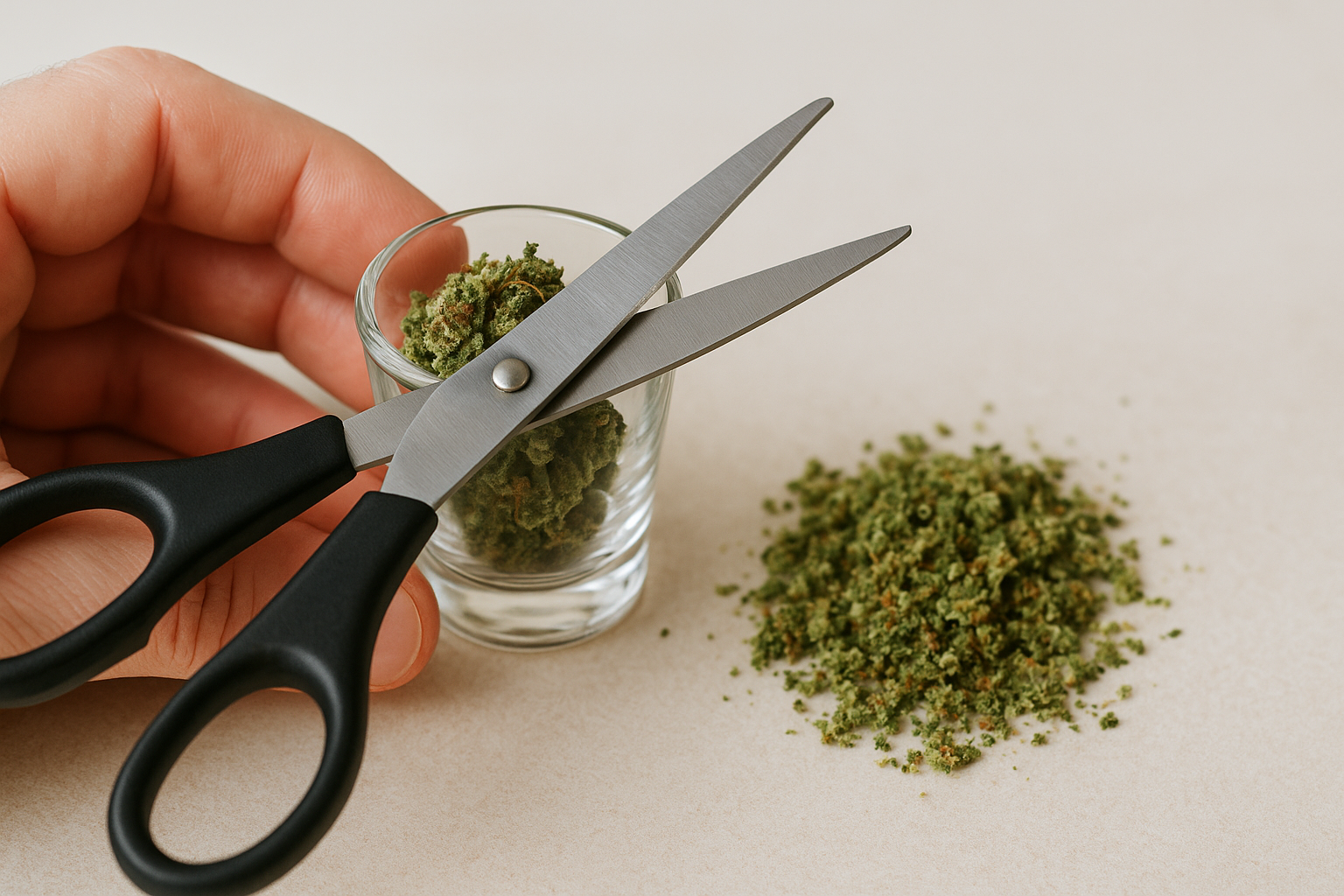
- Fill the glass about halfway with loosely broken bud
- Snip 20 to 30 times until you reach a medium-fine texture
- Pour the ground material directly into your cone
Method 4: Knife and cutting board
Place bud on a clean, dry cutting board and chop with a sharp knife using short, rocking cuts across the pile, exactly like you would with fresh herbs.
Keep the pile tight and centered as you work so pieces don't scatter across the board. Rinse the knife and board immediately after to avoid residue buildup between uses.
Methods 5–8: pill bottle coin, mortar, grater, coffee
These four methods cover less obvious household tools that still help you figure out how to grind weed when a standard grinder isn't around. Each one works best with dry, cured flower rather than sticky fresh bud, so leave your material out in open air for a few minutes if it feels damp.
Methods 5 and 6: Pill bottle with coin, mortar and pestle
Drop your flower into a clean, empty pill bottle, toss in a small coin, cap it tightly, and shake for about 30 seconds. The coin breaks the bud apart through repeated impact, giving you a reasonably consistent medium grind with almost no effort. A mortar and pestle gives you more direct control: press and twist the flower in short, gentle bursts rather than grinding hard, which turns material to powder quickly.
Check the grind every few bursts with a mortar and pestle so you don't overshoot the texture you're aiming for.
Methods 7 and 8: Cheese grater, coffee grinder
Rub your bud lightly across the fine side of a clean cheese grater over a plate to catch everything that falls through. A blade-style coffee grinder is the fastest alternative tool you'll find in most kitchens, but pulse it in one-second bursts only, checking between each pulse so you don't over-process the flower into unusable dust.
Fix common grinding problems
The method you pick for how to grind weed matters, but even the right technique hits trouble occasionally. The three most common issues are sticky flower, uneven texture, and a clogged grinder, and each one has a fast, direct fix.
Flower sticks together or clumps
Sticky or moist bud clumps instead of separating cleanly regardless of which method you use. Place your flower on a clean surface and air-dry it for 5 to 10 minutes before you try again. If you are using a grinder, load it and put the whole thing in the freezer for 15 minutes first; the cold firms up the resin so the teeth cut through much more cleanly.
Moisture is the single most common reason a grind ends up clumpy rather than fluffy and uniform.
After the air-dry or freeze step, break the bud into smaller chunks by hand before loading your tool again. Starting with smaller pieces reduces the work your grinder or scissors have to do and gets you to an even texture faster.
Grinder is clogged or stiff
Resin buildup between the teeth makes your grinder slow and hard to turn. Disassemble the grinder and drop each piece into isopropyl alcohol for 20 minutes, then scrub the teeth with an old toothbrush and rinse with warm water.
Your grinder will spin smoothly again after this cleaning. Run a quick test grind with a small amount of dry flower to confirm the teeth catch and release properly before your next full session.
Ready to pack your cone
Now that you know how to grind weed using eight different methods, the last step is putting that ground flower to work. A medium-fine, fluffy grind packs cleanly into any pre-rolled cone, fills evenly from tip to base, and burns slow without needing constant relighting or extra tamping. Pick the method that fits your situation, dry your flower if it feels sticky, and take an extra 30 seconds to check your texture before you load.
Your choice of cone matters just as much as your grind. RAW pre-rolled cones use an unbleached paper and an acacia gum line that burns slow and clean, which means a proper grind shows its full benefit every time. If you want consistent results from every session, stock up on cones built to match your technique and visit Green Blazer to find the RAW cone size that fits your next pack.
