

The pipe vs joint debate has been going on for decades, and there's still no universal winner. Both methods get the job done, but they do it differently, and those differences matter more than most people realize. From how hard each one hits to how much flower you burn through in a session, choosing between the two comes down to what you actually care about: efficiency, flavor, cost, convenience, or all of the above.
At Green Blazer, we're the largest authorized RAW cone retailer in the U.S., so we obviously have a stake in the joint side of this argument. But we're not here to sell you on one method over the other. We're here to break down the real differences, backed by what we've learned selling over 100 million cones to everyday smokers and commercial producers alike.
This guide covers everything you need to make a confident choice: hit intensity, waste, cost per session, health considerations, and practical convenience. By the end, you'll know exactly which method fits your smoking style, and where a quality pre-rolled cone might change the equation entirely.
Pipe vs joint at a glance
When you compare pipe vs joint, the most immediate difference is reusability. A pipe is a fixed, reusable device with a bowl you pack with flower each session. A joint is a single-use wrap made from rolling paper or a pre-rolled cone, filled once and smoked until it's gone. Both deliver cannabinoids through combustion, but the mechanics behind each method change how your session feels from start to finish.
How a pipe works
A pipe channels smoke through a short stem and a bowl, usually with a carb hole on the side that controls airflow when you cover and release it with your thumb. You pack the bowl with ground flower, light it while drawing air through the mouthpiece, and release the carb to clear the smoke. The key advantage is on-demand use: you take a hit, set the pipe down, and nothing burns between pulls. That alone makes a pipe one of the most material-efficient options available for solo sessions.
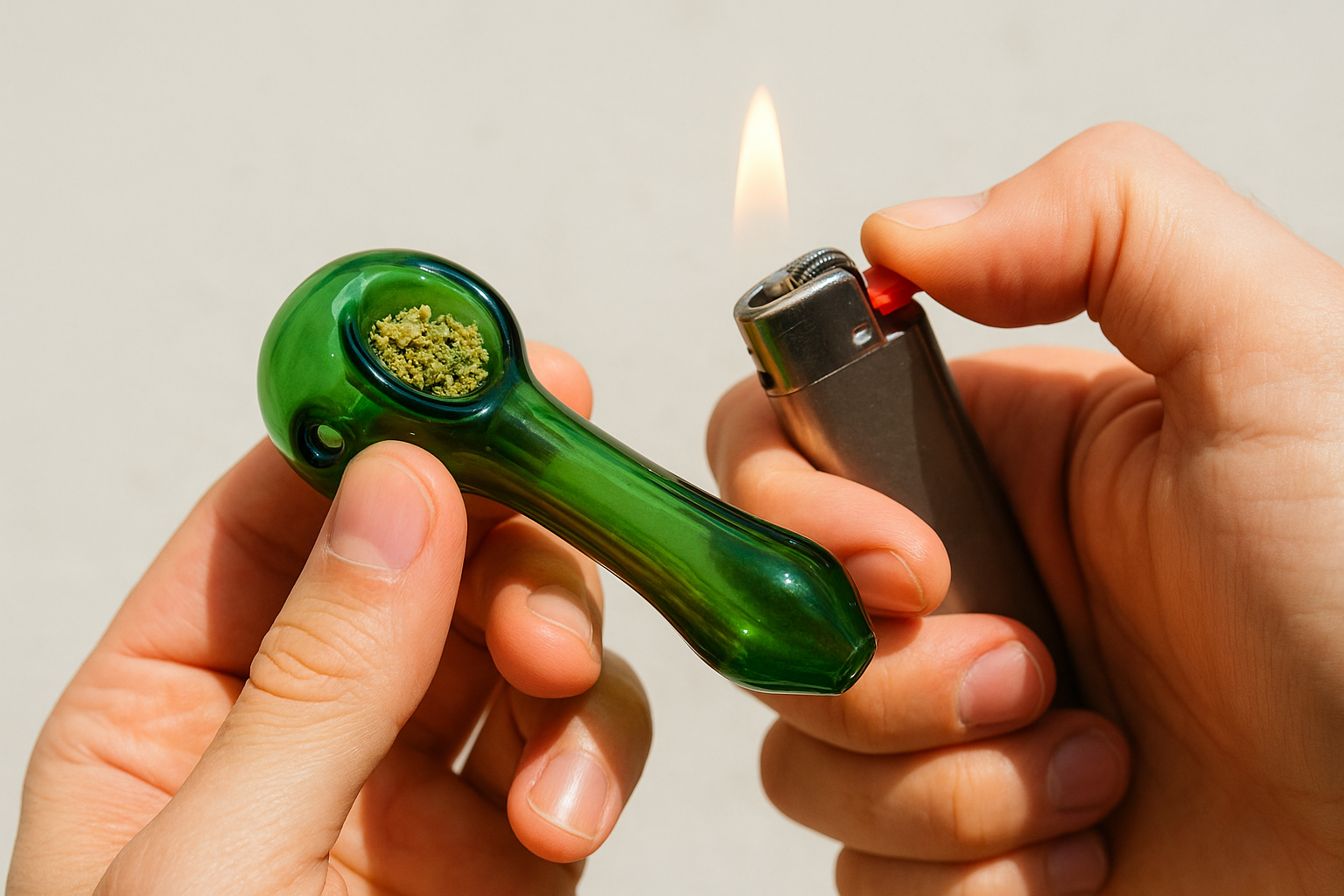
A pipe burns your flower only when you're actively pulling from it, so nothing goes to waste between hits.
How a joint works
A joint burns from the moment you light it until it's done or you put it out. The paper or cone holds your ground flower in a consistent shape, and the burn travels steadily from the tip toward your fingers throughout the session. Pre-rolled cones remove the need for any rolling skills entirely, which makes this method accessible to almost anyone. The tradeoff is that sidestream smoke continues to come off the cherry between your hits, which adds up over a full session.
| Feature | Pipe | Joint |
|---|---|---|
| Reusable | Yes | No |
| Requires rolling | No | Yes (or use a pre-rolled cone) |
| Burns between hits | No | Yes |
| Cleanup required | Yes | No |
Neither method is objectively better than the other, and your choice comes down to how you want to spend your time, your flower, and your money per session. The sections below break each factor down so you can make the call that fits how you actually smoke.
Why the method changes the high
The delivery method shapes your high more than most people expect. Temperature, airflow, and how long the material burns all affect which compounds reach you and in what concentration. When you stack up pipe vs joint, the differences in combustion mechanics translate directly into how fast the effects hit and how long they last.
Pipe hits: concentrated and immediate
A pipe delivers shorter, denser pulls because you control each hit manually with the carb. The smoke stays in a tight path from bowl to mouthpiece, with minimal dilution from outside air. That concentration means you can feel the effects from a single hit within a minute or two, which makes it easier to pace yourself and stop when you've reached the right level.
Covering the carb fully before you draw, then releasing it at the end, clears the chamber fast and reduces stale smoke buildup.
Joint hits: gradual and cumulative
A joint burns continuously, and each pull carries a longer stream of smoke that builds up across the session rather than peaking in a single moment. The cumulative effect of smoking a full joint tends to produce a stronger overall experience than a few quick pipe hits would. That makes joints better suited for shared sessions where the experience is meant to stretch over time rather than land all at once.
How to choose based on cost and waste
When you break down pipe vs joint by actual cost, the comparison splits into two categories: what you pay upfront and what you spend per session. A quality glass pipe can run anywhere from $10 to $50 or more, but you only buy it once. A box of RAW pre-rolled cones costs a fraction of that and covers dozens of sessions, so your entry cost stays low and you can stock up without committing to a large purchase.
Upfront vs ongoing costs
Your pipe purchase is a one-time expense, but ongoing costs depend entirely on how efficiently you pack your bowl. Most smokers load between 0.3g and 0.5g per bowl for a solo session. Joints typically use 0.5g to 1g per session, which adds up quickly if you smoke daily or share with others.
Over a week of daily sessions, the difference between 0.3g and 1g per use can mean burning through twice as much flower.
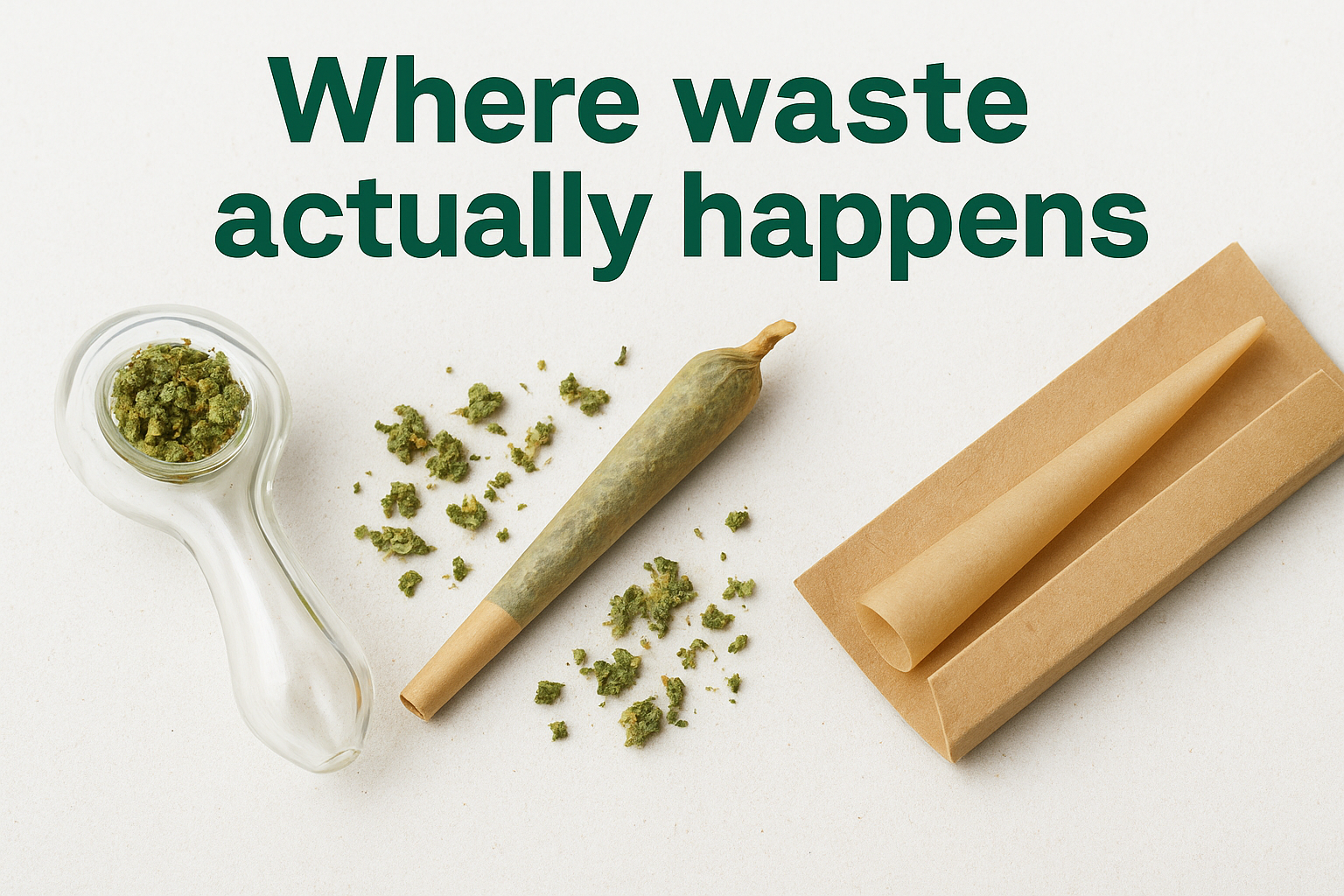
Where waste actually happens
The biggest cost driver with joints is sidestream smoke: the flower that burns off the cherry between your hits. That waste compounds across every session. Using a pre-rolled cone with evenly packed flower reduces canoeing and uneven burns, which keeps more of what you paid for in the smoke rather than drifting into the air unused.
What to expect for flavor, smell, and convenience
The pipe vs joint comparison gets personal once you factor in flavor, smell, and everyday convenience. Both methods combust flower at similar temperatures, but the material the smoke travels through changes what actually reaches your palate and how your space smells afterward.
Flavor: glass vs paper
A borosilicate glass pipe delivers the most neutral flavor profile you can get from combustion. Nothing stands between the smoke and your taste buds except air. Joints introduce rolling paper into the combustion process, which adds a subtle papery undertone, especially in the first few hits. RAW papers are among the thinnest available, which keeps that influence minimal compared to thicker alternatives.
If tasting your flower's full terpene profile matters to you, a clean glass pipe gives you the clearest read on any strain.
Smell and convenience
Pipes require regular cleaning with isopropyl alcohol to remove resin buildup in the bowl and stem over time. Joints leave no equipment behind, but continuous sidestream smoke lingers longer in a room because the cherry keeps burning between your hits. For on-the-go use or group sessions, a pre-rolled cone travels easily and requires zero cleanup.
A pipe gives you better control over your session at home, especially if you prefer quick, measured hits without committing to a full smoke. The tradeoff is that carrying glass requires care to avoid breakage, while a sleeve of pre-rolled cones slips into any bag without issue.
Health and safety considerations
Neither side of the pipe vs joint comparison is risk-free, and both methods involve combustion, which produces tar, carbon monoxide, and particulate matter regardless of what you're smoking. Knowing what each method exposes you to helps you make a more informed choice rather than assuming one is automatically safer than the other.
Combustion and your lungs
A pipe concentrates hotter, denser smoke in a shorter path, which can irritate your throat and lungs more acutely if you take large hits. Joints produce a longer, cooler draw across the length of the paper, but you inhale combusted paper along with the flower, which adds compounds to the smoke that aren't present when you use a clean glass pipe.
Keeping your hits short and not holding smoke in your lungs longer than a second or two reduces how much particulate matter your body absorbs.
Reducing exposure
Your bowl size and packing density directly affect how much you consume in a single session. A lightly packed bowl or a smaller cone size limits your intake without requiring willpower mid-session. Cleaning your pipe regularly matters too, since resin buildup in the stem and bowl forces you to inhale through a layer of combusted residue every time you use it. Whatever method you prefer, hydrating well during a session helps manage any throat irritation that comes with regular smoking.
Wrap-up and what to try next
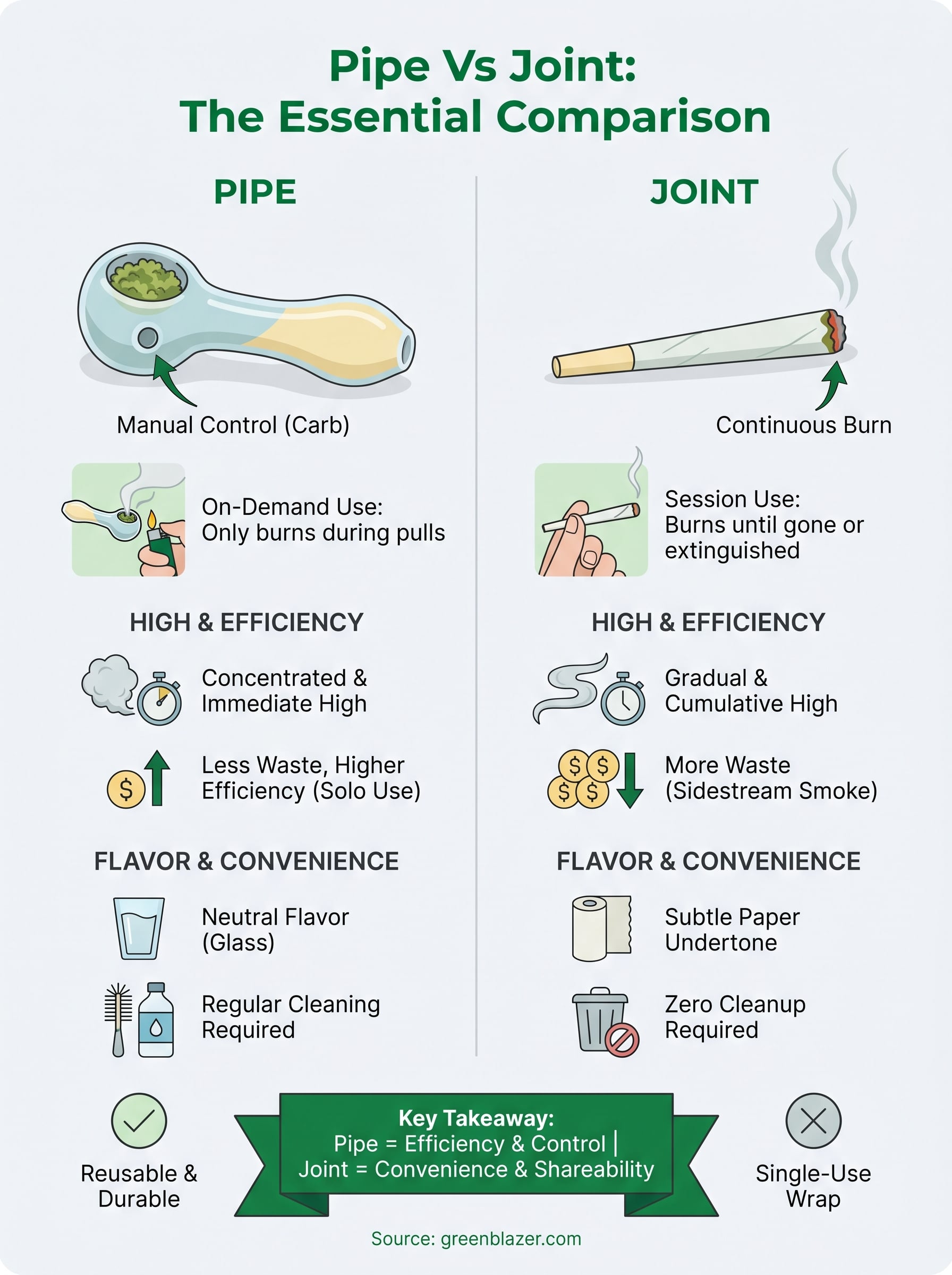
The pipe vs joint question doesn't have a single right answer, but it does have a right answer for your situation. A pipe saves money over time and works well if you want quick, controlled hits with minimal waste. A joint, especially one rolled with a quality pre-rolled cone, wins on convenience, shareability, and zero cleanup. Your choice comes down to whether you prioritize efficiency or ease in any given session.
Both methods involve combustion, so neither is without tradeoffs on the health side. What you can control is how much you consume, how clean your equipment stays, and the quality of materials you use. Thin, additive-free papers reduce what you inhale beyond the flower itself. If you want to take the joint side of this comparison for a test run without dealing with rolling technique, check out RAW pre-rolled cones at Green Blazer and see how a well-made cone changes the experience.
