

Cannabis gets most of the attention, but it's far from the only herb worth packing into a cone. People have been smoking botanicals for centuries, for relaxation, flavor, respiratory support, or simply as a tobacco-free alternative. If you've been searching for a smokable herbs list that actually breaks down what each plant does, how it tastes, and what to expect, you're in the right place.
At Green Blazer, we sell RAW pre-rolled cones built for whatever legal herb you choose to smoke. Our cones are unbleached, additive-free, and designed to let the natural flavor of your chosen botanical come through clean, no chemical taste, no uneven burn. That matters even more when you're exploring herbs with subtle flavor profiles and mild effects.
Below, we cover nine smokable herbs worth knowing about, including their benefits, flavors, effects, and practical tips for getting the most out of each one. Whether you're blending herbs with cannabis, replacing tobacco, or just curious about what else you can smoke, this list gives you a solid starting point.
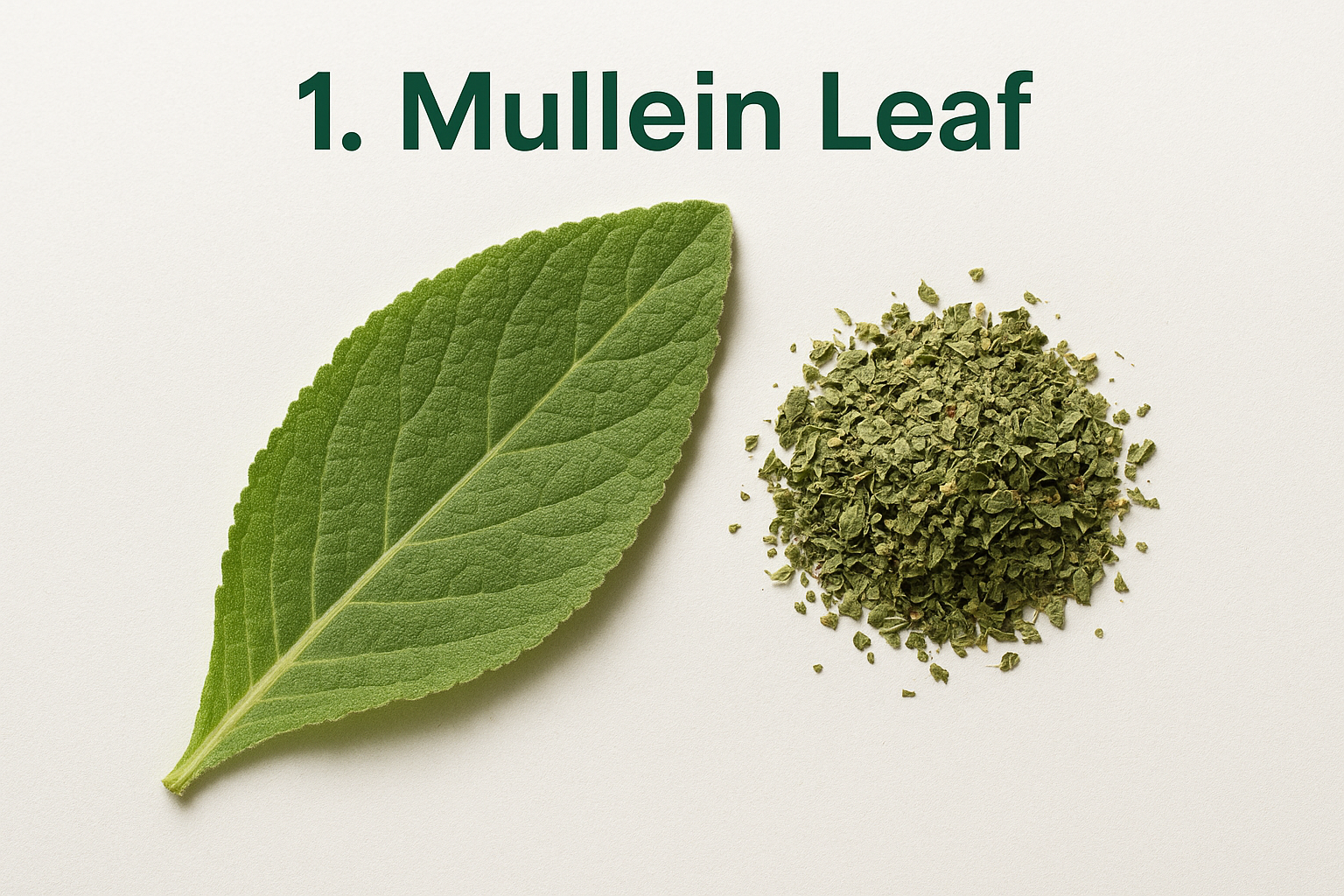
1. Mullein Leaf
Mullein leaf is one of the most recommended herbs on any smokable herbs list, and it earns that spot for practical reasons. This tall, broad-leafed plant has a long history in folk herbalism, particularly for respiratory support, which makes it an intentional and functional choice for herbal smoking blends rather than just a filler.
Why people smoke it
People reach for mullein primarily because it acts as a natural expectorant, helping to loosen mucus and open up the airways. Herbalists have used it for centuries to support lung and bronchial health, and many smokers today use it as a tobacco substitute or as the base in custom herbal blends. Unlike tobacco, it contains no nicotine, so there's no chemical dependency to worry about.
If you're trying to cut back on tobacco, mullein gives you the hand-to-mouth ritual without the addiction. It burns smoothly and produces a light, gentle smoke that most people find easy on the throat even during longer sessions.
Flavor and smoke character
Mullein has a mild, slightly earthy flavor with almost no harshness or bitterness. The smoke is light and airy, making it one of the most beginner-friendly herbs you can burn. Because the flavor is so neutral and understated, it blends naturally with stronger-tasting botanicals without competing against them.
Best ways to use it in a blend
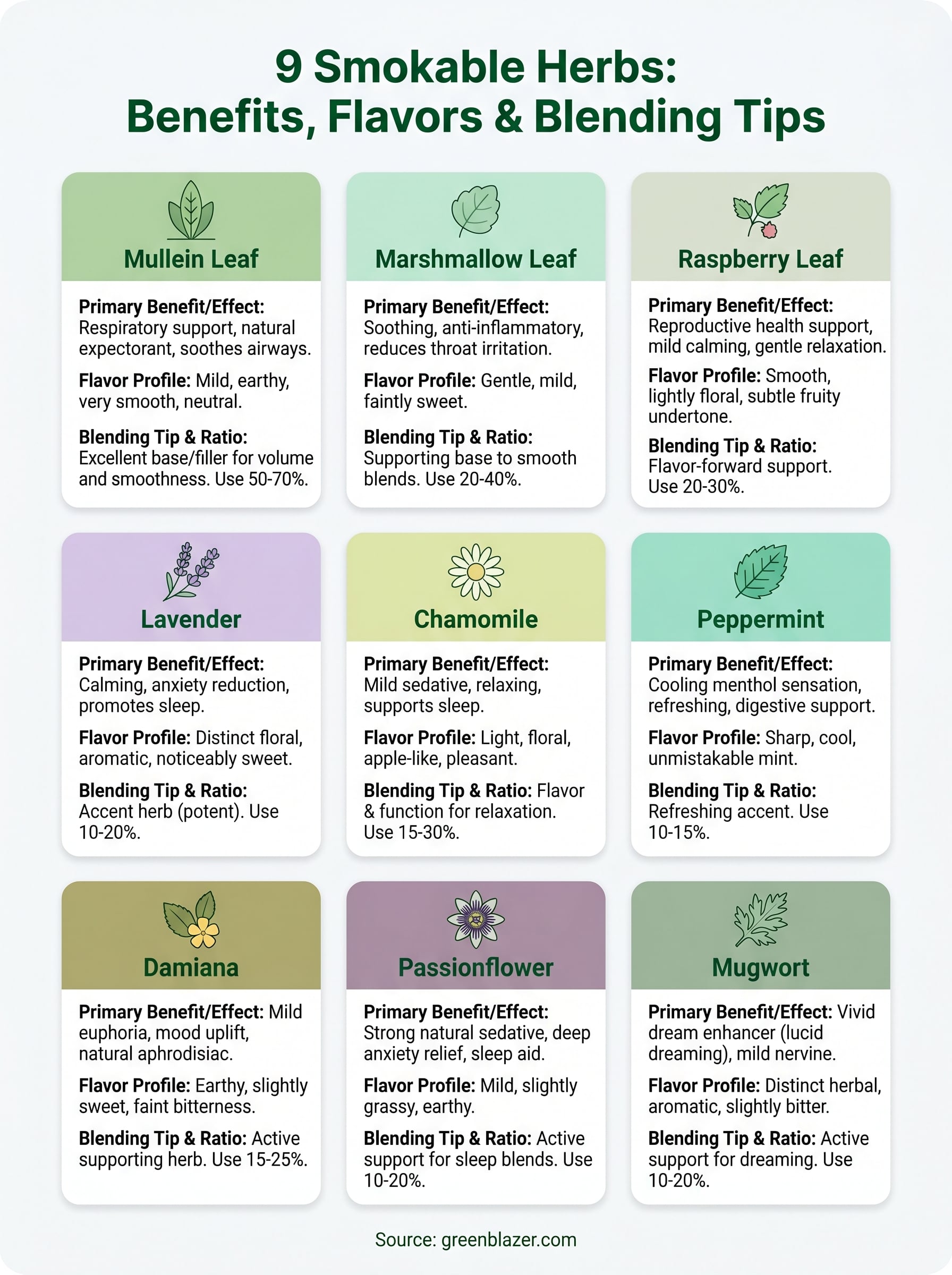
Mullein works best as a base or filler herb because of its mild flavor and smooth burn. Use it to bulk up a blend, reduce harshness from more potent herbs, or extend your supply of pricier botanicals without sacrificing the smoking experience. A common starting ratio is 50 to 70 percent mullein in a blend, with the remaining portion made up of more flavorful or active herbs.
Mullein is one of the best base herbs available because it adds volume and smoothness without pulling the flavor profile of your other ingredients in any unwanted direction.
Safety notes and who should avoid it
This herb is generally considered safe for most healthy adults when smoked in moderate amounts. The one key prep step: raw mullein leaves have tiny surface hairs that can irritate your throat, so always use properly dried and sifted mullein with those fine hairs removed before you smoke it. Pregnant or nursing individuals should avoid it entirely, and anyone with a known allergy to plants in the Scrophulariaceae family should approach it with caution.
2. Marshmallow Leaf
Marshmallow leaf (from the Althaea officinalis plant, not the sugary treat) is a soothing, mucilaginous herb that has earned its place on this smokable herbs list for one key reason: it is exceptionally gentle on your throat and airways.
Why people smoke it
People smoke marshmallow leaf mainly for its anti-inflammatory and soothing properties. The plant contains mucilage, a natural compound that coats and calms irritated tissue in your throat and respiratory tract.
Many herbal smokers reach for it specifically to reduce throat irritation caused by harsher herbs in a blend. Unlike tobacco, it carries no nicotine and no known dependency risk.
Flavor and smoke character
The smoke from marshmallow leaf is smooth and mild, with a faintly sweet, slightly earthy taste. There is very little harshness, making it one of the gentlest herbs you can burn.
If your blends are leaving your throat raw, adding marshmallow leaf is one of the easiest fixes available.
Its neutral flavor profile means it pairs well with almost any botanical without competing for attention.
Best ways to use it in a blend
Use marshmallow leaf as a supporting base herb alongside mullein or on its own. Some practical starting points:
- Blend at 20 to 40 percent of the total mix for a noticeable smoothing effect
- Pair it with chamomile or lavender for a calming, easy-smoking combination
Safety notes and who should avoid it
This herb is generally safe for most adults when used in moderation. If you are diabetic, avoid it since it may influence blood sugar levels. Pregnant or nursing individuals should consult a healthcare provider before use.
3. Raspberry Leaf
Raspberry leaf (from the Rubus idaeus plant) has been used medicinally for centuries and earns its spot on any smokable herbs list for both its flavor and its well-documented benefits. Its mild, pleasant taste makes it one of the more approachable botanicals you can pack into a cone.
Why people smoke it
Raspberry leaf is most commonly associated with female reproductive health, traditionally used to support hormonal balance and ease menstrual discomfort. Smokers who add it to blends also report a gentle calming effect that stays mild and grounding without any psychoactive impact.
Beyond reproductive health, it also provides light relaxation and mild anti-inflammatory properties that make it a useful addition to a functional herbal blend.
Flavor and smoke character
The smoke from raspberry leaf is smooth and lightly floral, with a subtle fruity undertone that makes it one of the more enjoyable herbs on this list to burn on its own. It produces a clean, easy smoke that sits comfortably in the throat.
Raspberry leaf is one of the few herbs here that tastes pleasant enough to smoke solo without any blending required.
Best ways to use it in a blend
Raspberry leaf works well as a flavor-forward supporting herb rather than a base. Practical starting points:
- Blend at 20 to 30 percent of the total mix for noticeable flavor
- Pair with chamomile or lavender for a floral, calming combination
Safety notes and who should avoid it
This herb is generally safe for most healthy adults when smoked in moderate amounts. Pregnant individuals should avoid it entirely since it may stimulate uterine contractions. Always source dried raspberry leaf from a reputable supplier to ensure it is clean and pesticide-free.
4. Lavender
Lavender (Lavandula angustifolia) is one of the most recognizable botanicals on this smokable herbs list, known worldwide for its distinct floral scent and calming properties. As a smokable herb, it brings both flavor and function to any blend.
Why people smoke it
People smoke lavender primarily for its calming and anxiety-reducing effects. The plant contains linalool, a naturally occurring compound linked to stress relief and improved sleep quality, making it a popular choice for winding down at the end of the day. Many herbal smokers add it to evening blends specifically to support relaxation without reaching for pharmaceutical sleep aids.
Flavor and smoke character
The smoke from lavender is floral and aromatic, with a noticeable sweetness that sets it apart from the earthier herbs on this list. Its distinctive fragrance carries strongly into the smoke, so even a small amount makes an immediate impact on the overall flavor profile.
Lavender can quickly overpower a blend if you use too much, so start with a small amount and build up gradually.
Best ways to use it in a blend
Use lavender as an accent herb rather than a base, and keep the ratio controlled. Practical starting points:
- Blend at 10 to 20 percent of the total mix for noticeable but balanced flavor
- Pair it with mullein, chamomile, or raspberry leaf for a calming, aromatic combination
Safety notes and who should avoid it
Lavender is generally safe for most healthy adults when smoked in small, moderate amounts. Avoid it if you have a known allergy to plants in the Lamiaceae family, which includes mint and sage. Pregnant or nursing individuals should consult a healthcare provider before using it.
5. Chamomile
Chamomile (Matricaria chamomilla) is one of the most widely recognized calming herbs in the world, and it earns its spot on any smokable herbs list for good reason. Its gentle effects and pleasant flavor make it an easy choice for beginners and experienced blenders alike.
Why people smoke it
People smoke chamomile primarily for its mild sedative and relaxing properties. The plant contains apigenin, a natural compound that binds to receptors in the brain associated with reducing anxiety and promoting sleep. Many herbal smokers use it in evening blends when they want to unwind without reaching for anything stronger.
Flavor and smoke character
The smoke from chamomile is light and floral, with a faintly sweet, apple-like taste that most people find genuinely pleasant. It burns smooth and mild, with very little harshness, making it one of the more enjoyable herbs to smoke on its own or in a blend.
If you want a calming smoke that actually tastes good, chamomile is one of the easiest choices you can make.
Best ways to use it in a blend
Chamomile works well as a flavor and function herb in relaxation-focused blends. Keep these ratios in mind:
- Blend at 15 to 30 percent of the total mix for balanced flavor and effect
- Pair it with lavender or passionflower for a deeply calming evening combination
Safety notes and who should avoid it
This herb is generally safe for most healthy adults when smoked in moderate amounts. Avoid it if you have a known allergy to plants in the Asteraceae family, which includes ragweed and daisies, since cross-reactions are possible. Pregnant individuals should consult a healthcare provider before use.
6. Peppermint
Peppermint (Mentha piperita) is a familiar herb that moves well beyond the tea cabinet and onto any solid smokable herbs list. Its sharp, cooling sensation and clean aromatic profile make it a standout choice for smokers who want something refreshing and functional in their blend.
Why people smoke it
People smoke peppermint primarily for its menthol content, which produces a cooling sensation in the throat and airways that many smokers find refreshing. Beyond the sensory experience, peppermint has a long history of use for headache relief, digestive support, and mild stimulation, giving it a functional edge over purely flavor-driven herbs. Some smokers use it as a tobacco substitute when cutting nicotine out of their routine.
Peppermint's menthol effect can make harsh blends noticeably smoother and more enjoyable without masking the flavor of other herbs.
Flavor and smoke character
The smoke from peppermint is sharp, cool, and unmistakably minty, with a clean finish that lingers pleasantly. It burns crisp and light, and even a small amount has a strong presence in any blend.
Best ways to use it in a blend
Peppermint works best as an accent herb because its flavor dominates quickly. A few practical starting points:
- Blend at 10 to 15 percent of the total mix for a balanced, refreshing effect
- Pair it with mullein or chamomile to brighten an earthy, mellow blend
Safety notes and who should avoid it
Peppermint is generally safe for most healthy adults when smoked in moderate amounts. Avoid it if you have a known sensitivity to menthol or a diagnosed GERD condition, as the cooling compounds may aggravate acid reflux symptoms.
7. Damiana
Damiana (Turnera diffusa) is one of the more distinct entries on any smokable herbs list, primarily because it is known for producing mild euphoric and relaxing effects that go noticeably beyond simple calming. Native to Central America and Mexico, it carries a long history of traditional use as a mood enhancer and natural aphrodisiac.
Why people smoke it
People reach for damiana because it produces a gentle uplift in mood, often described as a mild, pleasant euphoria that lasts roughly 30 to 60 minutes. Traditional herbalists used it to support relaxation, reduce anxiety, and enhance libido, and modern herbal smokers carry on that same intention. It stands out as one of the few non-psychoactive herbs that delivers a perceptible functional effect rather than just a barely noticeable shift.
Flavor and smoke character
Damiana has an earthy, slightly sweet flavor with a faint herbal bitterness that becomes more noticeable in larger quantities. The smoke is medium-bodied and moderately smooth, sitting between the mildness of mullein and the sharpness of peppermint.
If you want an herbal smoke with a noticeable effect and a flavor that holds its own, damiana delivers on both.
Best ways to use it in a blend
Damiana works well as an active supporting herb rather than a base. Keep your ratio at 15 to 25 percent of the total blend to capture its effects without letting the bitterness take over. Pair it with mullein or marshmallow leaf to smooth out the overall smoke.
Safety notes and who should avoid it
Damiana is generally safe for most healthy adults when used in moderate amounts. Avoid it if you take medications for blood sugar regulation, as it may interfere with glucose levels. Pregnant or nursing individuals should skip it entirely.
8. Passionflower
Passionflower (Passiflora incarnata) rounds out the middle of this smokable herbs list as one of the more potent natural relaxants available in herbal smoking blends. Native to the Americas, it has a well-established history in traditional herbalism for calming the nervous system and supporting restful sleep.
Why people smoke it
People smoke passionflower primarily for its strong sedative and anxiety-relieving properties. The plant contains compounds that interact with GABA receptors in the brain, producing a noticeable calming effect that many users describe as deeper and more pronounced than chamomile or lavender. It is a popular choice for evening blends when sleep support is the goal.
Flavor and smoke character
The smoke from passionflower is mild and slightly grassy, with a light earthy undertone that most people find inoffensive. It burns smoothly and evenly, making it an easy addition to any blend without introducing harshness or an unpleasant aftertaste.
Passionflower is one of the strongest natural sedatives on this list, so use it intentionally and avoid it before any activity that requires focus or alertness.
Best ways to use it in a blend
Use passionflower as an active supporting herb in sleep or relaxation blends. Keep your ratio at 10 to 20 percent of the total mix and pair it with chamomile or lavender for a deeply calming evening combination.
Safety notes and who should avoid it
This herb is generally safe for most healthy adults in moderate amounts. Avoid it if you take sedative medications or blood pressure drugs, as it may amplify their effects. Pregnant individuals should not use it.
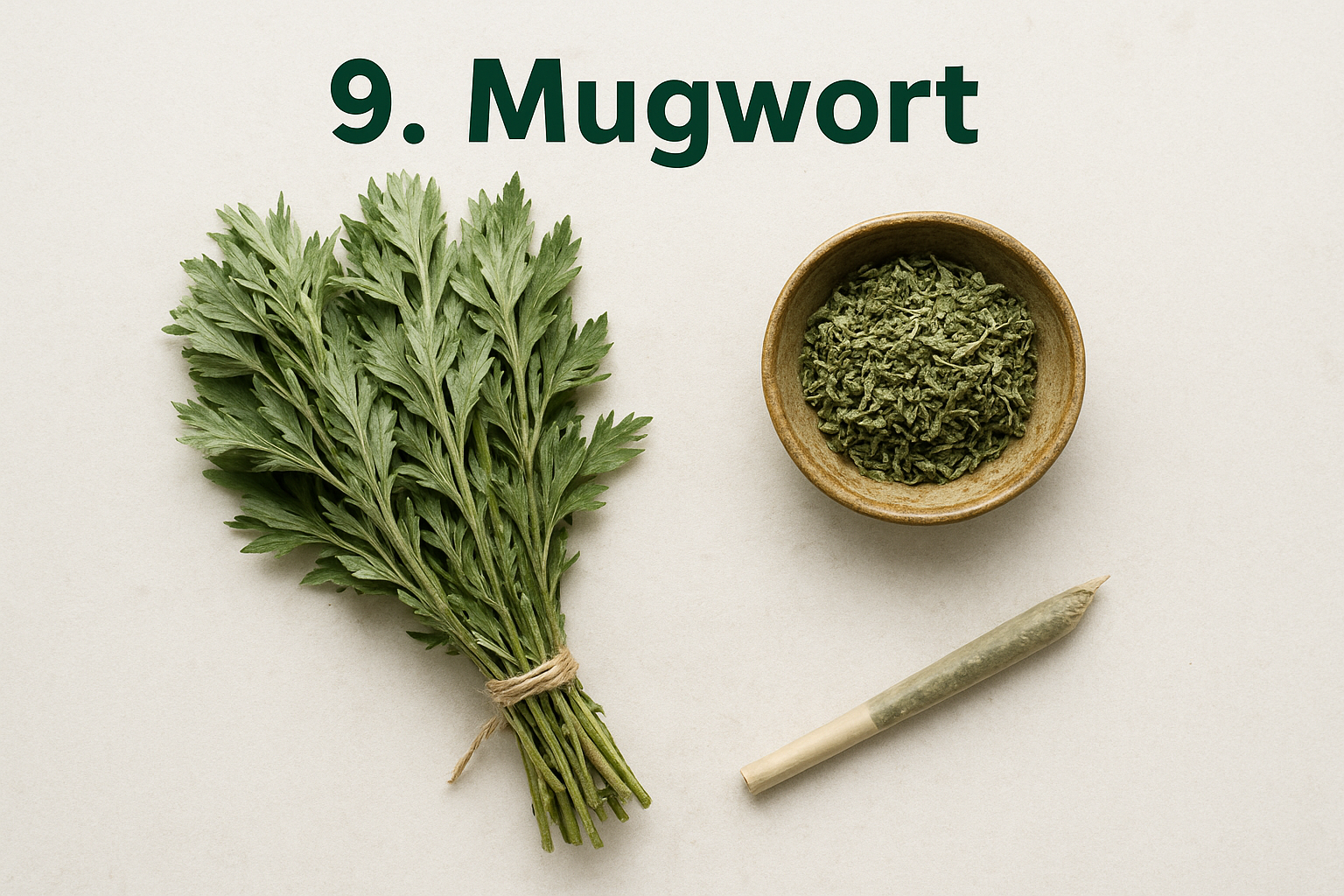
9. Mugwort
Mugwort (Artemisia vulgaris) is one of the most historically layered herbs on this smokable herbs list, used for centuries across cultures in Europe, Asia, and the Americas for both ceremonial and medicinal purposes. It sits in a category of its own thanks to its well-known association with vivid dreaming and subtle psychoactive effects.
Why people smoke it
People smoke mugwort primarily for its reputation as a dream enhancer, with traditional use pointing to more vivid, memorable, and lucid dreams when burned before sleep. Beyond that, it carries mild nervine and relaxing properties, making it a functional choice for unwinding in the evening. Some traditional herbalists have also used it to support digestion and ease menstrual discomfort, adding a practical dimension to its ceremonial history.
If lucid dreaming is something you want to explore, mugwort is one of the most widely referenced botanicals for that specific purpose.
Flavor and smoke character
Mugwort has a distinctly herbal, slightly bitter flavor with a pronounced aromatic quality that some describe as woody or sage-like. The smoke is medium-bodied and moderately smooth, though the bitterness becomes more noticeable in larger quantities.
Best ways to use it in a blend
Use mugwort as an active supporting herb at roughly 10 to 20 percent of your total blend. Pair it with mullein or marshmallow leaf to soften the bitterness and smooth out the overall smoke.
Safety notes and who should avoid it
Mugwort is generally safe for most healthy adults in moderate amounts. Pregnant individuals must avoid it entirely, as it has historically been used to stimulate uterine contractions. Anyone with allergies to plants in the Asteraceae family, including ragweed, should also steer clear.
Final Thoughts
This smokable herbs list gives you nine solid options to work with, each bringing something different to the table. Whether you want a smooth base like mullein, a calming evening blend with chamomile and passionflower, or something more functional like peppermint for its cooling effect, you now have the information to make an intentional choice rather than guessing.
Start simple. Pick two or three herbs that match your goal, blend them at the ratios outlined above, and adjust from there. Most people find their ideal blend through a bit of trial and error rather than getting it perfect on the first try.
When you are ready to roll your blends, you want a cone that burns evenly and lets the natural flavor of your herbs come through clean. RAW pre-rolled cones from Green Blazer are unbleached, additive-free, and built exactly for that purpose.
