

A what is a wax pen question comes up constantly among cannabis consumers exploring options beyond flower. Simply put, it's a compact, battery-powered device designed to vaporize cannabis concentrates like wax, shatter, budder, and crumble, without the blowtorch setup of a traditional dab rig.
Wax pens have gained serious traction because they're portable, discreet, and straightforward to use. If you've only ever smoked flower, whether packed into a bowl or loaded into a pre-rolled cone, concentrates can feel like unfamiliar territory. But the hardware itself isn't complicated. A wax pen breaks down into just a few core components, and once you understand how they work together, choosing and using one gets a lot easier.
At Green Blazer, we built our business around helping people enjoy cannabis the right way, starting with authentic RAW cones and accessories for flower smokers across the country. But we know our community doesn't stop at flower. Many of you use concentrates too, or you're curious about trying them. That's why we put together this guide: to give you a clear, honest breakdown of wax pens, how they work, what sets them apart from other vaporizers, and how to keep one running well. Whether you're weighing your first purchase or just want to understand the basics, this article covers it all.
Why wax pens matter for concentrate users
If you use cannabis concentrates regularly, you already know that the method of consumption matters as much as the concentrate itself. Wax pens solve a specific problem: how do you get a clean, efficient hit from a concentrate without setting up a full dab rig every time? Understanding what is a wax pen helps you see why so many concentrate users have shifted away from rigs entirely, or use a pen as their everyday option alongside a rig for home sessions. The device fills a genuine gap that nothing else in the concentrate space covers as well.
Portability changes how you consume
One of the biggest reasons concentrate users pick up a wax pen is simple: you can take it anywhere. A full dab rig involves a glass piece, a nail or banger, a torch, and a carb cap at minimum. That setup works great at home, but it's not something you pack into a bag for a regular outing. A wax pen fits in your pocket and requires nothing beyond a charged battery and a loaded chamber to work.
Portability isn't just a convenience feature; it genuinely changes how often and where you can use concentrates.
Beyond the physical footprint, wax pens let you set your own pace without planning a session around equipment. You load the chamber once, and the pen stays ready whenever you are, without any torch warm-up or cool-down time between uses. That kind of flexibility is hard to overstate if you have an active schedule.
Efficiency and concentrate preservation
Concentrate costs more per gram than flower, and wax pens help you get the most from every load. A well-designed pen heats your concentrate at a controlled, consistent temperature, meaning you vaporize what you load rather than burning it off or losing product to the surrounding air. The enclosed chamber and coil setup keeps waste to a minimum in a way that open rigs simply cannot match.
Dab rigs demand more experience to use efficiently. If you underheat the nail, you don't fully vaporize the concentrate and end up with wasted residue. If you overheat it, you combust it and sacrifice both flavor and potency. A wax pen handles most of that temperature control automatically, so you get a more consistent result without the guesswork that trips up newer concentrate users.
Lower startup cost and simpler setup
Getting into concentrates with a dab rig means spending money on multiple pieces of equipment upfront: the rig itself, a nail or banger, a torch, and butane. A quality wax pen typically costs less than that full rig setup and comes ready to use straight out of the box. You load your concentrate, press a button, and draw. There's no learning curve around torch technique and no waiting for a nail to reach the right temperature before you get started.
For newer concentrate users especially, this simplicity reduces the risk of a harsh or unpleasant first experience caused by poor torch control or an overheated nail. With a wax pen, the device handles temperature regulation for you, so your early sessions are far more consistent. Wax pens also work across a wide range of concentrate textures, from soft budder and wax to harder shatter and crumble, so you're not locked into one product type. That combination of low startup cost, easy operation, and broad compatibility is exactly why wax pens have become a standard piece of kit for concentrate users at every experience level.
How wax pens work inside the device
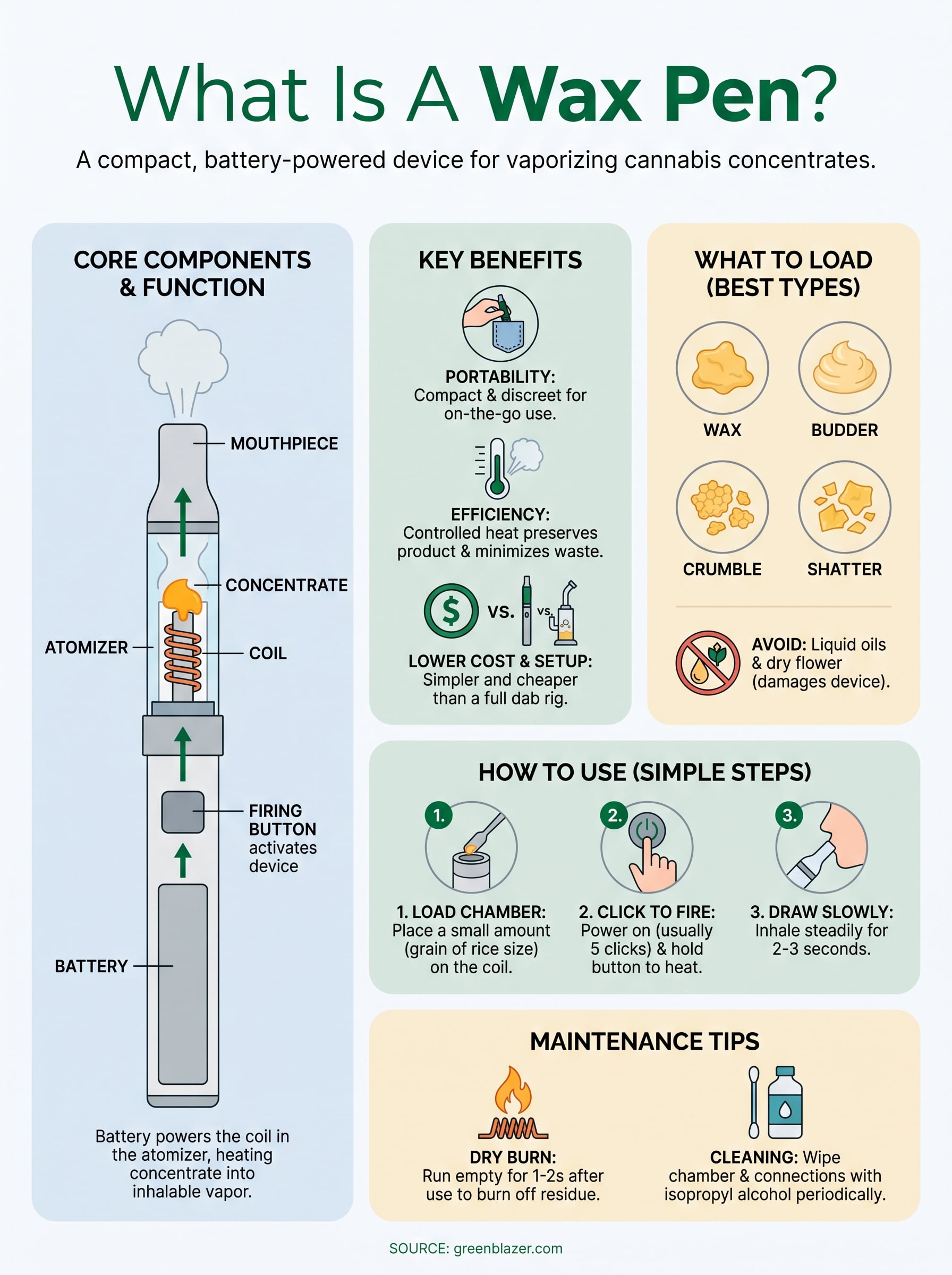
Understanding what is a wax pen becomes much clearer once you break it down by component. A wax pen has four core parts working in sequence: a battery, a firing mechanism, an atomizer, and a mouthpiece. Each part has a distinct job, and knowing how they interact helps you get better results and spot problems before they affect your sessions.
The battery and atomizer connection
The battery supplies the power that drives everything else in the device. Most wax pens use a 510-threaded lithium-ion battery, a threading standard that makes many batteries and atomizers interchangeable across brands. When you press the firing button, the battery sends an electrical current directly to the atomizer below it. Many pens include two or three voltage settings that let you adjust how much power reaches the atomizer, which in turn controls temperature and vapor density.
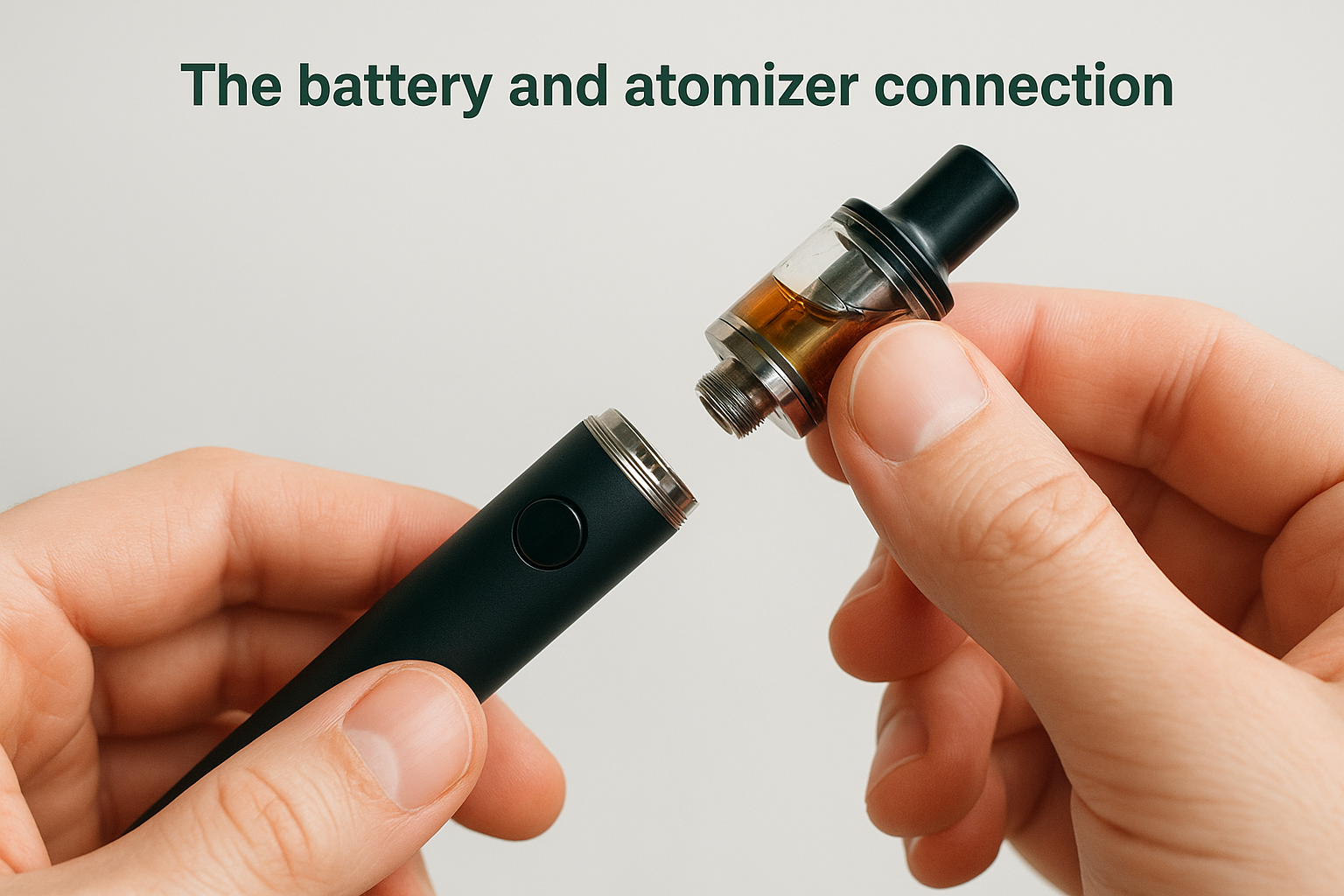
Inside the atomizer sits a small coil that does the actual vaporization work. The coil wraps around or rests near a rod or wick made from ceramic, quartz, or titanium. That coil heats up the moment current flows through it, and your concentrate, loaded into the chamber around the coil, heats with it until it turns to vapor. The coil material you choose affects both flavor output and how quickly the device reaches operating temperature.
Quartz coils heat up fast for strong flavor, ceramic heats slowly for smoother draws, and titanium lands in between with better long-term durability.
Vapor travel and draw technique
Once the coil vaporizes your concentrate, the vapor rises through the atomizer chamber and moves toward the mouthpiece. The mouthpiece is a short tube that cools the vapor slightly before it reaches your lips. The entire path from coil to mouth is sealed, which keeps the vapor concentrated and prevents it from dispersing into the air before you inhale.
Your draw technique directly affects the quality of each hit. Pulling too hard forces unvaporized concentrate up into the airpath and clogs the mouthpiece over time. A slow, steady draw lets the coil fully vaporize what's in the chamber before you pull it through. Most experienced wax pen users take two to three-second draws at moderate pressure, which strikes the right balance between vapor density and coil efficiency.
What you can put in a wax pen
One of the first practical questions that comes up when you understand what is a wax pen is what actually goes inside it. Not every concentrate is the same, and the consistency and texture of what you load directly affects how well your pen performs. Most wax pens handle a specific range of concentrate types based on how their coil and chamber are designed, so knowing your options upfront prevents wasted product and a clogged atomizer.
Cannabis concentrates that work best
Wax pens take their name from cannabis wax, the concentrate type they're most naturally suited for. Wax has a soft, pliable texture that sits on a coil without running off and vaporizes cleanly at the temperatures a standard pen reaches. Budder is another strong choice, with a creamy, whipped consistency that behaves similarly to wax in the chamber and produces a smooth, flavorful draw.

The consistency of your concentrate matters as much as its potency when it comes to getting clean, reliable performance from your pen.
Crumble works well too, since its dry, honeycomb-like texture breaks apart easily and loads into the chamber in small, manageable pieces without creating a sticky mess on your fingers or the device. Shatter requires slightly more care because its brittle, glass-like form can be difficult to handle, but once it melts onto the coil it vaporizes effectively at standard temperatures. Many concentrate users keep a mix of these four types on hand and rotate between them based on what they want from a given session, whether that's dense vapor, bold flavor, or easy loading.
What to avoid loading
Liquid concentrates and oils are not suited for a standard wax pen. Those products need a cartridge-based vape pen with a wick system designed to draw liquid upward into the coil, not a chamber built for semi-solid material. Loading oil into a wax pen floods the atomizer, ruins the coil prematurely, and forces you through a deep clean before the device functions properly again.
You should also avoid loading flower or dry herb into a wax pen. Wax pens operate at temperatures and with coil designs optimized for concentrate, not plant material. Dry herb requires a completely different heating system, and packing it into a wax pen chamber will scorch the material rather than vaporize it, leaving carbon residue on your coil and a harsh, burnt taste in your draws. If you use both flower and concentrates, keep separate dedicated devices for each rather than trying to make one pen serve both purposes.
How to use a wax pen step by step
Knowing what is a wax pen and how it works is useful background, but actually using one correctly is what separates clean, consistent sessions from wasted concentrate and frustrating draws. The process is straightforward once you break it into clear steps, and following them in order from your first session builds habits that protect both your device and your product.
Loading the chamber
Before you load anything, make sure your battery is charged and your pen is completely powered off. Loading a hot or active pen risks burning your concentrate before you're ready to draw, and it can also burn your fingers. Use a dab tool to pick up a small amount of concentrate and place it directly onto the coil inside the atomizer chamber. Keep the load small: a piece roughly the size of a grain of rice is enough for several draws. Overloading floods the coil and forces liquid concentrate into the airpath, which clogs the mouthpiece and wastes product.
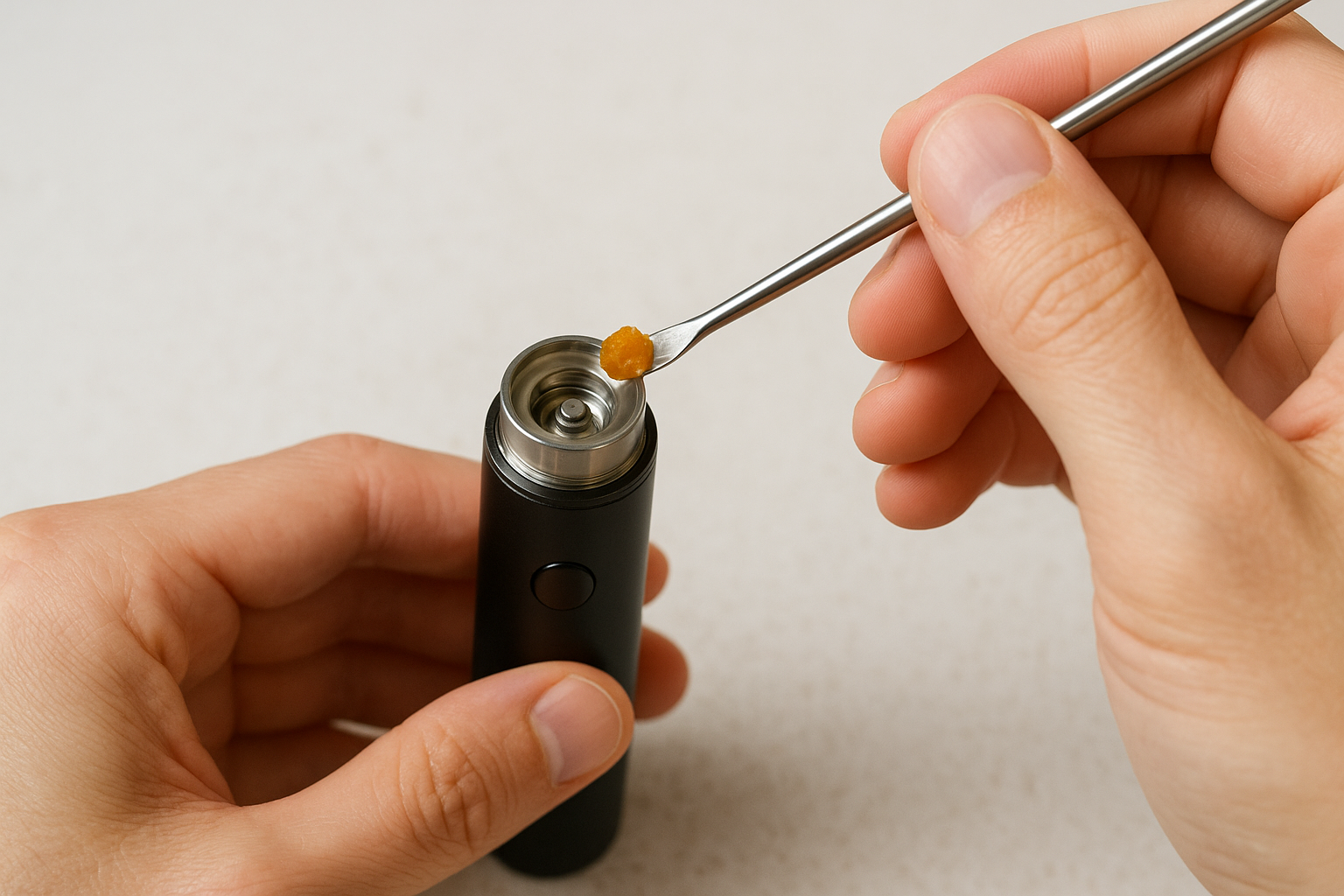
Once your concentrate is loaded, screw the atomizer back onto the battery firmly but without overtightening. Overtightening strips the threading over time and makes future disassembly harder. Keep your pen upright after loading to prevent concentrate from migrating away from the coil before you fire it.
Firing and drawing
Click the firing button five times rapidly to power on your pen; most devices use this sequence as a safety lock to prevent accidental activation in your pocket. Once powered on, select your preferred voltage setting if your pen offers multiple options. Start on the lowest or middle setting and work upward from there. Lower temperatures preserve flavor, while higher temperatures push denser vapor but can burn off terpenes quickly.
Starting low gives you a clear read on how your pen and concentrate interact before you commit to a stronger heat setting.
Hold the firing button and begin drawing slowly before you press it, then draw at a steady, moderate pace for two to three seconds. Releasing the button before you finish your draw lets the vapor clear cleanly from the chamber. After your session, click the button five times again to lock the pen, cap the mouthpiece if your device includes a cover, and store it upright until your next use.
How to clean and maintain a wax pen
Regular cleaning is the single most important habit you can build around wax pen ownership. Even if you understand what is a wax pen and use it correctly every session, residue from concentrate builds up inside the atomizer and airpath over time. Neglecting that buildup leads to clogged draws, burnt flavor, and coil failure faster than any other factor. A consistent cleaning routine keeps your device performing at its best and extends the life of both the atomizer and the battery.
Cleaning the atomizer and coil
After each session, run a dry burn by firing your pen at low voltage for one to two seconds without drawing from it. This burns off the thin layer of residue left on the coil after you've finished, which prevents it from carbonizing between sessions. Do this while the coil is still warm from your last draw, and you'll keep buildup from hardening into a crust that's much harder to remove later.
A quick dry burn after every session takes less than five seconds and adds weeks to your coil's usable life.
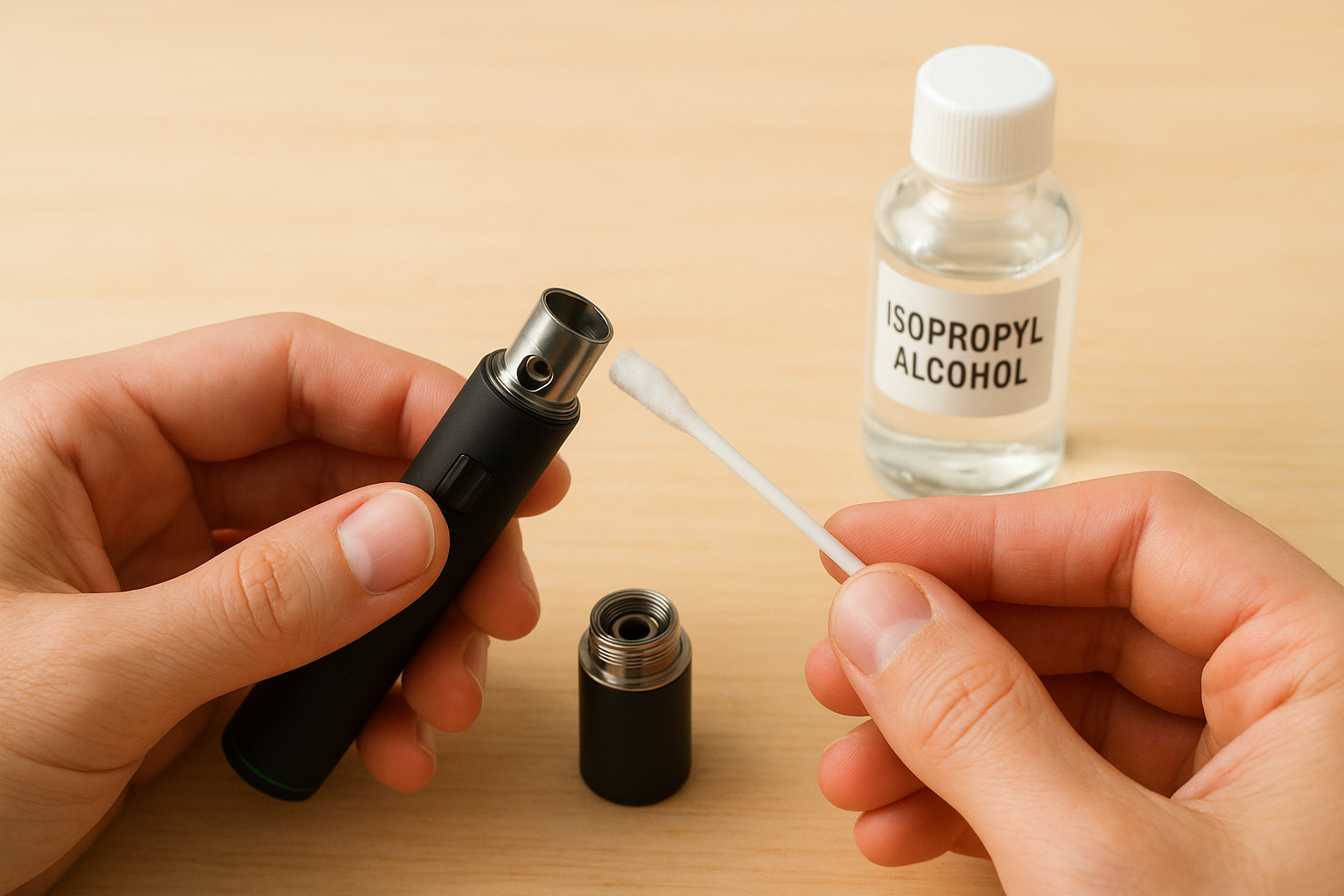
For a deeper clean, disassemble the atomizer from the battery and use a cotton swab dipped in isopropyl alcohol to wipe the inside walls of the chamber, the threading, and the base of the coil. Avoid soaking the coil directly in alcohol because the liquid can wick into the coil material and affect performance on your next session. Let every component dry completely for at least 20 to 30 minutes before reassembling, since firing a wet atomizer damages the coil and can push alcohol vapor into your draws.
Maintaining the battery and connections
Battery maintenance is just as important as coil cleaning, though most users overlook it entirely. Wipe the 510-threaded connection point between your battery and atomizer with a dry cotton swab every few cleaning cycles. Concentrate residue and dust collect in that threading and create poor electrical contact, which shows up as inconsistent firing or a device that seems underpowered even on a full charge.
Store your pen upright in a cool, dry location when you're not using it. Horizontal storage lets any remaining concentrate in the chamber migrate away from the coil and into the airpath, which clogs the mouthpiece and forces you into an unplanned cleaning session before your next use. Charge your battery before it drops below 20 percent rather than running it to empty, since repeatedly draining lithium-ion batteries fully shortens their overall lifespan.
Wax pen vs vape pen vs dab rig
Once you understand what is a wax pen, comparing it to similar devices becomes much simpler. The three options, wax pens, vape pens, and dab rigs, share some surface-level similarities but serve different concentrate types and use cases in practice. Knowing where each one fits helps you pick the right tool instead of forcing the wrong device to do a job it wasn't designed for.
Wax pens vs vape pens
The most common mix-up happens between wax pens and vape pens. A vape pen is built around a pre-filled or refillable cartridge containing liquid oil, which a wick draws upward into a coil for vaporization. A wax pen, by contrast, uses an open chamber where you load semi-solid concentrate directly onto the coil. These two designs are not interchangeable, and loading oil into a wax pen or packing wax into a cartridge-based vape pen damages both devices and wastes your product.
Vape pens tend to be slimmer and more discreet because the cartridge replaces the open chamber entirely. That convenience comes with less control over concentrate quality and sourcing, since cartridge contents vary widely across brands and markets. With a wax pen, you choose exactly what goes into the chamber, which gives you full visibility into your concentrate's origin, purity, and content that cartridge users give up in exchange for a plug-and-play experience.
Wax pens vs dab rigs
A dab rig delivers the strongest, most flavorful hits of the three options because it uses a water filtration system and a large heated surface to vaporize a significant amount of concentrate at once. The tradeoff is that rigs require a torch, a nail or banger, carb cap, and careful temperature management before every single session. That setup works well at home, but it's not practical for regular use outside a controlled environment.
A wax pen won't fully replicate a well-timed dab rig hit, but it produces results that are more than sufficient for most everyday sessions.
Wax pens trade some of that raw intensity for convenience and consistency. You don't need to time your nail's cool-down period, and there's no open flame involved at any point during a session. For users who want to enjoy concentrates regularly without building a full rig setup, a wax pen handles the vast majority of everyday sessions at a fraction of the preparation time, cost, and equipment overhead that a dab rig demands.
How to choose the right wax pen
Once you understand what is a wax pen and how it functions, the next step is picking one that fits your actual habits. The market offers dozens of options across a wide price range, and the differences between them aren't always obvious from the outside. Three factors separate a well-matched pen from a frustrating purchase: coil material, temperature control, and battery life. Evaluating each one before you buy saves you from upgrading sooner than you need to.
Coil material and temperature control
Coil material determines flavor quality and how quickly your pen reaches operating temperature, which makes it the most important spec to evaluate before buying. Quartz coils heat fast and produce clean, terpene-forward vapor, making them a strong choice if flavor is your priority. Ceramic coils heat more slowly but distribute heat evenly across the chamber, which reduces the risk of burning your concentrate before it fully vaporizes. Titanium coils sit between those two options, heating quickly while lasting longer than quartz under heavy use.
The coil material you choose directly shapes every session you run, so treat it as the starting point of your decision rather than an afterthought.
Temperature control options also vary significantly across pens. Entry-level devices offer a single fixed voltage, which works for basic use but limits your ability to fine-tune flavor versus vapor density. Mid-range pens give you two or three voltage settings, which covers most users well. If you use a wide variety of concentrate textures regularly, a pen with a precise variable voltage dial or digital display gives you the most flexibility to match temperature to the specific concentrate you're running.
Battery life and build quality
Battery capacity, measured in milliamp-hours (mAh), tells you how many sessions you can run between charges. A pen with 650 mAh handles light daily use comfortably, while a 900 mAh or larger battery suits heavier sessions or situations where charging isn't convenient. Check whether the pen uses a standard micro-USB or USB-C port, since USB-C charges faster and cables are far easier to find when you're away from home.
Build quality shows up in threading precision, button responsiveness, and how well the chamber seals between uses. A poorly threaded atomizer connection causes voltage drops and inconsistent firing that no amount of cleaning will fix. Read user reviews specifically for long-term durability rather than first-impression feedback before you commit to a purchase.
Safety, legality, and drug test basics
Understanding what is a wax pen goes beyond hardware and technique. How you use one safely, whether it's legal where you live, and how concentrate use affects drug screenings are all practical questions that deserve direct answers before you commit to a device. None of these topics are complicated, but skipping over them leads to avoidable problems.
Using a wax pen safely
The most common safety issue with wax pens is overheating, either the coil or the battery. Running your pen on maximum voltage for every session degrades the coil faster and pushes the battery harder than necessary. Use the lowest temperature that produces satisfying vapor from your chosen concentrate, and give the device a short rest between back-to-back draws to prevent the atomizer from overheating.
Keep your pen away from flammable materials while it's charging, and never leave it charging overnight. Lithium-ion batteries carry a small but real risk of failure if they're punctured, overcharged, or exposed to extreme heat. Store your pen somewhere cool and dry, away from direct sunlight, and replace the battery if you notice swelling, unusual warmth, or a sudden drop in charge retention.
Legal considerations by state
Cannabis concentrate legality varies significantly by state, and a wax pen loaded with THC concentrate falls under the same laws that govern any other cannabis product in your jurisdiction. Before purchasing concentrate, verify that your state permits recreational or medical use and that you're purchasing from a licensed dispensary operating within your state's regulatory framework.
Crossing state lines with cannabis concentrate, even between two states where it's legal, remains a federal offense under current U.S. law.
Traveling with a wax pen that has residue in the chamber carries the same legal risk as traveling with the concentrate itself. Clean your device thoroughly before any air travel, and check the specific rules for your destination before you go.
Wax pens and drug tests
Concentrate used through a wax pen contains THC that metabolizes and stores in your body's fat cells the same way flower does. The delivery method does not change how long THC remains detectable. Standard urine drug screenings detect THC metabolites, not the method of consumption, so using a pen rather than smoking flower offers no advantage on a drug test. If you face regular testing, factor that into your consumption decisions regardless of which device or product type you choose.
Final thoughts
Understanding what is a wax pen gives you a real foundation for making smarter decisions about how you consume concentrates. The device itself is simple: a battery, a coil, and a chamber that work together to vaporize your material cleanly and efficiently. Choosing the right coil material, keeping the atomizer clean, and matching your temperature to your concentrate are the three habits that separate a frustrating experience from a consistently good one.
Concentrates aren't for everyone, and a wax pen won't replace flower for users who prefer the ritual of rolling and smoking. But if you're curious about concentrates or already use them and want a more practical daily option than a full dab rig setup, a wax pen is the most accessible entry point available. If flower remains your go-to, stock up on quality supplies and browse the full range of rolling accessories at Green Blazer to keep your sessions dialed in.
