

A good filter tip does more than keep herb out of your mouth. It shapes airflow, affects draw resistance, and can even cool smoke before it hits your throat. Choosing the best filter tips for joints comes down to what you prioritize, flavor purity, smoothness, reusability, or just a sturdy mouthpiece that holds its shape from first light to last puff. With options ranging from classic paper to glass, activated charcoal, and ceramic, the differences are real and worth understanding before you stock up.
At Green Blazer, we sell RAW tips and accessories daily to both individual smokers and commercial pre-roll producers across the country. We've handled, tested, and talked through countless tip options with customers at every experience level. That hands-on knowledge is exactly what shaped this list, nine filter tips worth your attention, broken down by material, function, and who they work best for.
1. RAW pre-rolled cones with built-in paper tips
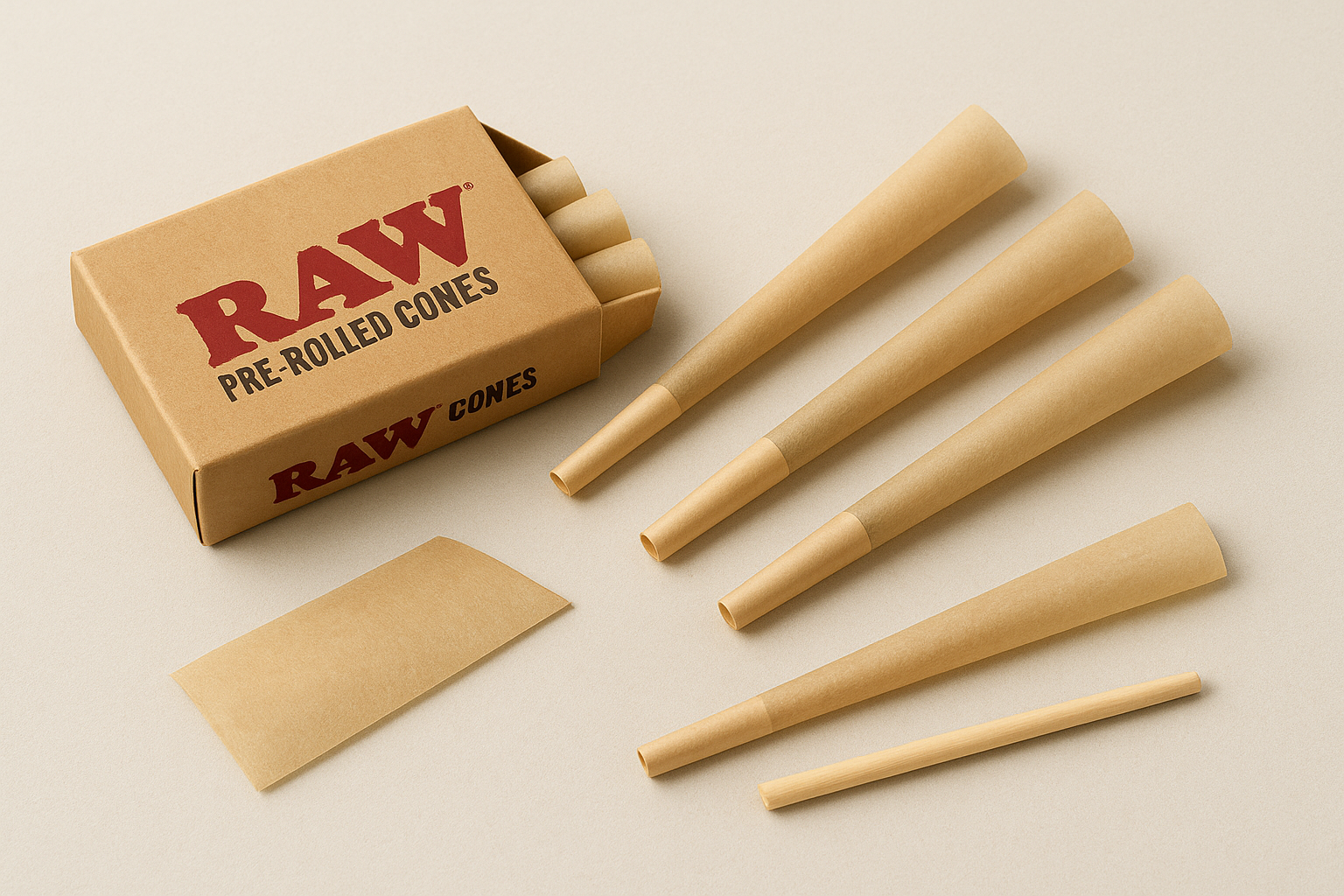
RAW pre-rolled cones are the most accessible option for anyone who wants a consistent, ready-to-fill joint without learning to roll. Each cone comes pre-shaped with a built-in paper filter tip (also called a crutch) already attached at the mouthpiece end, so the structural work is done before you even open the pack.
How it works
The cone shape holds its form through a combination of slow-burn RAW paper and a pre-rolled paper crutch glued into the mouthpiece opening. You fill the open end with your herb, pack it down using the included packing stick or a pen, twist the tip closed, and it's ready to smoke. The built-in filter keeps the mouthpiece stiff, prevents the paper from collapsing on your lips, and stops herb from pulling through into your mouth. RAW also uses a signature watermark pattern across the paper to prevent runs and encourage an even burn from cone to crutch.
The paper tip in a RAW cone is structural: it keeps the mouthpiece from going oval or collapsing mid-session, which plain rolling papers without a crutch often do.
Best for
For beginners who want a no-roll setup, RAW cones with built-in tips remove the biggest frustration upfront. They also work well for commercial pre-roll producers who need consistent, uniform joints at volume. If you're filling hundreds of cones at once with a filling machine, the built-in tip means one less step and one fewer variable to manage.
Pros
Speed and consistency are the two clearest advantages of this option.
- No rolling skills required
- Paper filter holds its shape through the full session
- Available in multiple sizes: Dogwalker, 1 1/4, Lean, King Size, and more
- Made from unbleached, additive-free paper with natural acacia gum line
- Compatible with cone-filling machines for commercial production
Cons
Paper tips do have real limitations worth knowing before you commit.
- Single-use only with no reusability
- Draw resistance increases as the paper absorbs moisture during a session
- Airflow is narrower compared to glass or ceramic tips
- Not ideal if you want a completely flavor-neutral mouthpiece material
Typical price range
Retail boxes of RAW cones range from small packs of 6 to standard boxes of 32 cones, typically priced between $10 and $15 depending on size and variety. Bulk wholesale orders bring the per-cone cost down significantly, which is why commercial producers buying thousands of units at a time treat them as a staple supply item rather than a premium add-on.
2. RAW perforated paper filter tips
RAW perforated paper filter tips give you a standalone crutch option separate from any pre-rolled cone. These are flat booklets of paper with perforated lines, letting you tear off individual tip sheets and roll your own filter at whatever size and tightness you prefer.
How it works
Each sheet has evenly spaced perforations that guide you to fold the paper into an accordion-style or simple roll filter. You fold the perforated end a few times to create a firm core, then wrap the remaining paper around it to build out the cylindrical mouthpiece shape. The perforations break up direct airflow channels through the tip, which helps limit resin from pulling straight through to your mouth.
Best for
RAW perforated tips suit hand-rollers who prefer full control over their joint. If you like to adjust the diameter or tightness of your mouthpiece to match a specific paper width, these give you that flexibility that pre-made tips do not.
Pros
These tips keep things simple and accessible without sacrificing material quality.
- Biodegradable and natural paper material
- Perforations guide consistent folds with less guesswork
- Lightweight and portable in booklet form
- Easy to customize thickness and diameter to your preference
Cons
There are a few practical trade-offs to keep in mind before you buy.
- Requires practice to roll a tight, even crutch
- Single-use only with no reusability
- Paper absorbs moisture and can soften the tip over a longer session
If you want a reliable, plant-based option among the best filter tips for joints without committing to glass or ceramic, RAW perforated tips are a strong starting point.
Typical price range
Booklets of RAW perforated tips typically run $2 to $4 for a pack of 50 sheets, making them one of the most cost-effective options on this list.
3. Spiral paper filter tips
Spiral paper filter tips take the basic paper crutch concept and add a tightly wound internal channel that changes how smoke travels through the mouthpiece. Instead of a simple folded core, the spiral design creates a longer, winding path for smoke before it reaches your lips.
How it works
The spiral filter uses a coiled paper insert rolled into a tight helix inside the mouthpiece cylinder. Smoke follows the curved channel rather than moving in a straight line, which gives it slightly more contact time with the paper walls before you inhale. Some versions come pre-formed and ready to insert into your joint, while others require you to roll the spiral yourself from a pre-cut sheet.
This longer internal path is the spiral tip's main advantage over a standard straight-roll crutch, and it's what makes this one of the more talked-about options among the best filter tips for joints.
Best for
Spiral tips suit hand-rollers who want more filtration from a paper-based option without switching to glass or ceramic. They work well for smokers who find standard paper crutches too direct and want a bit more separation between the herb and their mouth.
Pros
- Longer smoke path slows delivery slightly
- Biodegradable and plant-based material
- No tools or accessories needed for pre-formed versions
Cons
- Self-rolling the spiral takes more practice than a basic accordion fold
- Still single-use only with no reuse potential
- Paper absorbs moisture and can loosen the spiral structure over a long session
Typical price range
Pre-formed spiral tips typically sell for $3 to $6 per pack, with pack sizes ranging from 20 to 50 tips depending on the brand.
4. Hemp filter tips
Hemp filter tips are made from compressed or rolled hemp fiber rather than standard wood pulp paper. They give you a plant-based alternative that stays firmer through a full session and brings a slightly different draw feel compared to regular paper crutches.
How it works
The tip uses tightly pressed hemp fibers to form a rigid cylindrical mouthpiece. Some versions come pre-rolled and ready to insert directly into your joint, while others arrive as flat sheets you roll yourself. The dense fiber structure resists moisture better than standard paper, which means the tip holds its shape longer even during extended sessions.
For smokers who want one of the best filter tips for joints that stays fully plant-based but holds up better than regular paper, hemp tips close that gap cleanly.
Best for
Hemp tips work well for hand-rollers who prefer natural materials but want more structural integrity than a basic paper crutch delivers. They also suit you if you run longer sessions where moisture buildup tends to soften and collapse standard paper tips before you finish.
Pros
- More moisture-resistant than standard wood pulp paper tips
- Biodegradable and naturally sourced material with no synthetic additives
- Pre-formed options require no rolling skill to use
Cons
- Still single-use only with no reusability
- Draw resistance can vary depending on how tightly the fibers are compressed
- Less widely available than standard paper tips at most retail outlets
Typical price range
Hemp filter tips typically sell for $3 to $6 per pack, with most packs containing between 30 and 50 tips depending on the brand and tip size.
5. Wood filter tips
Wood filter tips are pre-formed cylindrical mouthpieces made from compressed wood pulp or thin wood fiber. They give you a rigid, ready-to-use filter that requires no folding or rolling skill, and they hold their structure from the first draw to the last.
How it works
A wood filter tip slots directly into the mouthpiece end of your joint before you seal it. The compressed wood material is dense enough to hold its shape under moisture, and the small central channel allows consistent airflow without the collapsing issue you get with poorly rolled paper crutches. Most wood tips come pre-formed in standard sizes that fit common rolling paper widths.
Wood tips occupy a useful middle ground among the best filter tips for joints, offering more structural durability than paper while staying fully biodegradable and plant-based.
Best for
Wood tips work well for smokers who want a no-prep filter option that still comes from natural materials. They suit you if you prefer biodegradable materials but find standard paper tips too soft or prone to going limp mid-session.
Pros
- Pre-formed and ready to use with no folding required
- Holds shape better than paper under moisture
- Biodegradable and natural wood-based material
- Consistent airflow channel through each tip
Cons
- Still single-use only with no reusability
- Flavor-sensitive smokers may notice a faint wood taste on early draws
- Less widely available than paper options at most retailers
Typical price range
Wood filter tips typically sell for $4 to $7 per pack, with most packs containing between 20 and 40 tips depending on the brand and tip diameter.
6. Glass filter tips
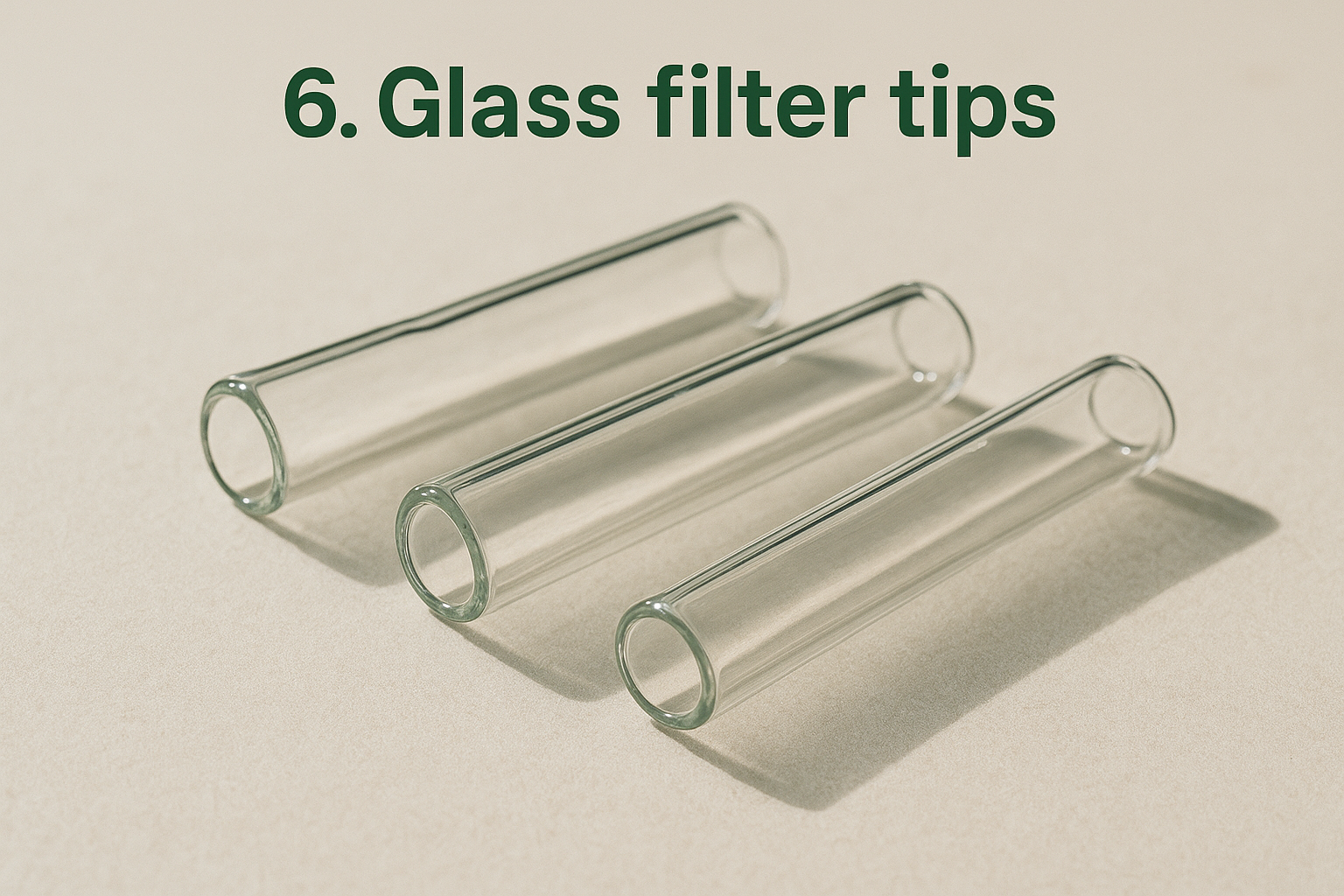
Glass filter tips are reusable cylindrical mouthpieces made from borosilicate glass. Unlike paper or wood options, glass contributes zero material flavor to your smoke, making it the go-to choice for anyone who prioritizes taste above everything else.
How it works
You slide the glass tip into the mouthpiece end of your rolling paper before you seal the joint. The smooth glass cylinder keeps the paper open, maintains a consistent airflow channel, and does not absorb moisture during your session. Because glass is completely inert, it introduces no added taste from the tip material itself, leaving the full flavor of your herb unaltered from start to finish.
Glass is the clearest winner among the best filter tips for joints when flavor purity is your top priority.
Best for
Glass tips suit experienced smokers who roll their own joints and want the cleanest possible draw. They also work well for anyone who finds that paper or wood tips soften and lose their shape partway through a session and wants a mouthpiece that stays firm no matter how long the session runs.
Pros
- Fully reusable with simple cleaning between uses
- Zero flavor interference from the tip material
- Stays rigid throughout the entire session with no moisture absorption
- Available in multiple diameters to match different paper widths
Cons
- Breakable if dropped on a hard surface
- Requires cleaning with isopropyl alcohol to remove resin buildup between uses
- Higher upfront cost compared to disposable paper or wood options
Typical price range
Glass filter tips typically sell for $5 to $15 per tip, with multi-packs of two to five tips available between $10 and $25 depending on glass thickness and brand.
7. Ceramic filter tips
Ceramic filter tips are rigid, reusable mouthpieces made from fired natural clay minerals. They occupy a practical middle ground between glass and paper, offering the structural durability of a hard tip without the fragility that makes glass tips a liability if you smoke outdoors or carry your kit around regularly.
How it works
You insert the ceramic tip into the mouthpiece end of your rolling paper the same way you would with a glass tip. The dense ceramic body does not absorb moisture, maintains a consistent airflow channel throughout your session, and stays firm from first draw to last. Ceramic is also a naturally inert material, which means it does not leach flavor into your smoke the way some wood tips can on the opening draws.
Ceramic sits close to glass in flavor neutrality, making it a solid contender among the best filter tips for joints for anyone who wants a reusable hard tip that handles travel better.
Best for
Ceramic tips suit smokers who want a reusable hard tip but find glass too fragile for regular outdoor or on-the-go use. They work well if you move around a lot and need something durable enough to survive an accidental drop without shattering on contact.
Pros
A few clear advantages make ceramic worth considering over glass for certain setups.
- Reusable with simple cleaning between sessions
- More drop-resistant than glass while still delivering near-neutral flavor
- Maintains a rigid airflow channel with zero moisture absorption
Cons
Ceramic tips come with a few practical trade-offs to weigh before buying.
- Still breakable under hard impact, just less fragile than glass
- Requires cleaning to remove resin buildup between uses
- Harder to find at most local retailers than paper-based options
Typical price range
Ceramic filter tips typically sell for $5 to $12 per tip, with multi-packs available between $10 and $20 depending on size and brand.
8. Activated carbon filters
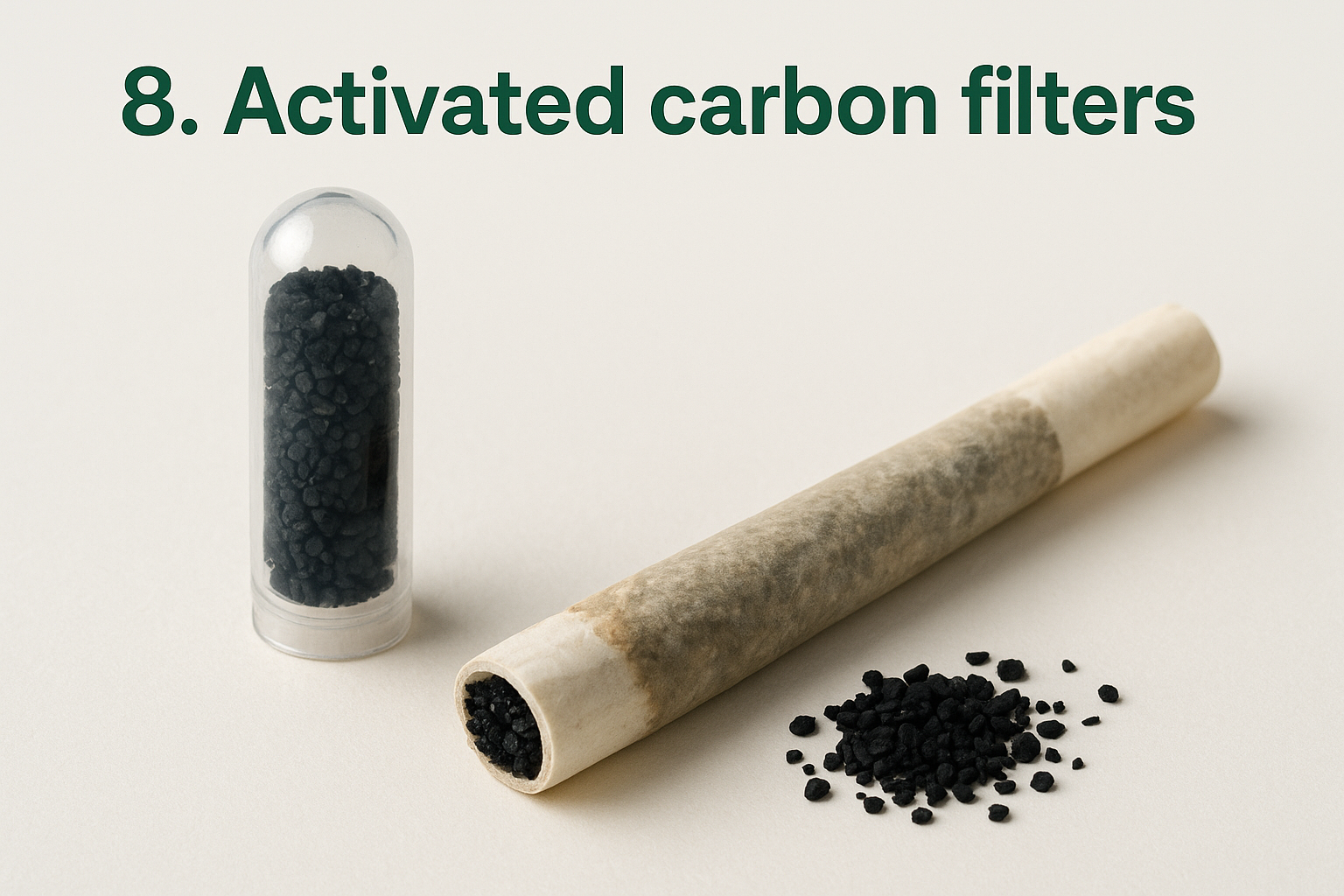
Activated carbon filters are insert-style capsules or tubes filled with granulated activated charcoal that sits between your herb and your mouth as you draw. Unlike paper, glass, or ceramic tips, activated carbon adds an active filtration layer that physically traps certain compounds in smoke before they reach your lungs.
How it works
The filter uses porous activated charcoal granules packed inside a paper or cellulose housing. When smoke passes through the carbon bed, the microscopic pores in the charcoal absorb some combustion byproducts and tar particles through a process called adsorption. Most activated carbon joint filters attach to the mouthpiece end of your joint and are designed for single-session use, though some versions come with reloadable housings that let you swap the carbon core rather than replacing the whole unit.
Activated carbon stands apart from every other option on this list of the best filter tips for joints because it actively removes compounds from smoke rather than just guiding airflow or blocking debris.
Best for
Activated carbon filters suit smokers who prioritize reducing harshness and want more than a structural mouthpiece from their tip. These work particularly well if you smoke regularly and notice throat irritation from combustion byproducts on heavier sessions.
Pros
- Reduces certain combustion byproducts through active adsorption
- Delivers a noticeably smoother draw compared to unfiltered joints
- Easy to attach with no rolling skill required
Cons
- Single-use in most standard versions
- Carbon can absorb some terpenes along with unwanted compounds, which may reduce flavor complexity
- Adds more cost per session than paper or hemp tips
Typical price range
Activated carbon joint filters typically sell for $8 to $20 per pack, with most packs containing between 10 and 30 filters depending on brand and housing material.
9. Corn fiber filters
Corn fiber filters are pre-formed cylindrical tips made from natural corn husk material. They sit in the same category as hemp tips in terms of plant-based sourcing, but the corn fiber composition gives them a distinct texture and structural feel that sets them apart from both paper and hemp options.
How it works
A corn fiber tip slots directly into the mouthpiece end of your rolling paper before you seal and light it. The tightly bound corn fibers form a rigid channel that holds its shape under moisture better than standard wood pulp paper, which makes the tip stay firm through most of a session without collapsing or going soft on your lips. The natural fiber structure also gives the smoke a slightly longer path through the mouthpiece compared to a simple rolled paper crutch.
Best for
Corn fiber tips suit you if you want a fully natural, biodegradable option that requires zero prep work. These are particularly useful if you prefer pre-formed tips but want to avoid anything wood-based due to potential flavor transfer on early draws.
For smokers focused on keeping every element of their joint plant-based, corn fiber is one of the more underrated picks among the best filter tips for joints.
Pros
- Biodegradable and naturally sourced with no synthetic materials
- Pre-formed and ready to insert with no folding or rolling required
- Holds shape better under moisture than standard paper tips
Cons
- Single-use only with no reusability
- Less widely available than paper or hemp tips at most retailers
- Flavor neutrality varies slightly by brand depending on how the fibers are processed
Typical price range
Corn fiber tips typically sell for $3 to $6 per pack, with most packs containing between 20 and 40 tips depending on the brand and tip size.
Final thoughts
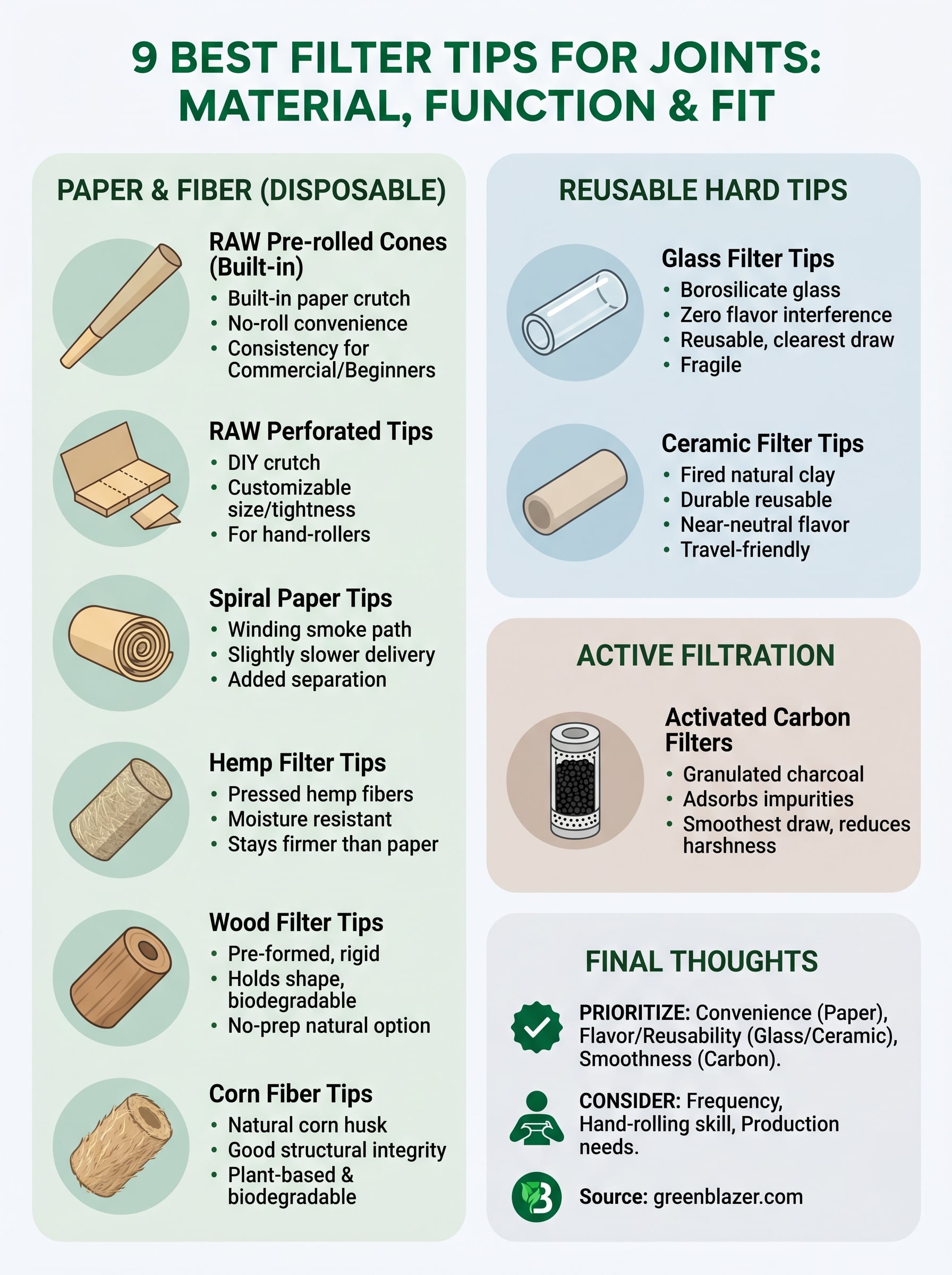
Picking the right tip from this list of best filter tips for joints comes down to what you actually want from your session. If you prioritize convenience and consistency, paper-based options like RAW pre-rolled cones or perforated tips get the job done without any extra gear. If you care most about flavor purity or reusability, glass and ceramic tips are worth the higher upfront cost.
Your smoking frequency matters too. Daily smokers who notice harshness will get real value from activated carbon filters, while occasional smokers will likely find a simple hemp or corn fiber tip more than enough. For commercial producers filling joints at scale, RAW pre-rolled cones with built-in tips remain the most practical choice by a wide margin.
Whatever you decide, browse RAW cones and accessories at Green Blazer to find authentic products backed by a satisfaction guarantee.
