
A spliff hits different than a pure joint. The mix of cannabis and tobacco creates a unique buzz and flavor profile that millions of smokers prefer, but if you've never learned how to roll a spliff, the process can feel intimidating. The good news: it's a straightforward skill that anyone can pick up with the right technique and materials.
Whether you're rolling your first one or tightening up your method, this guide breaks down every step, from choosing your ratio of cannabis to tobacco, to building a proper filter, to sealing the paper for a smooth, even burn. We put this together drawing on years of experience at Green Blazer, where we supply RAW rolling papers and pre-rolled cones to smokers and manufacturers across the country.
Below, you'll get a clear step-by-step walkthrough, practical tips on ratios, and a few tricks that make the difference between a spliff that smokes perfectly and one that falls apart. Let's get into it.
What a spliff is and what you'll need
A spliff is a hand-rolled cigarette that combines cannabis and tobacco in the same paper. Unlike a pure joint, which contains only cannabis, a spliff blends both to produce a lighter, more balanced buzz and a distinct flavor profile that many smokers around the world prefer. The tobacco adds body to the smoke, gives the roll more structural support, and helps it stay lit more consistently than a straight cannabis roll.
A spliff gives you direct control over potency, burn quality, and flavor that pre-packaged options rarely match.
What sets a spliff apart from a joint
The core difference is the inclusion of tobacco. A joint is pure cannabis; a spliff mixes the two. That changes how the paper burns, how the smoke feels, and how strong the overall effect is. Tobacco fills space in the roll, so your spliff tends to hold its shape better and burn more evenly from start to finish. Here's a quick side-by-side:
| Joint | Spliff | |
|---|---|---|
| Contents | Cannabis only | Cannabis + tobacco |
| Potency | Higher | Lower to moderate |
| Burn consistency | Variable | More even |
What you'll need before you start
Before you learn how to roll a spliff, get your materials together. Having everything on the table beforehand keeps the process clean and cuts down on wasted paper.
- Rolling papers (RAW Classic or Organic Hemp in King Size work well for most ratios)
- Ground cannabis (fine but not powdery)
- Loose rolling tobacco (not pipe tobacco; rolling tobacco packs more evenly)
- A filter tip or crutch material (stiff cardboard or a pre-cut tip)
- A grinder for consistent cannabis texture
- A pen or thin dowel to pack the spliff after rolling
Quality materials make a real difference. Thin, unbleached papers burn slower and cleaner, letting you taste both cannabis and tobacco without chemical interference muddying the flavor.
Step 1. Pick your mix ratio and prep it
Your ratio is the single biggest factor in how your spliff smokes. Go too heavy on cannabis and you lose burn consistency; go too heavy on tobacco and the cannabis flavor disappears. Picking the right balance before you start saves you from wasting materials.
Common ratios to try
Most smokers working out how to roll a spliff start with a 70/30 split: 70% cannabis to 30% tobacco. That ratio gives you a strong cannabis effect with enough tobacco to stabilize the burn. Here are three starting points:
| Ratio (Cannabis/Tobacco) | Effect | Best for |
|---|---|---|
| 70/30 | Strong, well-balanced | Experienced smokers |
| 50/50 | Moderate, even buzz | New to spliffs |
| 30/70 | Light, tobacco-forward | Microdosing or stretching supply |
Start at 50/50 if you're new to spliffs; you can always shift the ratio once you know how each blend smokes for you.
How to prep your blend
Grind your cannabis to a medium-fine texture. Avoid grinding it to powder; that blocks airflow and makes the spliff hard to draw. Once ground, mix your cannabis and tobacco together on a rolling tray before loading anything into the paper.
A pre-mixed blend distributes evenly across the roll and eliminates the hot spots that cause uneven burns or canoeing.
Step 2. Make a filter tip and shape the paper
A good filter tip separates a spliff that smokes clean from one that gets soggy and collapses at the mouthpiece. Building your tip before you touch the paper keeps the process linear and gives you a firm anchor to roll around.
How to fold the filter tip
Cut or tear a strip of stiff cardboard roughly 2cm wide and 5cm long. A business card or the cardboard from your rolling paper box works perfectly. Fold the first 1cm into a tight W or M shape using three short accordion folds, then wrap the remaining length around those folds to form a cylinder. The accordion section keeps the channel open so air flows freely when you draw.
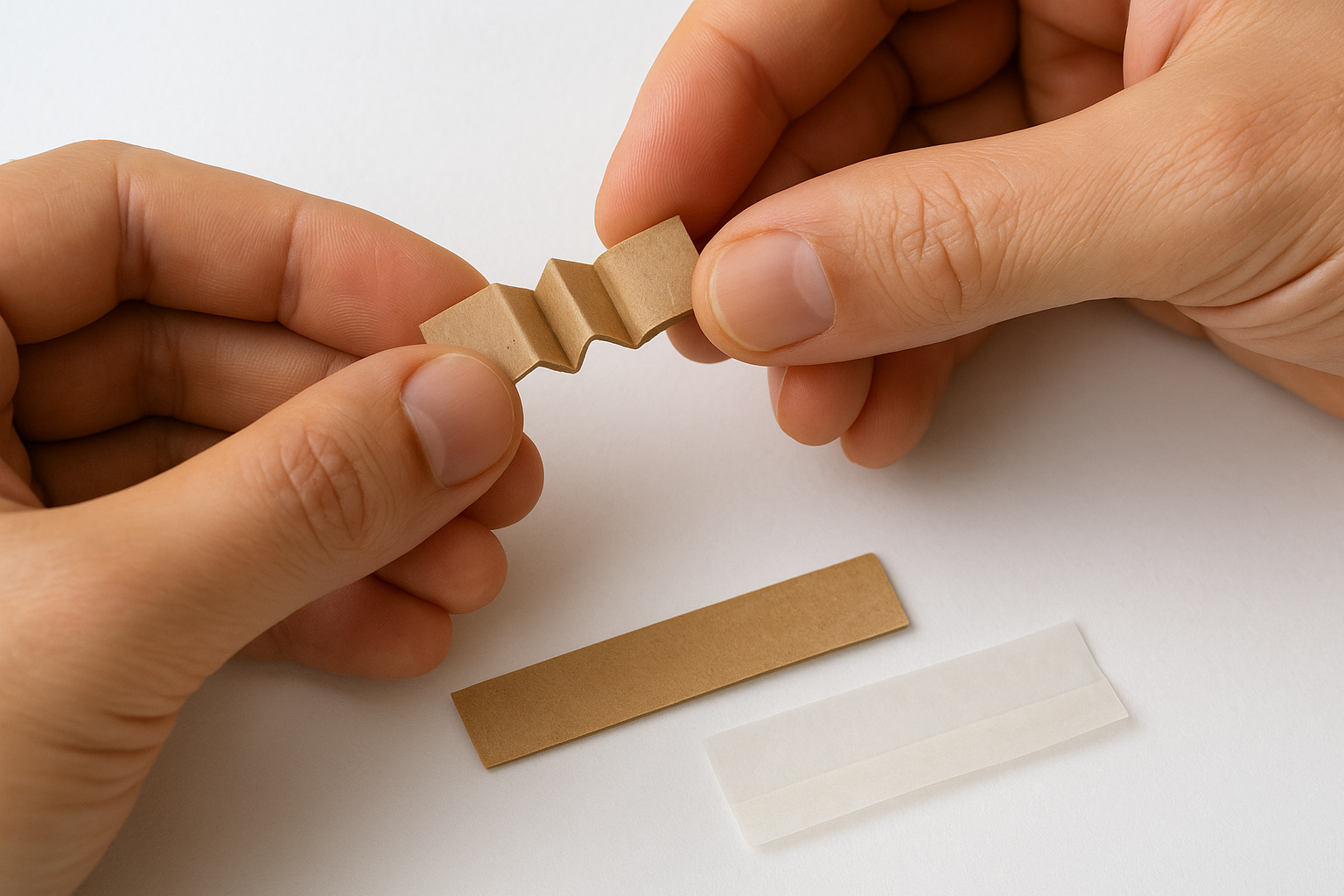
A firm, well-formed tip prevents the mouthpiece end from flattening mid-smoke and keeps your draw consistent from start to finish.
How to shape the paper
Once your tip is ready, place the paper in front of you with the gum line facing up and toward you. Set the filter at one short end. As you work through how to roll a spliff, forming a slight U-shape or trough in the paper before you add any material helps contain your blend. Pinch both ends of the paper lightly to hold that curve while you move to the next step.
Step 3. Fill, roll, and seal without runs
With your filter in place and your paper shaped into a trough, you're ready to load your blend. This step is where most people learning how to roll a spliff make their biggest mistake: overfilling. Spread your pre-mixed cannabis and tobacco blend evenly from the filter end toward the opposite tip, leaving about a centimeter of empty paper at the far end. An even fill prevents lumps that cause the spliff to burn unevenly on one side.
How to roll the paper around the fill
Pinch the paper between your thumbs and forefingers and start rolling the material back and forth gently to compact it into a cylinder. Once the blend feels firm and uniform, tuck the non-gum edge of the paper down and under the blend using your thumbs, then roll upward so the paper wraps tightly around the fill. Keep the filter end anchored so it stays flush.
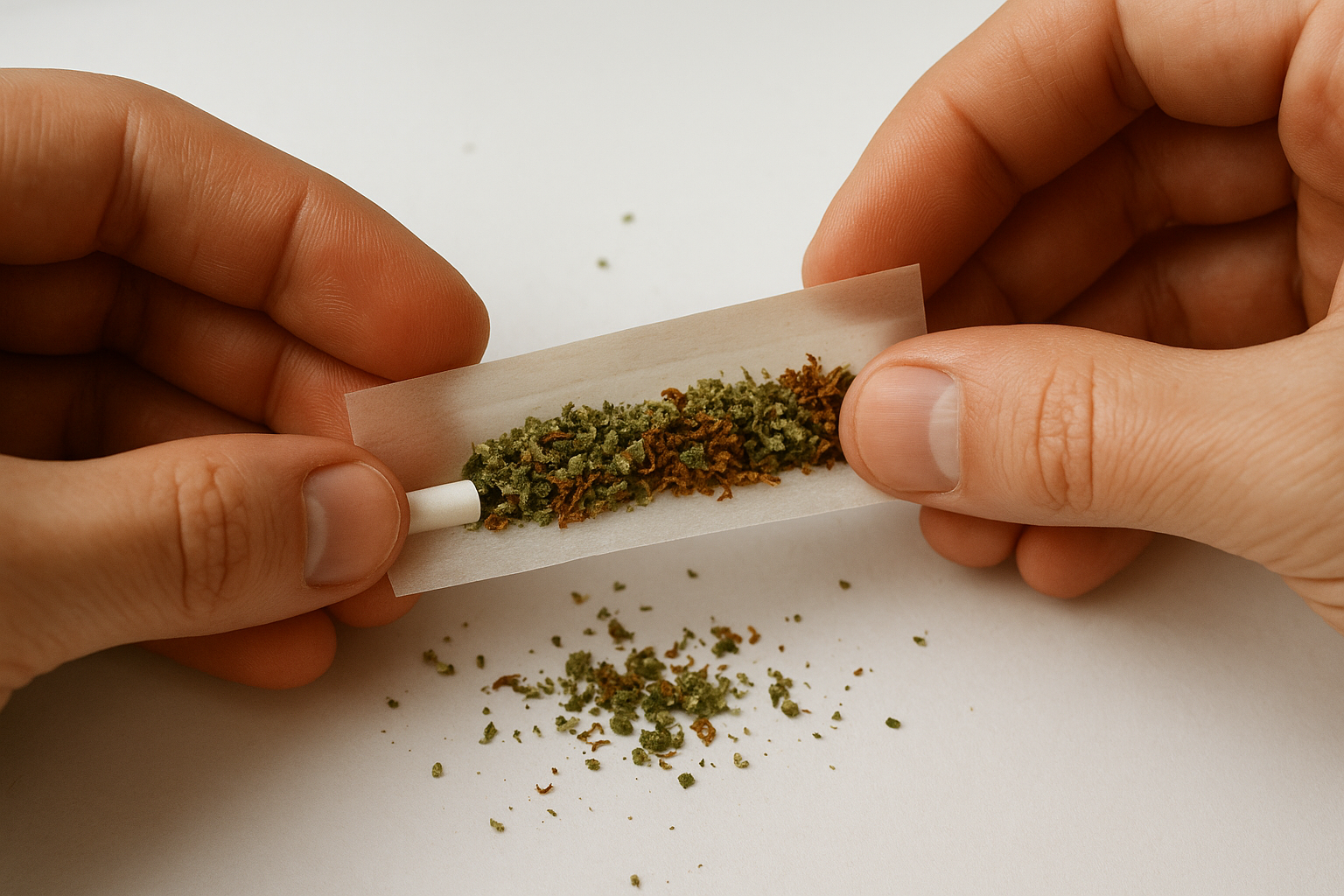
How to seal without burning through
Lick the gum strip lightly with one smooth pass; too much moisture warps the paper and causes runs. Press the gum line down firmly, starting from the filter end and working toward the tip to push out any air pockets. A clean seal means a straight, consistent burn.
Seal from the filter end outward to keep the paper tight and avoid the air bubbles that cause canoeing.
Step 4. Pack, twist, and light it evenly
Your sealed spliff needs one final step before it's ready: packing the open end and giving it a proper twist. This stage locks in your fill and sets you up for an even light.
How to pack and twist the open end
Insert your pen or thin dowel into the open tip and gently tamp the blend down toward the filter. You're not compressing it hard; just closing the gaps enough that the blend is snug and uniform from one end to the other. Once packed, pinch the excess paper at the open end and twist it closed in one direction. A tight twist gives you a clean, slow-burning start point.
How to light it without burning the side
Lighting a spliff correctly is one of the most overlooked parts of learning how to roll a spliff. Hold the spliff horizontally, rotate it slowly over the flame, and let the twisted tip catch evenly before you take your first draw. Avoid pressing the flame directly to one spot.
Toast the tip by rotating it over the flame for a few seconds before drawing; this primes the burn and prevents canoeing from the first puff.
Quick recap
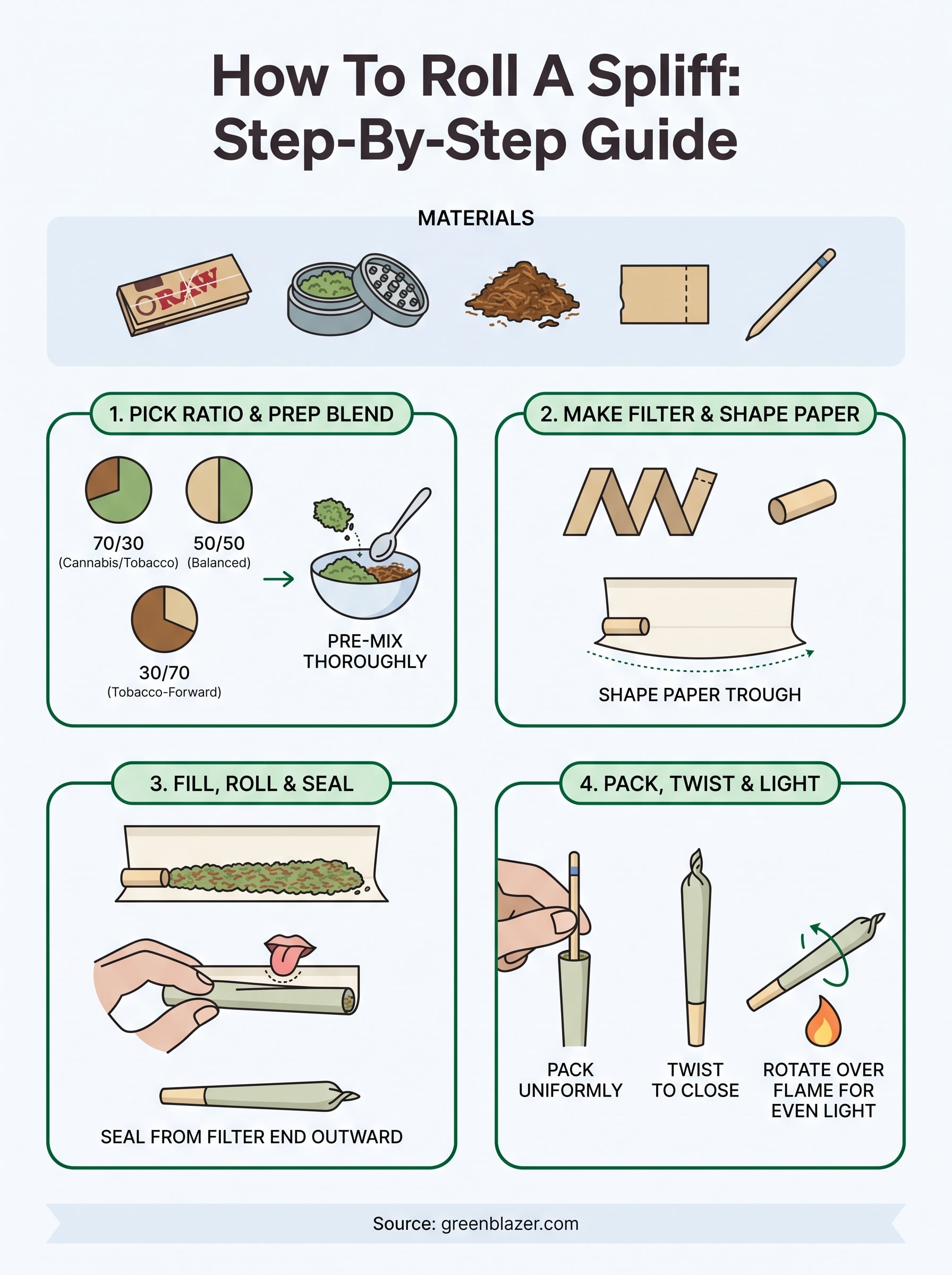
Learning how to roll a spliff comes down to four repeatable steps: pick your ratio and pre-mix your blend, build a firm filter tip, fill and roll the paper with an even tuck and seal, then pack and twist the open end before lighting it slowly over a rotating flame. Each step builds on the one before it, so skipping any of them usually shows up as a run, a loose draw, or a canoe halfway through your smoke.
Your biggest variables are your cannabis-to-tobacco ratio and the quality of your rolling paper. Starting at 50/50 gives you a forgiving baseline you can adjust once you know how each blend smokes. Using thin, unbleached papers like RAW Classic keeps the burn slow and the flavor clean without chemical interference. Practice a few rolls and you'll nail the technique faster than you expect.
For RAW papers, cones, and accessories that make every roll cleaner, visit Green Blazer.
