

If you want to buy herb grinder online and get it right the first time, start with a 4-piece metal grinder in the 2 to 2.5 inch range, from a shop that states its return policy clearly. It handles most dry herb, catches kief, and typically costs $15 to $40. Choose an electric model if your hands tire quickly or you grind in volume, a 2-piece if you want something cheap and pocketable, and a premium or novelty model only when lifetime durability or looks matter to you.
The problem is that online listings all look alike. Photos hide tooth quality, thread fit, and metal grade. The word "premium" shows up on $12 products and $90 products alike. You cannot feel the weight or twist the lid before you pay, so you need to know which type matches how you use herb, and which details on the product page actually predict quality.
At Green Blazer, we are an authorized RAW distributor based in Las Vegas, and grinders ship in the same orders as our cones, papers, and trays. That means we see which grinders people reorder and which ones come back. This guide walks through six types, with what each one does, who it suits, and what it costs. Then it covers where to buy, shipping, and returns.
1. Four-piece metal grinder
A 4-piece metal grinder is the safest pick when you buy an herb grinder online for the first time. It puts a grinding chamber, a screen, and a kief catcher into one pocket-sized body, and you can find it at almost every price point.
The 4-piece is the benchmark: every other type is worth buying only if it beats it for your situation.
How it works
You load flower into the top chamber, close the lid, and twist. Sharp teeth shred the herb, and it falls through holes into the middle chamber. A fine screen then sifts kief, the powdery trichomes, into the bottom compartment.
Three specs matter more than the brand name:
- Size: 1.5 to 2 inches fits a pocket. About 2.5 inches (63 mm) is better for daily use.
- Material: Zinc alloy is heavier and cheaper. Aluminum is lighter and often anodized.
- Teeth: Sharp, closely spaced teeth give an even grind. Blunt teeth tear and smear herb.
Who it suits
Everyday smokers, first-time buyers, and anyone who likes to save kief get the most from it. It also pairs well with RAW cones, because a fluffy, even grind fills a cone without gaps and helps it burn evenly instead of canoeing.
Expect more upkeep if you grind very sticky flower. Resin builds up on the screen and teeth faster than on simpler designs. Plan to clean it with isopropyl alcohol and a brush every few weeks.
Price and buying tips
Budget zinc-alloy models usually list for $11 to $20. Better-finished aluminum versions run $20 to $40, and large machined units reach $75 to $100 (see item 5).
Make sure the listing names the material and diameter and says whether the lid is magnetic. A description that only says "premium" tells you nothing.
2. Two-piece grinder
A 2-piece grinder is the cheapest way to get a real grind, and it is the best choice for travel. It has just a lid and a base with teeth, so there is no screen, no catcher, and nothing to lose in a bag.
Fewer parts mean fewer things to clean, lose, or break, and that is the whole appeal.
How it works
You drop herb between the two halves and twist. The teeth on both halves shred it, and the ground herb stays in the base until you tip it out. Most have a magnetic or snap-fit closure.
The trade-off is that you skip kief collection. Whatever falls off the herb mixes into the grind. For many people that is fine, since they were never going to save the kief anyway.
Who it suits
Travelers, light users, and people who hate cleaning will like it best. It is also handy as a second grinder that lives in a car or backpack while your 4-piece stays at home.
Heavy daily users will find it limiting. With no screen, the grind is less uniform, and you cannot separate fine material from coarse.
Price and buying tips
Basic models list for roughly $10 to $20. Machined premium 2-pieces from specialty makers run closer to $40 to $50.
Check the thread and closure first. Cheap 2-pieces often have loose lids that pop open and spill herb. Also confirm the diameter, because small 1.5 inch models hold only a gram or so of flower.
3. Electric grinder
An electric grinder does the twisting for you with a motor. It is the right type if you grind large amounts or have hands, wrists, or grip that make manual twisting painful.
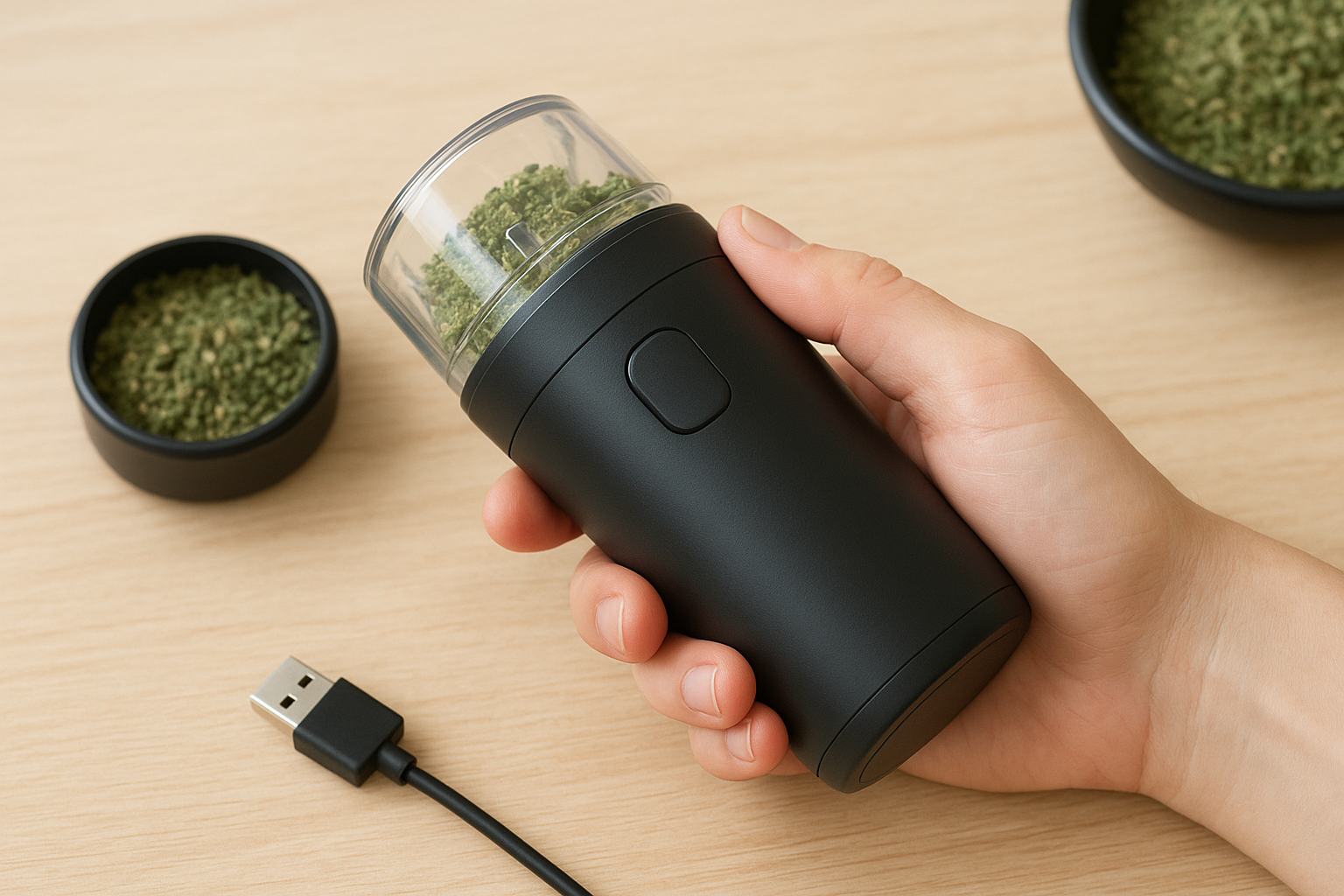
An electric grinder buys you comfort and speed, and it costs you grind control.
How it works
Most handheld models run on a rechargeable battery with a USB charging cable. You load herb, press a button, and the motor drives the blades. Larger countertop-style units plug into a wall outlet and take bigger loads.
Electric grinders tend to produce a finer, more uniform grind than hand twisting. That is useful for some uses, but very fine herb can burn hot and fast in a joint. Pulse the button instead of holding it down.
Who it suits
People with arthritis, anyone prepping a week's worth of herb at once, and users who want one-handed operation get real value here. If you fill dozens of cones, pair a grinder with a pre-roll filling machine to speed up the whole process.
Casual users rarely need one. A good manual grinder takes about ten seconds per session.
Price and buying tips
Expect to pay from about $30 to $50 for common handheld and plug-in models, with cheap USB minis below that. Because it is an electronic product, check the battery and charging details on the listing, and make sure the seller offers returns or replacements for defects. Motors and batteries fail more often than metal teeth do.
4. Novelty and custom grinders
Novelty grinders work the same way as standard multi-chamber grinders, but with printed, engraved, or themed bodies. They suit gift buyers and anyone who wants a grinder with personality.
A novelty grinder is a normal grinder with a design on it, so judge the design last and the mechanics first.
How it works
Most are 4-piece or 5-piece aluminum bodies with a design printed, laser-engraved, or coated on the lid. Common themes include anime, music artwork, mythology, and seasonal prints. Some sellers offer custom grinders where you submit a photo, phrase, or logo.
Large 5-piece versions often add a second screen for finer separation. Listings usually say "fine screen" or "microfine screen" when they do.
Who it suits
Gift shoppers and collectors are the obvious buyers. Custom grinders also work well for events, groups, and small business branding where legal.
If you grind daily and want a tool that lasts for years, put the money into the mechanics instead. A printed design can wear on the edges where your fingers grip.
Price and buying tips
Typical novelty and custom grinders list at about $19 to $25 for extra-large aluminum models. Before you order, check three things:
- Finish type: Engraving and anodizing outlast a printed coating.
- Actual diameter: "Extra large" is not a standard measurement, so look for inches or millimeters.
- Return terms: Made-to-order items are often final sale and ship slower. Read the policy before you add a custom design.
5. Premium CNC-machined grinder
A premium CNC-machined grinder is the one to buy if you want a single grinder for years. It is cut from solid aluminum or stainless steel with tight tolerances, so the threads turn smoothly and the teeth stay sharp.
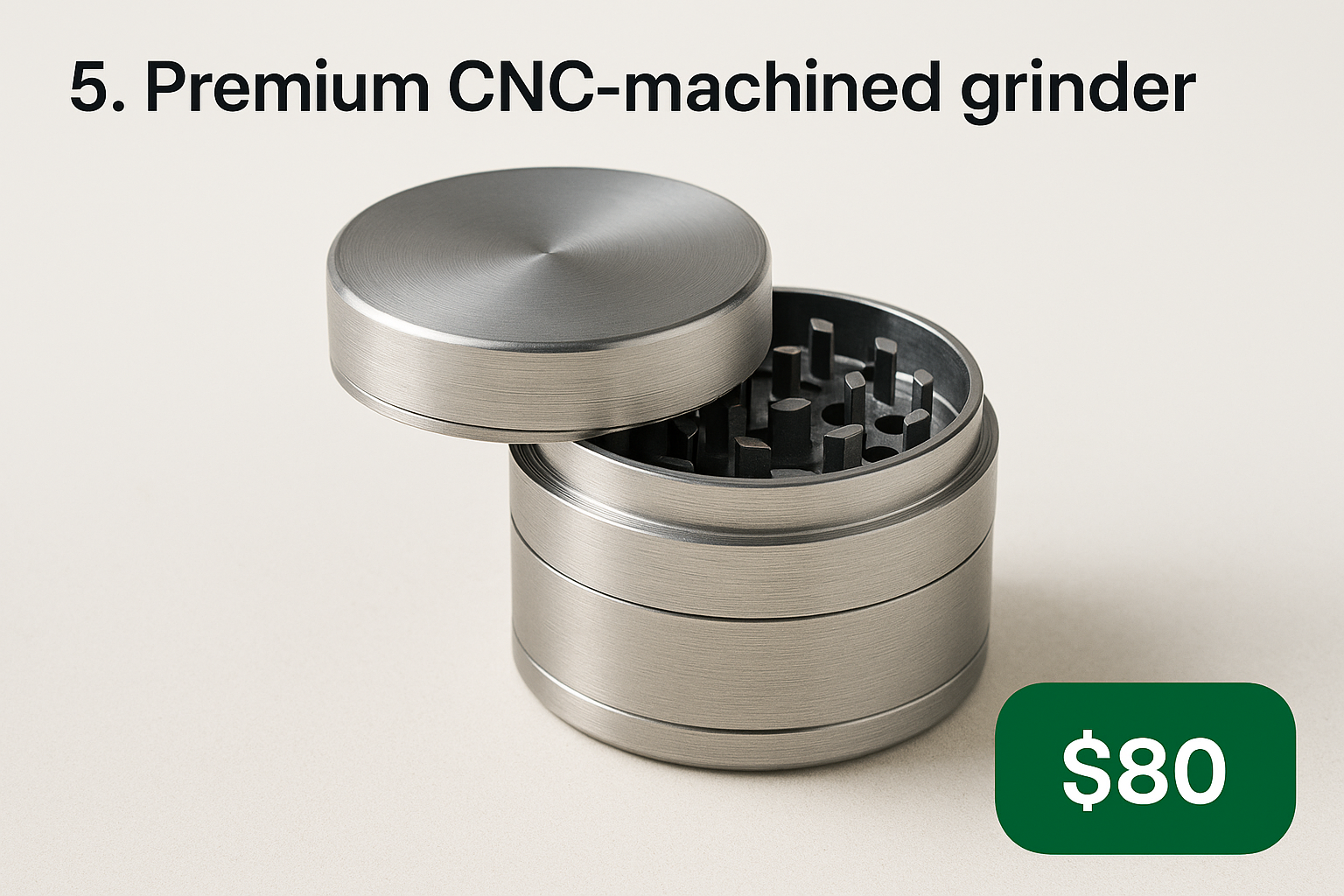
Premium grinders cost four to six times more than budget ones, and you pay for fit, finish, and lifespan, not for a different result in the bowl.
How it works
The mechanics match a 4-piece grinder: chamber, screen, kief catcher. The difference is manufacturing. Machined parts line up precisely, so the grinder spins without grit or wobble and the lid does not wear loose. Some makers use angled or shaped teeth to speed up grinding.
Established brands in this tier include Santa Cruz Shredder and Phoenician Engineering. Their larger 4-piece models commonly list at about $75 to $100.
Who it suits
Daily users, people who grind a lot of flower, and anyone tired of replacing cheap grinders every year benefit most. Over several years, the cost per month ends up close to a budget grinder you replace twice.
If you grind once or twice a week, or tend to lose gear, a premium grinder is overspending.
Price and buying tips
Plan on $60 to $100 for most large models. Knockoffs of well-known brands are common online, so buy from an authorized retailer and check what warranty or replacement policy comes with the grinder. Compare the listed dimensions as well, since "large" differs between brands.
6. Wood and acrylic grinders
Wood and acrylic grinders are the style and budget options. Wood gives you a handcrafted look, and acrylic gives you bright colors at a very low price. Both work, but neither matches metal for durability.
Choose these for looks or a tight budget, and expect to replace them sooner than metal.
How it works
Acrylic grinders use molded plastic bodies, often with plastic or light metal teeth. Wood grinders commonly pair a turned wood body with metal teeth inside, so check the listing, since some use all-wood construction that grinds poorly. A 2-piece walnut model, for example, lists around $35 at U.S. shops.
Neither material is as precise as machined aluminum, so the grind can be a little less even.
Who it suits
Acrylic suits beginners who are not sure they will keep grinding, plus anyone who wants a throwaway grinder for a festival or beach bag. Wood suits people who want a piece that sits on a shelf or coffee table.
Wood is harder to clean, since resin soaks into the grain. Cleaning with alcohol can dry or discolor wood finishes, so a gentle dry brush is safer.
Price and buying tips
Acrylic grinders commonly cost $10 to $20, and decorative wood models run about $30 to $40. Look for metal teeth in either material, a secure lid, and clear photos of the inside. Skip listings that show only the exterior.
How to buy an herb grinder online without regrets
Buy from a specialty retailer that lists the material, diameter, and return terms on every product page, and compare the total cost after shipping. The right type matters less than buying from a shop that stands behind its products.
A grinder is only a good deal if the shop will take it back when the threads are rough or the teeth are dull.
Where to buy: specialty shop, marketplace, or local store
Specialty online shops usually give the best selection and the clearest specs. Large marketplaces offer fast delivery, but listings mix genuine brands with knockoffs, so check who actually sells the item. Local smoke shops let you feel the weight and threads, but stock is limited.
Green Blazer sells grinders alongside RAW cones, rolling papers, and trays, with a 100% satisfaction guarantee, free returns and replacements, and discreet delivery. That combination is convenient if you also restock cones.
One note on terminology: if you want to grind fresh culinary herbs, use a kitchen mill or mortar and pestle. Metal smoking grinders are built for dry herb, and moist leaves gum up the teeth.
Typical prices by type
The ranges below are approximate list prices at U.S. online shops. Sales and member discounts can lower them.
| Type | Typical price | Best for | Cleaning effort |
|---|---|---|---|
| 4-piece metal | $11 to $40 | Daily use, kief | Medium |
| 2-piece | $10 to $20 (premium up to $50) | Travel, light use | Low |
| Electric | From about $30 to $50 | Volume, hand strain | Medium to high |
| Novelty and custom | $19 to $25 | Gifts, style | Medium |
| Premium CNC | $60 to $100 | Long-term daily use | Medium |
| Wood and acrylic | $10 to $40 | Budget, looks | Medium to high |
Shipping, returns, and age checks
Run through this checklist before you pay:
- Free shipping threshold: Many shops set it somewhere around $50 to $100, so a $15 grinder can cost more than expected after shipping.
- Return policy: Look for a stated window and whether returns or replacements are free.
- Packaging: Discreet, plain packaging protects both the grinder and your privacy.
- Age verification: Reputable shops require buyers to be 21 or older.
- Local rules: Laws on smoking accessories vary by state, so confirm yours before ordering.
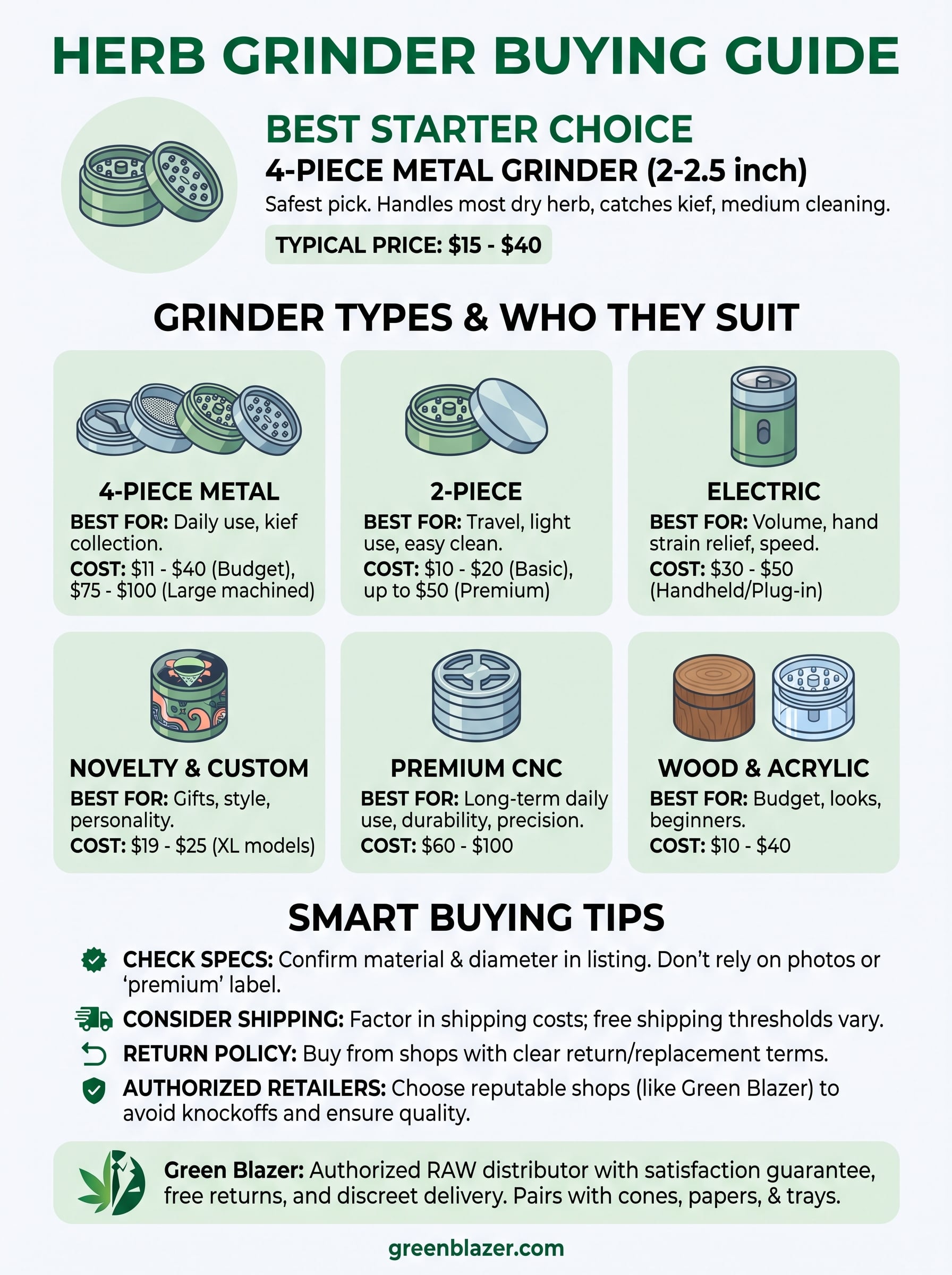
Pick the grinder, then pick the shop
For most people, a 4-piece metal grinder in the 2 to 2.5 inch range is the right buy. Move to an electric model if grinding hurts your hands, a 2-piece if you travel, a premium CNC grinder if you want it to last, and a novelty or wood model if style is the point.
Whichever type you choose, read the material and diameter on the listing, add shipping to the price, and confirm the return terms before checking out. If you also roll with RAW, browse rolling tray and grinder sets, cones, and papers at Green Blazer and order everything from one authorized shop.
