

Your grinder does one job, break down flower, and the teeth inside are what make or break that job. Not all teeth are created equal, though. Weed grinder teeth types vary in shape, sharpness, and layout, and each design produces a noticeably different grind. Some shred herb into fine powder, others leave it chunky, and the wrong match can mean clogged screens, uneven burns, or wasted flower.
Whether you're packing RAW cones by hand at home or loading them by the thousands in a commercial operation, grind consistency matters more than most people think. At Green Blazer, we've seen firsthand how the right grind transforms a pre-roll session, it's one reason we carry quality grinders alongside our full lineup of RAW cones and smoking accessories.
This guide breaks down the most common grinder tooth shapes, diamond, pyramid, shark fin, square, and more, and explains how each one affects your grind texture, the grinder's lifespan, and overall performance. By the end, you'll know exactly which tooth design fits your setup and smoking style.
Why grinder teeth design matters
The teeth inside your grinder are the only moving parts doing actual work. Their shape determines how flower breaks apart, whether that's a fine powder, a medium grind, or chunky pieces. A set of well-designed teeth cuts cleanly through sticky bud without binding, while a poorly designed set crushes and mashes it, pulling trichomes off and leaving uneven chunks. The difference shows up directly every time you pack a cone or load a pre-roll machine.
How grind texture affects your smoke
Grind texture is the direct output of your tooth design, and it controls nearly everything about your smoking experience. A fine grind packs tighter into RAW cones, which slows airflow and produces a denser, slower burn. A coarser grind lets more air move through the paper and tends to burn faster. Neither one is automatically better, but the match between grind texture and cone size is something you need to get right before you start packing.
If your grind is too coarse for a King Size cone, airflow gets inconsistent and the burn canoes. If it's too fine, you end up with a plugged cone that barely draws.
Packing pre-rolls by hand requires a grind that is even and free of stems or seeds, which your tooth shape directly controls. For commercial pre-roll production, where filling machines run at speed, the grind needs to stay consistent across every batch. One core reason understanding weed grinder teeth types matters is that tooth geometry determines batch-to-batch consistency, not just a single session's output.
Tooth sharpness and how it degrades over time
Sharp teeth break flower down efficiently, but tooth sharpness fades with regular use, and the rate at which that happens depends entirely on tooth design. Teeth with thin, pointed tips cut faster initially but also wear down quicker, especially when you are grinding dense, resinous flower on a regular basis. Thicker and more robust tooth profiles hold their edge longer and resist the sticky buildup that gradually dulls cutting surfaces.
The material your grinder is made from works alongside tooth shape to determine longevity. Aluminum and zinc alloy grinders have teeth machined to precise tolerances, while cheaper plastic grinders tend to have molded teeth that lose their edge after a few weeks of consistent use. A well-shaped tooth on a low-grade material still underperforms over time regardless of the original design quality.
Understanding how different tooth designs handle wear also helps you set realistic cleaning and replacement expectations for your grinder. Teeth that collect resin buildup quickly will degrade faster if you skip regular cleaning, which directly affects grind quality and cone performance. Staying on top of maintenance keeps your output consistent and your cones packing the way they should, session after session.
Common weed grinder teeth types
Walk into any smoke shop or browse online and you'll find grinders with teeth that look nothing alike. The most common weed grinder teeth types break down into a few distinct categories, each built around a different cutting geometry. Knowing what separates them helps you pick a grinder that actually delivers the texture you need.
Diamond and pyramid teeth
Diamond teeth are the most popular design on the market, and for good reason. Their angled, pointed tips slice through flower cleanly rather than tearing it, which means you get a more even grind with less effort. Pyramid teeth work on a similar principle, using a sharper taper to pierce dense bud, but they tend to produce a slightly finer output compared to the broader diamond shape. Both designs work well for packing RAW cones by hand since they break flower into consistent, medium pieces without over-processing it into dust.
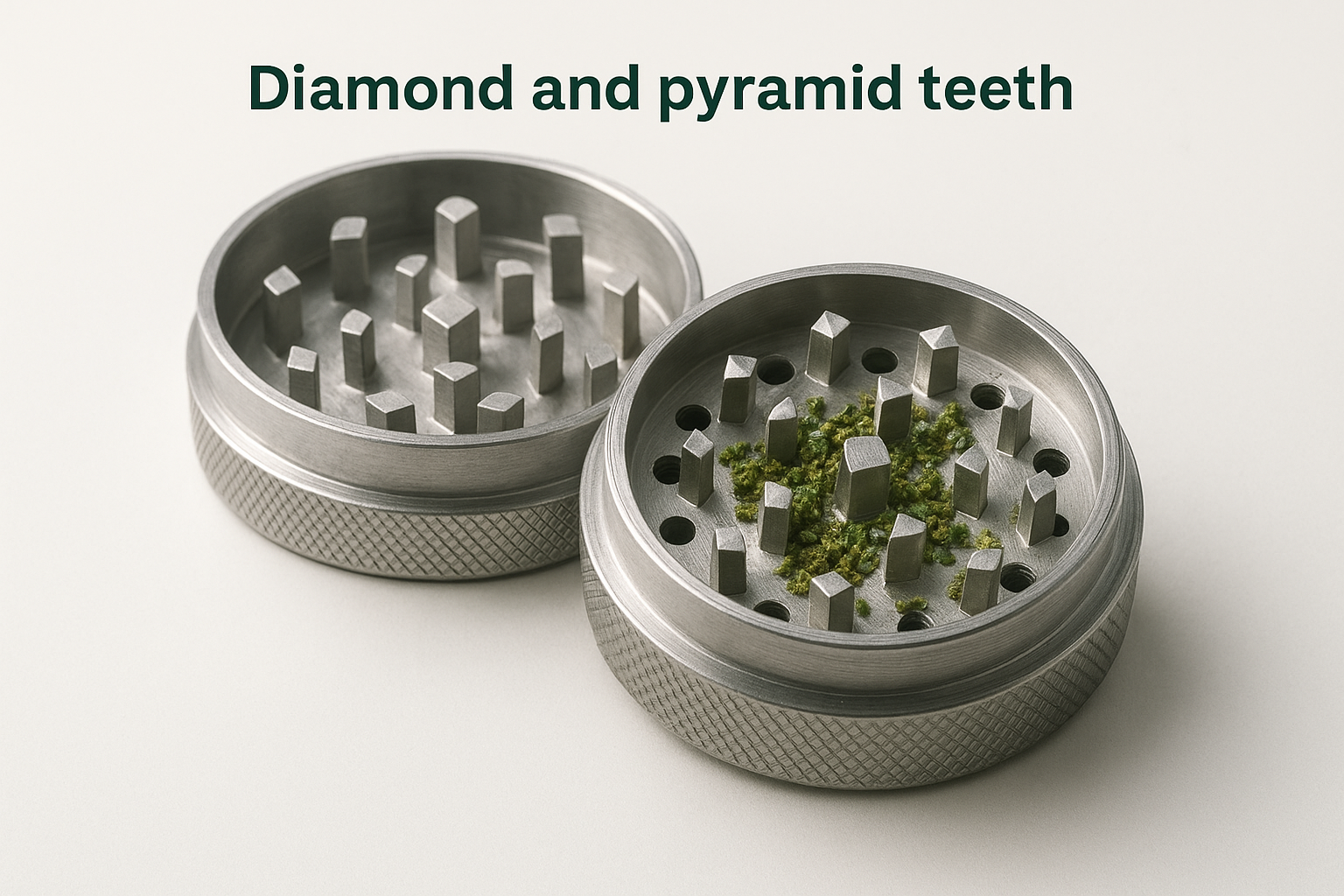
If you primarily pack King Size cones or use a pre-roll filling machine, diamond or pyramid teeth give you the most reliable, repeatable grind.
Shark fin and blade teeth
Shark fin teeth have a curved, asymmetrical profile that grabs flower on the pull stroke and releases it on the return. This aggressive cutting action works well on sticky, resinous strains that tend to clump and bind inside standard grinders. Blade-style teeth function similarly, using a flat, sharp edge rather than a curved one. Both designs tend to produce a coarser, chunkier grind compared to diamond or pyramid teeth, which makes them better suited to loose-pack applications than tight cone fills.
Square and peg teeth
Square teeth, sometimes called peg teeth, are the simplest design available. They do not cut flower so much as they break it apart through blunt force, pushing pieces against each other until they separate. This produces an inconsistent grind with a mix of fine bits and larger chunks. Most quality grinders have moved away from square teeth entirely, and you will typically only find this design on entry-level plastic grinders where durability and performance are already limited.
How teeth shape changes the grind
Tooth shape does more than determine how fast you grind. The geometry of each tooth directly controls whether flower comes out as fine dust, medium chunks, or a coarse mix of both. Understanding this connection is the practical reason different weed grinder teeth types produce such different results from the same flower, even at the same grind speed and duration. Your cone format, packing method, and burn preferences all depend on getting that output right.
Fine vs. coarse output by tooth type
Pointed teeth like diamond and pyramid designs pierce and slice through flower, which produces a medium-fine, even output. Because they cut rather than crush, the resulting grind has fewer oversized chunks and less powdery dust. Shark fin and blade teeth shred more aggressively and leave more variation in particle size, skewing coarser overall. Square peg teeth crush more than cut, producing the least consistent output of all the common designs.
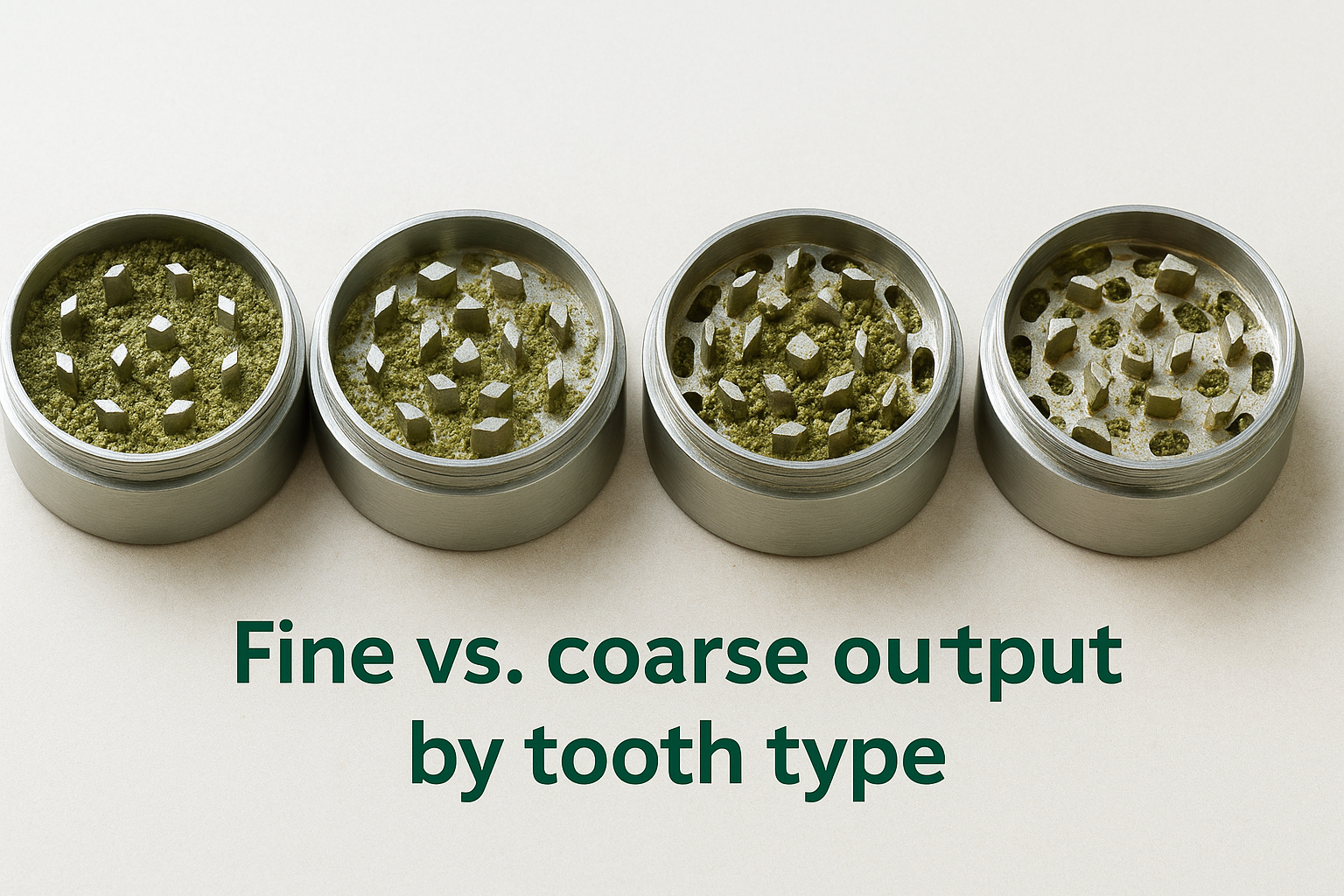
The finer and more consistent your grind, the more predictably a RAW cone packs and burns from start to finish.
Here is a quick breakdown of how the main tooth types compare on output texture:
| Tooth Type | Grind Output | Best Use |
|---|---|---|
| Diamond | Medium-fine, even | Hand-packing cones, pre-roll machines |
| Pyramid | Fine, consistent | Tight cone fills, smaller sizes |
| Shark fin | Coarse, variable | Loose-pack, pipes, bowls |
| Blade | Medium-coarse | General use, thicker cones |
| Square peg | Inconsistent mix | Not recommended for cones |
Trichome retention and flavor
How a tooth breaks flower down also affects how many trichomes stay on the bud versus fall off into the kief catcher. Crushing and tearing teeth knock trichomes loose at a higher rate, which reduces the potency and flavor of what ends up inside your cone. Slicing teeth preserve more trichome structure by cutting cleanly rather than mashing.
Flavor matters more than people expect when you are packing premium RAW cones. Choosing a tooth design that cuts rather than crushes keeps more of the plant's active compounds where you want them, packed into the paper and not sitting at the bottom of your grinder.
How to choose the right teeth for your setup
Picking the right grinder comes down to how you use it and what you pack. Not every weed grinder teeth type works equally well for every situation, and buying based on looks or price alone usually means settling for a grind that does not match your actual needs. Your cone format, packing method, and how often you grind are the three factors that should drive your decision.
Match tooth design to how you pack
If you pack RAW cones by hand, diamond or pyramid teeth give you the most control over grind consistency. Their slicing action produces an even, medium-fine output that fills cones cleanly without over-packing the tip or leaving air gaps in the middle. For commercial pre-roll filling machines, that same consistency matters even more since uneven grind texture causes jams and inconsistent fill weights at scale.
Diamond teeth remain the most versatile choice for anyone filling RAW cones regularly, whether that is one cone at home or hundreds in a production run.
Use this quick reference to match your setup to the right tooth design:
| Setup | Recommended Tooth Type |
|---|---|
| Hand-packing King Size cones | Diamond or pyramid |
| Pre-roll filling machine | Diamond |
| Pipes or loose-fill applications | Shark fin or blade |
| Entry-level casual use | Blade (avoid square peg) |
Consider your volume and flower type
High-volume grinders need durable tooth profiles that hold their edge through extended use. If you grind daily or commercially, thicker tooth designs like diamond cut on aluminum grinders outlast thinner pointed profiles by a wide margin. Resinous, high-moisture flower also accelerates wear, so choosing a tooth shape with a broader cutting surface reduces how fast sticky buildup degrades your grind quality.
If you work with drier, less dense flower, pyramid or shark fin teeth give you a clean break without the added durability requirement. Matching your tooth type to both your packing method and your typical flower consistency is what actually produces reliable results over time.
Care, cleaning, and when to replace a grinder
Resin buildup is the single biggest threat to grinder performance, regardless of which weed grinder teeth types you're working with. Even the sharpest diamond or pyramid teeth lose their effectiveness when sticky residue coats the cutting surfaces and clogs the screen. Regular cleaning keeps your grind consistent and extends the life of your grinder far beyond what neglect allows.
How to clean your grinder properly
Start by disassembling your grinder completely and placing it in the freezer for 20 to 30 minutes. Cold temperatures harden resin buildup, making it brittle and much easier to knock loose before you introduce any liquid. Once chilled, tap each piece firmly over a clean surface to dislodge frozen residue, then use a stiff brush to scrub the teeth and screen thoroughly.
For a deeper clean, soak metal grinder pieces in isopropyl alcohol (90% or higher) for 20 to 30 minutes, then scrub and rinse with warm water before drying completely.
Avoid soaking plastic or acrylic grinders in alcohol since it breaks down the material and causes teeth to crack or warp over time. For plastic models, warm water and dish soap are your safest cleaning option. Dry all pieces fully before reassembling, since moisture trapped inside a metal grinder promotes corrosion that shortens its lifespan significantly.
Signs your grinder needs replacing
You will know a grinder is past its useful life when cleaning no longer restores smooth operation. Teeth that spin without gripping flower or wobble noticeably between the grinding plates indicate the cutting edges have worn flat. At that point, no amount of cleaning recovers the performance you need for consistent cone packing.
Stripped threading on the lid, cracked body sections, or a torn kief screen are additional signs that replacement is overdue. Continuing to use a grinder in that condition produces inconsistent grind texture that directly affects how your cones fill and burn. Replacing it before performance fully breaks down keeps your packing sessions running smoothly rather than forcing you to work around a tool that no longer holds up.
Quick wrap-up and next steps
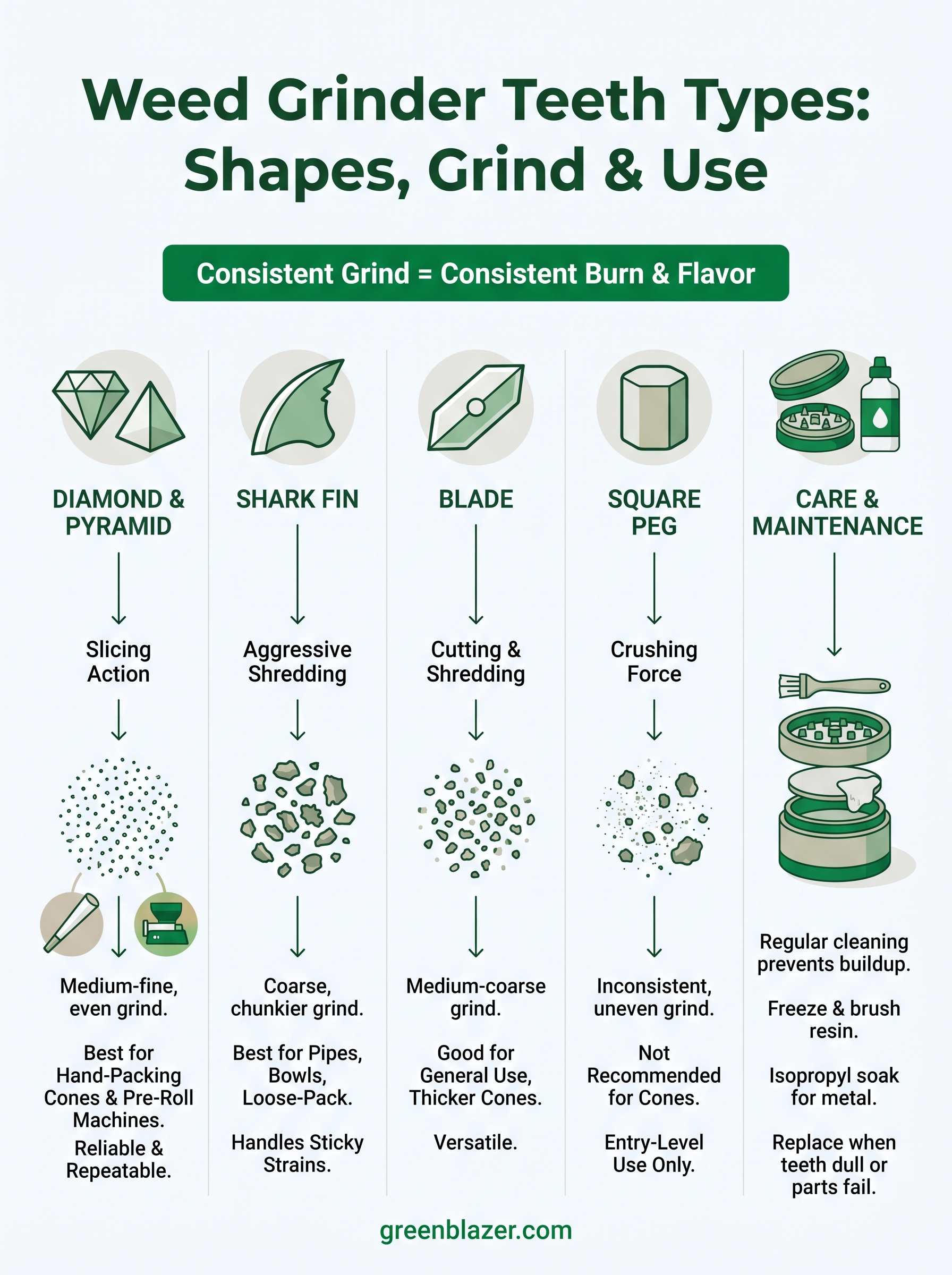
Weed grinder teeth types come down to a few core shapes, diamond, pyramid, shark fin, blade, and square peg, and each one produces a noticeably different output. Diamond and pyramid teeth slice cleanly and deliver the consistent, medium-fine grind that works best for packing RAW cones by hand or running a pre-roll filling machine. Shark fin and blade designs run coarser and suit looser applications better. Square peg teeth rarely serve you well for cones at all.
Your choice of tooth shape, matched to the right material and kept clean on a regular schedule, is what keeps your grind consistent and your cones burning evenly. Skipping that match costs you in wasted flower and frustrating sessions that a better grinder would have prevented. Now that you know what separates one tooth design from another, you can put that knowledge to use. Browse the full selection of RAW cones and smoking accessories at Green Blazer and stock up with confidence.
