

If you've ever walked into a room and caught a whiff of something dank, you've probably wondered what you were smelling. The hash vs weed smell debate comes up constantly because these two cannabis products produce noticeably different aromas, and knowing the difference matters more than you might think. Whether you're trying to identify what's burning nearby or figure out which product is more discreet for your personal sessions, scent is one of the fastest ways to tell them apart.
Hash and flower come from the same plant, but the way they're processed changes their smell profile significantly. Weed flower tends to hit your nose with a loud, unmistakable funk that fills a room fast. Hash, on the other hand, carries a denser, more concentrated aroma that can range from earthy and spicy to almost sweet, depending on the type and how it's consumed.
In this article, we break down exactly how these two smell different, which one is stronger in person, and what factors affect their scent intensity. At Green Blazer, we supply RAW pre-rolled cones built for a clean, natural smoking experience, no chemical taste or added odors interfering with whatever you choose to pack inside. Understanding what you're smelling starts with understanding what you're smoking, and that's where we come in.
Why hash and weed smell different
The core reason hash and weed produce different smells comes down to how each product is made and what ends up in your nose when you open the bag. Both come from the cannabis plant, but they go through entirely different production processes, and those processes determine which aromatic compounds survive, concentrate, or get lost along the way. Understanding this separation is the foundation for making sense of everything else about how these two products behave aromatically.
Terpenes: the source of all cannabis smell
Terpenes are the aromatic compounds produced inside the trichomes of the cannabis plant. These microscopic, crystal-like structures coat the surface of the flower and are responsible for every scent note you detect, from citrus and pine to skunk and diesel. When you smell raw weed flower, you're getting a direct hit of volatile terpenes in their natural, unstabilized state, which is why the smell is so sharp and immediate the moment you crack open a bag or break apart a bud.
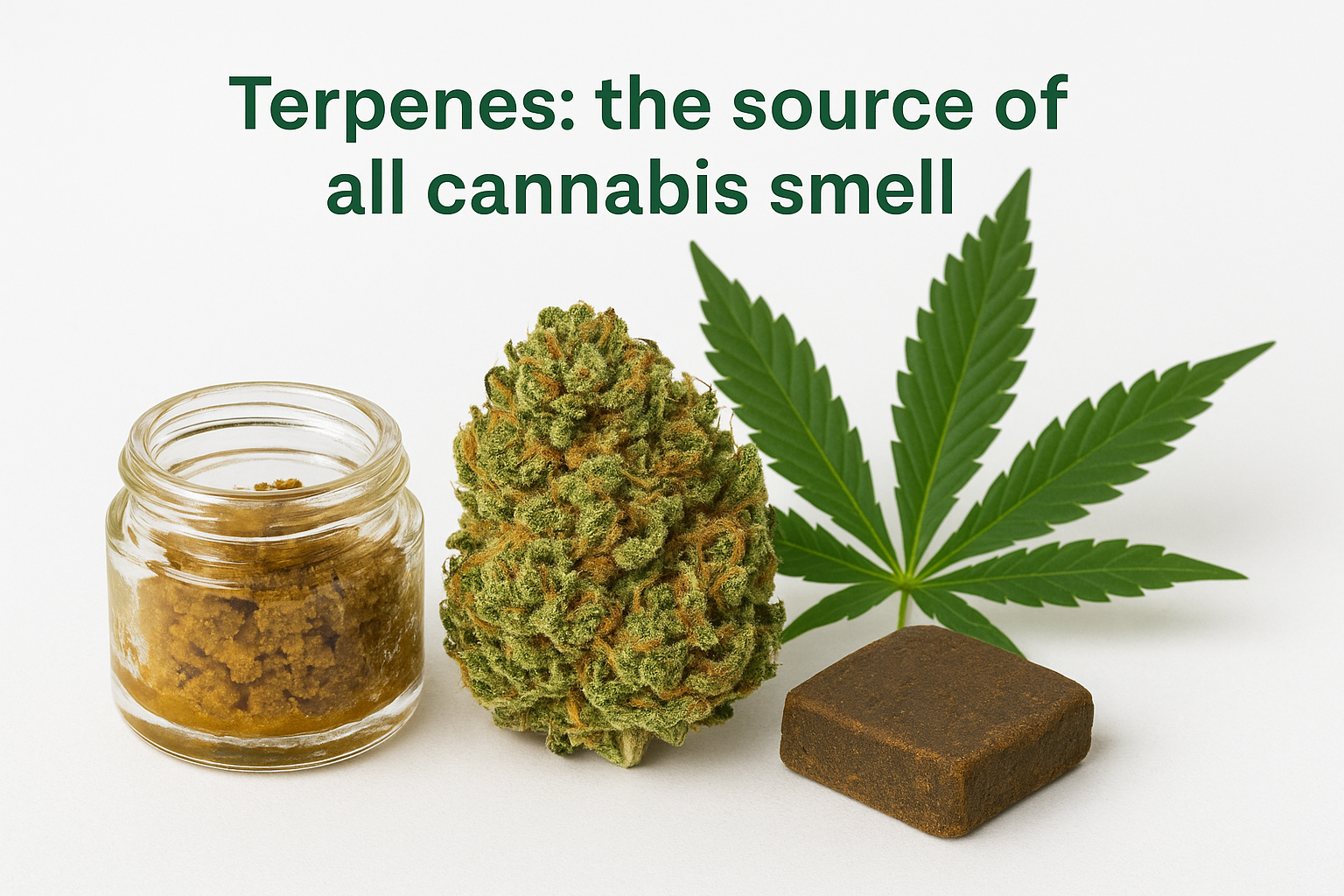
The trichome is where all the action happens, producing both the cannabinoids and the terpenes that define each product's unique scent profile.
Both weed and hash originate from these same trichomes, but the similarity in smell ends there. Weed keeps its terpenes locked inside the flower structure, releasing them gradually when you grind the bud apart or apply heat. Hash separates and compresses those trichomes away from the plant material entirely, which changes how those same compounds behave and interact with each other in the final product.
How hash production strips and concentrates the smell
Making hash means physically separating the trichome heads from the plant, and this has a significant effect on the final aroma. In traditional pressed hash, heat and pressure are applied to the collected resin. This process causes some of the lighter, more volatile terpenes to evaporate off during production, which is why many types of hash smell less sharp and more earthy, spicy, or musky than the flower it came from.
Bubble hash, made using ice water and agitation rather than heat, preserves more of those volatile terpenes because it skips the heating step entirely. Dry sift hash falls somewhere in between. The specific production method shapes the final aroma directly, and it is the single biggest reason the hash vs weed smell difference is so noticeable when you place both products side by side and take a slow, deliberate sniff of each.
Why weed flower smells louder and more varied
Weed flower retains its full terpene profile because it hasn't been processed beyond drying and curing. Each strain carries its own distinct terpene combination, which is why one bag might smell like blueberries and another smells like motor fuel. This strain-to-strain variation gives flower a much wider aromatic range than hash, and it's why describing weed smell as a single category is nearly impossible.
Hash, by contrast, tends to smell more uniform across types, trending toward earthy, resinous, and sometimes sweet or faintly chocolatey notes. The processing flattens some of that strain-specific character. You're still smelling terpenes, but a narrower, denser version of them. Experienced users can often identify hash from across the room as something that smells "like cannabis but different," without being able to place exactly which strain they're detecting, because much of that strain identity has been compressed out during production.
How to tell hash from weed by smell
You don't need a lab to tell these two apart. Your nose picks up enough information in a single sniff to make a confident call, provided you know what specific qualities to focus on and what each product's scent profile actually tells you. The hash vs weed smell comparison becomes intuitive once you've experienced both a few times, but even first-timers can learn to read the signals.
What fresh weed smells like up close
When you bring raw cannabis flower close to your nose and inhale, the smell is immediate and aggressive. You're getting a direct blast of volatile terpenes, the kind that hit the back of your sinuses fast. Depending on the strain, you might detect sharp citrus, skunky fuel, pine, or a floral sweetness, but the common thread is that the smell is loud and multidimensional, shifting slightly as you continue to inhale. Breaking apart the bud amplifies everything because you're releasing terpenes that were trapped inside the plant structure.
Fresh, quality flower should smell sharp enough that it's detectable before you even open the bag fully.
What hash smells like up close
Hash carries a fundamentally different scent signature. When you bring a piece of pressed or bubble hash close to your nose, the first thing you notice is that it smells heavier and more compact. There's less of that sharp, volatile brightness you get from flower. Instead, you pick up earthy, resinous base notes that sit lower in the aromatic range. Some hash varieties have a faint spiciness, others lean chocolatey or almost incense-like. The smell is still cannabis, but it registers as a denser, more muted version of it.
Using texture and context alongside scent
Smell alone works well, but pairing it with physical observation makes identification easier. Hash typically feels waxy, crumbly, or pliable depending on the type, while flower is clearly botanical with visible structure. If you're in a situation where you can only smell without seeing the product, focus on whether the scent has sharp top notes or a flat, earthy depth. Sharp and multidimensional means flower. Dense, resinous, and low-register means hash. That contrast holds up consistently across most common varieties of both products.
What changes the smell: freshness, method, storage
Both hash and weed start with a baseline smell defined by their terpene content, but that baseline shifts constantly based on factors you control directly. Age, how you consume the product, and how you store it all push the hash vs weed smell comparison in different directions. Knowing which variables matter most helps you manage the scent intensity of either product before it becomes an issue.
Freshness and age
Fresh flower smells loudest. The terpenes in recently harvested and properly cured weed are volatile by nature, meaning they release into the air readily and hit your nose fast. As flower ages, those lighter terpene compounds evaporate off even without heat, leaving behind a duller, more generic cannabis smell that lacks the sharp top notes you get from fresh product. The same degradation happens with hash. Fresh bubble hash carries a noticeably brighter scent than a piece of pressed hash that's been sitting for months, because age flattens aromatic complexity regardless of the product type.
Storing either product in an airtight container slows terpene loss significantly, keeping the smell closer to what it was on day one.
How the consumption method affects scent
The way you consume cannabis has a direct impact on how far the smell travels and how long it persists in a space. Smoking flower in a pre-rolled cone produces thick, visible smoke that carries terpene compounds into the surrounding air and clings to fabrics and surfaces. Hash burned in a pipe or sprinkled into a joint releases a denser, lower-profile smoke that many people find less pervasive in enclosed spaces, though the smell is still unmistakably cannabis. Vaping either product at lower temperatures produces less combustion byproduct, which keeps the surrounding scent footprint smaller compared to an open flame.
Storage and its impact on smell
Proper storage controls how much scent escapes into your environment before you even consume anything. Airtight glass jars work better than plastic bags for both products because they don't absorb or off-gas competing odors, and they create a sealed environment that locks terpenes in rather than letting them drift out. Humidity plays a role too. Flower stored at 55 to 62 percent relative humidity holds its terpene profile longer, while overly dry conditions cause rapid evaporation that strips scent quickly. Hash is less humidity-sensitive but still benefits from airtight storage away from heat and direct light.
Which one smells stronger and which smell lingers
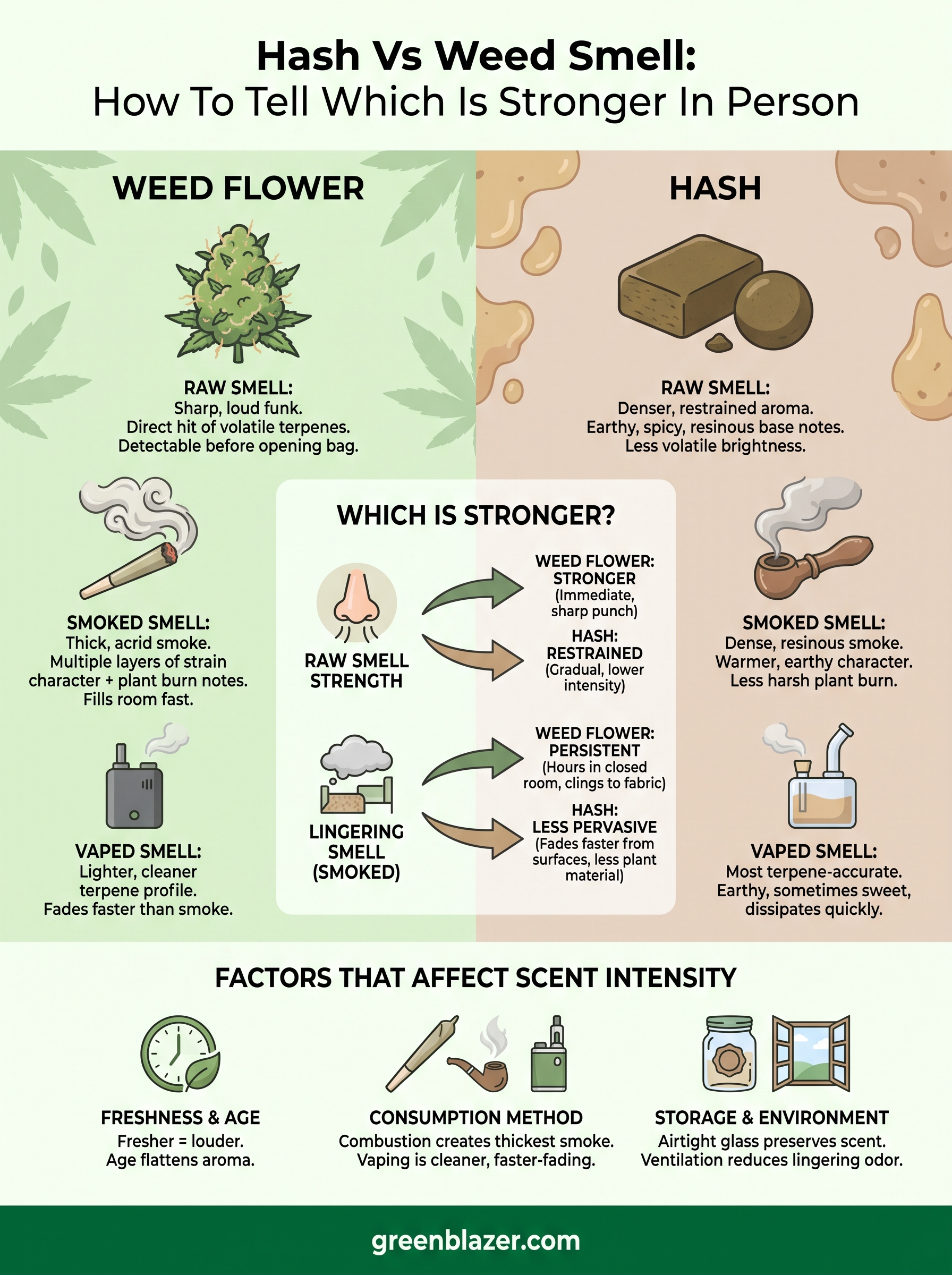
When you compare raw, unburned flower and hash side by side, weed flower almost always wins on immediate smell strength. The volatile terpenes in fresh bud release into the air freely, creating that sharp, room-filling punch you notice the second someone cracks open a jar. Hash carries a more restrained raw scent because the production process has already driven off many of those lighter aromatic compounds, leaving behind a denser but less aggressive odor at baseline.
Raw smell strength in real-world conditions
Placing both products on a table in front of you tells the story quickly. Fresh flower announces itself from several feet away, even before you handle it. Hash, by comparison, requires you to get closer before the smell registers strongly. This doesn't mean hash is odorless or subtle. A large chunk of fresh bubble hash or soft pressed resin still carries a noticeable earthy, resinous scent that fills a small space over time. The difference is that flower spreads its aroma aggressively and immediately, while hash releases its scent more gradually and at a lower intensity in its unheated state.
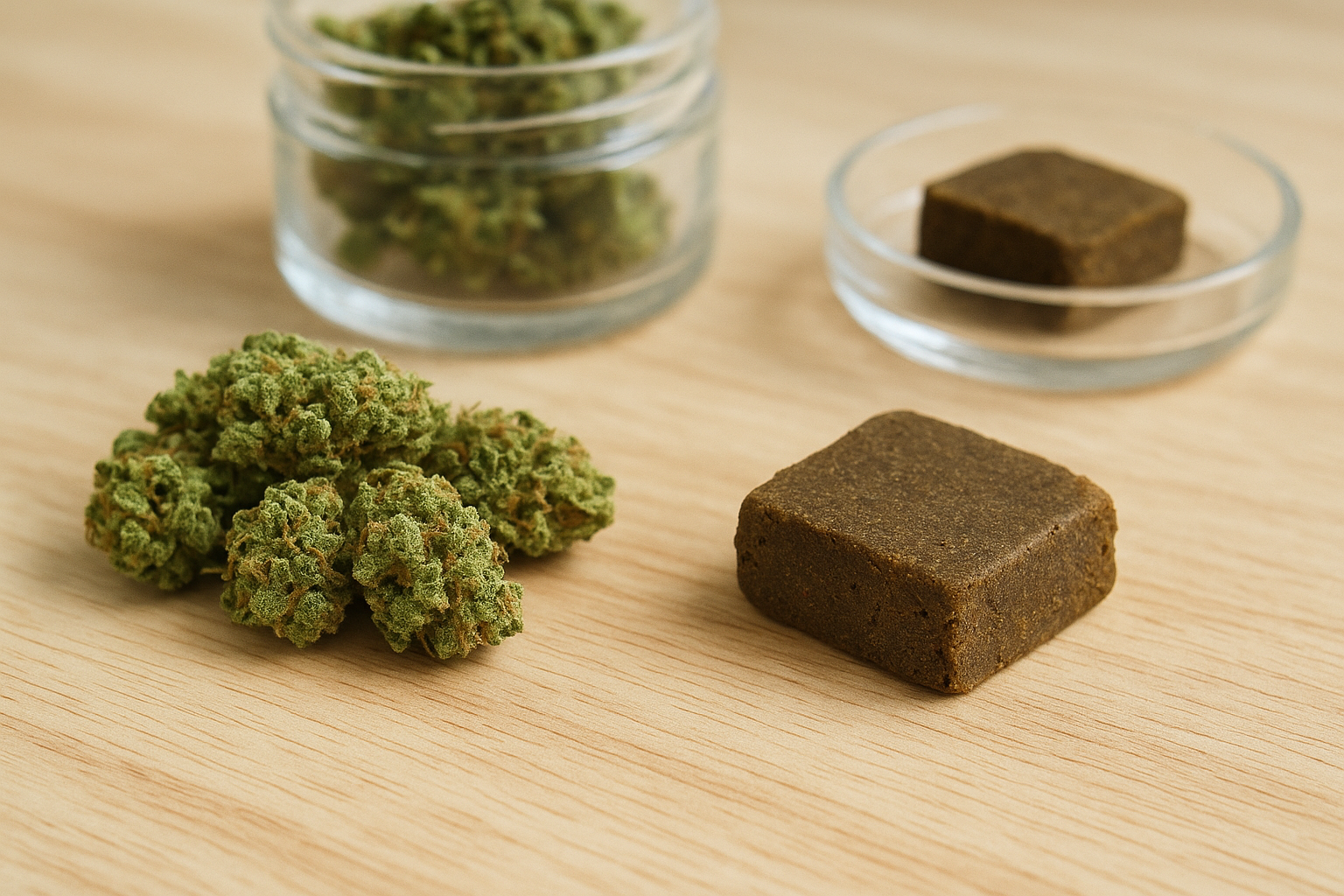
This raw smell gap is the biggest practical distinction in the hash vs weed smell comparison for anyone concerned about ambient odor in a shared space.
Which smell sticks around longer after consumption
Once you introduce heat, the dynamic shifts. Burning flower creates thick, plant-based smoke that carries terpene compounds deep into fabric, hair, and porous surfaces. That smell can persist for hours in a closed room. Hash smoke tends to sit at a lower aromatic volume after combustion, and many people find it fades from fabrics and surfaces faster than flower smoke does, partly because the plant material producing the harshest, most persistent smoke compounds has already been removed during hash production.
Your environment plays a major role in how long either smell stays present. Hard surfaces like glass and metal release odor much faster than upholstered furniture or carpet, which trap smoke particles deeply. Poor ventilation extends how long any cannabis smell lingers, regardless of whether you burned flower or hash. If you're managing scent persistence after a session, airflow and surface type matter more than which product you chose to consume.
What they smell like when smoked or vaped
Heat changes everything about how cannabis smells. When you apply a flame or a heating element to either product, you trigger combustion or vaporization of the terpene compounds that define each product's scent profile, and the results differ sharply between weed and hash. The hash vs weed smell comparison becomes most practical here because this is the moment when both products produce odor that affects everyone in your immediate environment, not just you.
The smell of smoked flower
Burning flower in a pre-rolled cone or pipe produces a thick, sharp smoke that spreads quickly and fills a room within seconds. The smell is recognizable from a significant distance because combustion releases those volatile terpenes into the air in a concentrated burst alongside the byproducts of burning plant material. You'll notice the scent carries multiple layers simultaneously: the strain's natural terpene character sitting on top of a heavier, more acrid smoke base.
The plant material itself burns alongside the trichomes in flower, which adds a harsh, green note to the smoke that hash typically doesn't produce.
Vaped flower at lower temperatures reduces that acrid plant-burn note significantly. You get a cleaner version of the strain's terpene profile with less combustion byproduct muddying the aroma. The smell is still clearly cannabis, but it reads as lighter and fades from the air faster than smoke from an open flame.
The smell of smoked or vaped hash
Burning hash produces a denser, more resinous smoke than flower, but with noticeably less of that sharp green-burn note you get from combusting raw plant material. The absence of chlorophyll and cellulose means the smoke smells more purely of the concentrated terpenes rather than burning vegetation. Many people describe smoked hash as carrying a warmer, earthier character that sits lower in the aromatic range compared to the aggressive high notes of smoked flower.
Vaped hash, particularly high-quality bubble hash or solventless rosin pressed from it, delivers the most terpene-accurate experience of any consumption method. Because you're heating the resin without full combustion, the smell that comes off the device is closer to the raw product's aroma: earthy, sometimes sweet or spiced, and noticeably less pungent than the smoke version. The resulting odor dissipates faster too, making vaped hash one of the lower-impact options if you're managing ambient scent in your space.
Final takeaways
The hash vs weed smell comparison comes down to one core principle: processing determines aroma. Fresh flower hits harder and faster in its raw state because its full terpene profile stays intact until you consume it. Hash carries a denser, more restrained scent that reads as earthier and more uniform because production compresses or removes many of the lighter volatile compounds that make flower smell so sharp and immediate.
Once you apply heat, the gap narrows. Smoked hash skips the harsh green-burn note that comes from combusting raw plant material, while vaped hash delivers the cleanest, fastest-fading odor of the two. Storage, freshness, and ventilation matter for both products, and controlling those variables gives you real control over how much scent you're putting into your environment.
If you're filling cones with either product, the quality of your papers matters just as much as what's inside them. Check out RAW pre-rolled cones at Green Blazer for a clean burn that lets the natural aroma speak for itself.
