

If you've spent any time around cannabis culture, you've probably heard both terms tossed around, but what is hash vs weed, exactly? They come from the same plant, yet they look, feel, smoke, and hit very differently. Understanding the distinction matters whether you're choosing what to pack into a cone for a solo session or deciding what product fits your tolerance level.
Hash is one of the oldest cannabis concentrates in human history, while weed (dried flower) remains the most widely consumed form of cannabis today. They differ in how they're made, how potent they are, and how they're best consumed, including in pre-rolled cones, which is where we come in. At Green Blazer, we're the largest authorized RAW cone retailer in the U.S., and whether you're filling cones with flower or a hash-and-flower blend, the right cone makes a real difference in your smoking experience.
This article breaks down everything you need to know: production methods, THC potency, effects on the body, and the best ways to use each one. By the end, you'll have a clear understanding of both products and know exactly which one suits your preferences and experience level.
Why people mix up hash and weed
The most common reason people confuse hash and weed is straightforward: both products come from the Cannabis plant. Unless someone has walked you through the production process, it's easy to assume they're just two names for the same thing. Dispensary menus, online shops, and even conversations among experienced users tend to use overlapping terms that blur the line between dried flower and a concentrate. Add in the fact that both get rolled, smoked, and discussed in the same circles, and the confusion makes complete sense.
They come from the same plant
Both hash and weed originate from Cannabis sativa, Cannabis indica, or hybrid strains of those plants. The plant produces flowers, leaves, and a resin-rich coating of tiny structures called trichomes. Weed, as most people know it, is the dried and cured flower of the plant. Hash is made by collecting and compressing those trichomes into a dense, concentrated form. Because both products start from the same source, it's natural to assume they behave the same way once you consume them. They don't, but that shared origin is enough to create lasting confusion for a lot of people who are newer to cannabis.
The difference between hash and weed is not about the plant they come from. It is about how much of the plant's active compounds end up concentrated in what you are actually smoking.
The terminology gets blurry fast
If you've ever tried to understand what is hash vs weed by searching online or asking around, you've probably run into a wall of slang. Words like "bud," "flower," "herb," and "green" all typically refer to weed. Terms like "hashish," "charas," or "kief" all point toward hash or hash-related products. Regional slang makes this worse, especially when you factor in that cannabis culture spans multiple continents with distinct traditions. What someone calls hash in Morocco looks and feels different from what someone in Amsterdam calls hash, even though both fall into the same product category.
Here are some common terms that often get used interchangeably but actually describe different things:
- Bud / Flower / Green = dried cannabis flower (weed)
- Kief = loose, powdery trichomes collected before compression
- Hash / Hashish = compressed trichome concentrate
- Charas = hand-rolled hash traditional to South Asia
- Bubble hash = hash made using an ice water extraction method
Similar consumption methods add to the confusion
You can smoke both hash and weed, which is where many new users stop asking questions. If you can roll both into a joint or pack both into a cone, why dig deeper into the differences? The answer matters because the experience shifts significantly once you factor in potency, burn rate, and the kind of effect each one produces. Hash is often mixed with weed or tobacco in rolled products, meaning many people have smoked hash without realizing it. If you've ever taken a hit from someone's cone and noticed it hit harder or tasted noticeably richer than usual, hash was likely part of that mix.
RAW pre-rolled cones work well for both products because the paper stays completely neutral. You taste what you put in it, not the paper. That neutrality makes it much easier to notice the real difference between a pure flower session and one that includes hash, which is one of the most practical ways to start building your own understanding of how both products behave on their own terms.
What weed is and how it's made
When most people ask what is hash vs weed, their baseline understanding of weed is usually pretty solid, even if they can't fully explain it. Weed, also called flower or bud, is the dried and cured reproductive structure of the female cannabis plant. It's the most common form of cannabis sold in dispensaries, consumed in pre-rolled cones, and discussed in everyday cannabis conversations across the country.
The cannabis flower explained
The female cannabis plant produces dense clusters of flowers called buds, which are covered in small, hair-like structures called trichomes. Those trichomes contain the cannabinoids (like THC and CBD) and terpenes responsible for both the psychoactive effects and the flavor profile you experience when you smoke. The visible crystals coating a well-grown bud are almost entirely trichome heads packed with these compounds.
Terpenes are what give different strains their distinct smell and taste. A citrus-forward strain and a skunky one may have similar THC levels but deliver noticeably different smoking experiences because of the specific terpene combinations present in the flower. This is why two buds from different strains can feel and taste so different even when their THC percentages look nearly identical on a label.
How weed gets from plant to product
Cultivators harvest the plant after the flowers reach peak maturity, typically determined by the color of the trichomes under a loupe or microscope. After harvest, the buds go through a drying phase lasting one to two weeks, followed by a curing phase inside sealed containers. Curing allows moisture to redistribute evenly through the bud, which preserves terpenes and produces a smoother, more consistent burn.
Once cured, the flower gets trimmed, tested for potency and contaminants, packaged, and sold. What you fill into a RAW pre-rolled cone is the final result of that entire process: a natural, plant-derived product that retains its full cannabinoid and terpene profile. Because RAW cones are unbleached and additive-free, they let the actual flavor of the flower come through without interference from the paper itself.
What hash is and how it's made
Hash takes the answer to what is hash vs weed in a very different direction from flower. Instead of consuming the whole dried plant material, you're consuming a concentrated collection of trichomes, the resin-producing structures that sit on the surface of the cannabis flower. Removing those trichomes and compressing them into a solid form is the core idea behind every type of hash, regardless of where it's made or how old the technique is.
The trichome extraction process
Trichomes are where the majority of the plant's cannabinoids and terpenes live. When you collect them away from the plant material and press them together, you end up with a product that is significantly more potent per gram than dried flower. The extraction process separates these trichome heads from the leaves, stems, and plant fiber that dilute the potency of traditional weed. What you're left with is a dense, concentrated mass that burns differently and hits harder than flower alone.
Hash is not a different drug from weed. It is the same plant's active compounds, just stripped of the bulk material and pressed into a far more concentrated form.
Traditional vs. modern hash production methods
Traditional methods have been around for centuries and rely on physical agitation or hand-rolling to separate trichomes from the plant. Dry-sift hash involves rubbing dried cannabis over fine mesh screens, collecting the powder that falls through (kief), and then pressing it into a solid block using heat and pressure. Charas, the hand-rolled hash from South Asia, involves rubbing live or freshly harvested cannabis flowers between the palms until a dark, sticky resin coats the hands, which is then scraped off and shaped.
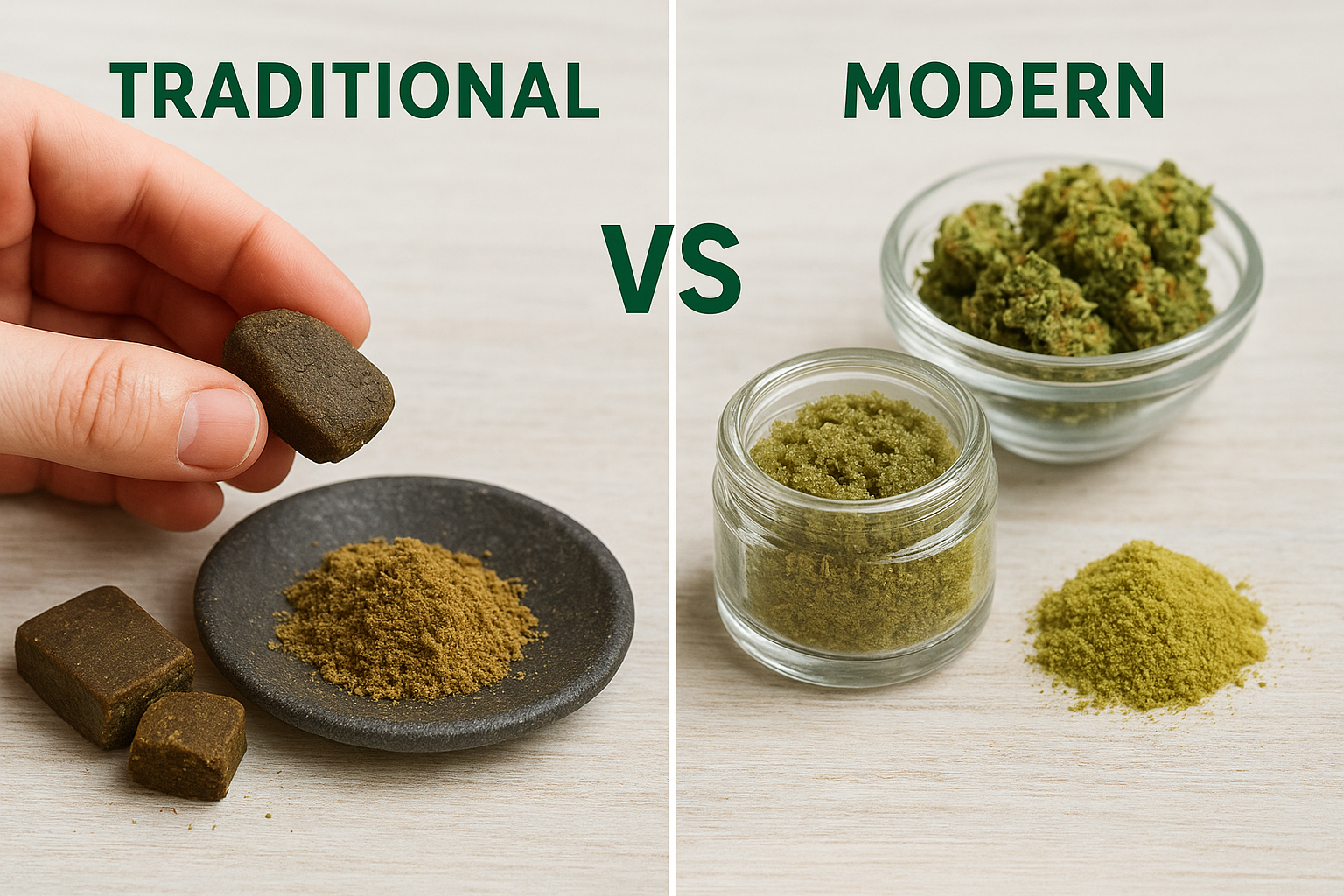
Modern production methods use cold water and agitation to separate trichomes without heat. Bubble hash, one of the most popular modern varieties, involves mixing frozen cannabis with ice water, agitating the mixture, and running it through progressively finer mesh bags to collect trichome heads by size. The result is a cleaner, lighter-colored product with a terpene profile that more closely reflects the original strain. Both traditional and modern methods produce hash, but the potency, texture, color, and flavor vary significantly depending on the technique used.
Potency and chemical profile differences
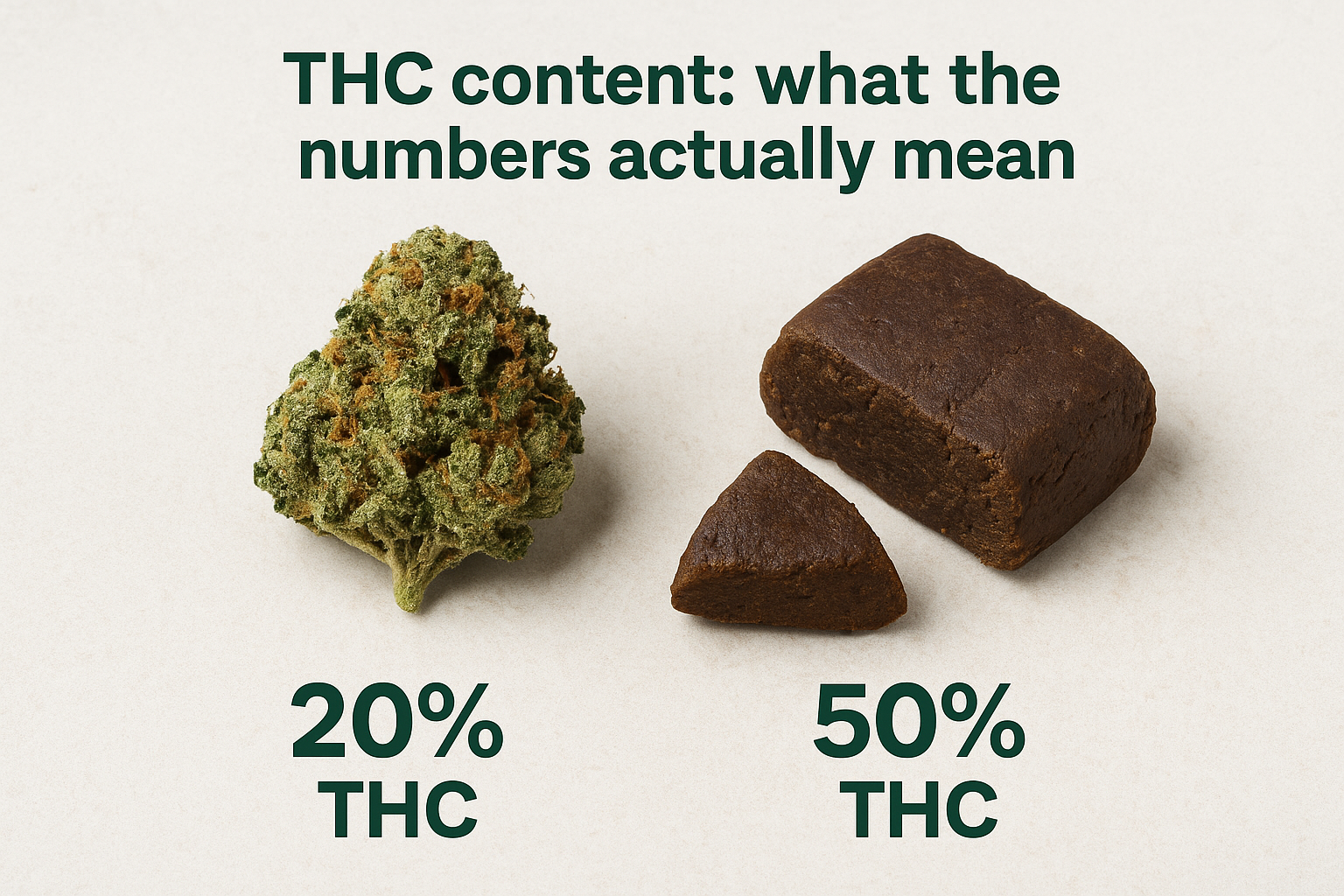
Potency is one of the clearest answers to what is hash vs weed because the numbers don't lie. Dried cannabis flower typically tests between 15% and 30% THC, depending on the strain and how it was grown. Hash, depending on the production method, usually lands between 40% and 60% THC, with some high-quality bubble hash pushing past that range. That gap isn't minor. It fundamentally changes how much you need to consume to feel an effect and how quickly that effect arrives.
THC content: what the numbers actually mean
A percentage on a cannabis label tells you how many milligrams of THC are present per 100 milligrams of product. When you fill a RAW cone with flower testing at 20% THC, you're working with roughly 200mg of THC per gram of material. Pack that same cone with a hash testing at 50% THC and you're now at 500mg of THC per gram. For most people, that difference is enormous, especially if you approach hash the same way you'd approach flower without adjusting how much you use.
Starting with a smaller amount of hash than you'd normally use with flower is not unnecessary caution. It is accurate dosing based on the actual chemistry of what you're consuming.
Terpenes and the broader chemical profile
THC percentage alone does not tell the full story of how a cannabis product affects you. Terpenes, the aromatic compounds found in both weed and hash, interact with cannabinoids in a process researchers refer to as the entourage effect. Fresh weed retains a fuller terpene profile because the intact plant material holds moisture and volatile compounds better than a processed concentrate does.
Hash produced through low-heat or cold-water methods like bubble hash preserves more terpenes than dry-sift or traditionally pressed hash, which loses some volatile compounds during compression and heat exposure. This means the production method directly shapes the flavor, aroma, and overall experience you get from hash, not just the THC number on the label. A lower-THC bubble hash can deliver a richer sensory experience than a higher-THC brick hash, purely based on what survived the extraction process intact.
Effects, onset, and how long it lasts
One of the most practical angles on what is hash vs weed is simply asking: what does each one actually feel like, and how fast does it hit? Both products activate the same cannabinoid receptors in your brain, but the intensity, speed, and duration of the experience shift considerably depending on which one you're using and how much you consume.
How each one hits your body
Weed delivers a gradual, building effect that most experienced users find easy to manage. You take a few hits from a cone, wait a few minutes, assess how you feel, and go from there. The high from flower tends to feel more nuanced, often carrying the distinct character of the strain's terpene profile. Some strains produce a more energetic, uplifting effect; others lean sedating and body-heavy. Your experience with weed is largely shaped by the strain you choose and how much of it you smoke in a single session.
Hash hits faster and with more force, especially if you're used to flower. Because you're consuming a much higher concentration of THC per unit of material, even a small amount of hash added to a cone can push the experience into noticeably stronger territory. The effect tends to feel heavier overall, with more pronounced physical relaxation and a stronger cognitive impact.
If you've only ever smoked weed and you treat hash like flower in terms of how much you use, you will likely consume more than you intended.
Onset time and duration
Smoked weed typically produces noticeable effects within five to fifteen minutes of your first hit. The peak usually arrives around 30 minutes in and begins tapering off after one to two hours, depending on potency and personal tolerance. Most people find the total duration lands between two and three hours for a standard session.
Hash follows a similar onset window when smoked, but the peak hits harder and can feel more sustained. Many users report that hash sessions last longer than comparable flower sessions, likely because the higher THC load takes more time for your body to process. Expect the full experience to run between two and four hours depending on how much you used and your individual tolerance level.
How to use hash and weed safely
Understanding what is hash vs weed comes with a practical responsibility: knowing how to use each product in a way that keeps your experience manageable. Both products are safe for most adults when used in moderation, but their differences in potency mean the same approach does not work for both. Treating hash like flower, or flower like hash, is the most common way people end up having a worse time than they planned.
Start low, adjust gradually
This applies to both products but matters far more with hash. A small pinch of hash added to a cone is enough to meaningfully change the experience if you primarily smoke flower. Start with less than you think you need, wait for the effects to settle fully before adding more, and give yourself at least 15 minutes before deciding the session needs anything extra.
Here are three practical starting points for new hash users:
- Mix hash with flower in a RAW cone rather than smoking it on its own
- Keep your first hash session in a comfortable, familiar setting
- Use a cone format so you can control exactly what goes into each session
Know your tolerance before mixing
If you mostly smoke flower, your baseline tolerance is calibrated to THC concentrations between 15% and 30%. Adding hash without adjusting the total amount you consume pushes well beyond what your body is used to handling. Mixing a small amount of hash into flower is a practical middle ground that lets you get familiar with the stronger effect without jumping straight to a pure hash session.
Your tolerance is personal, and no label percentage tells you exactly how a product will affect your specific body chemistry.
Use quality materials for a cleaner experience
The cone you use shapes every session, regardless of what you put in it. RAW cones are unbleached and additive-free, made with natural hemp or organic materials depending on the variety you choose. Chemical coatings or bleaching agents in lower-quality papers add unwanted compounds to what you're inhaling.
Choosing clean, natural rolling materials is one of the simplest ways to keep your sessions consistent and free from avoidable irritants, whether you're smoking flower, hash, or a blend of both.
Final takeaways
Understanding what is hash vs weed comes down to three core differences: how each product is made, how potent it is, and how your body responds to each one. Weed is dried, cured flower that retains its full plant profile. Hash is a concentrated extraction of trichomes that delivers significantly more THC per gram and hits harder than flower alone. Both come from the same plant, but they are not interchangeable products, and treating them as if they are is the fastest way to have a session go sideways.
Your safest path forward is starting with less than you think you need, especially with hash, and adjusting based on your actual experience rather than assumptions. Clean rolling materials and quality cones make a measurable difference in every session, regardless of what you put in them. If you're ready to stock up on supplies for both flower and hash sessions, browse RAW pre-rolled cones at Green Blazer and find the right size for the way you smoke.
