

Walk into any dispensary or browse any cannabis menu and you'll immediately run into two familiar labels: sativa and indica. But what is the difference between sativa and indica, really? And does it actually matter when you're choosing what to smoke? The short answer is yes, these two categories point to real differences in plant structure, chemical makeup, and the effects you'll feel, though the full picture is more nuanced than most people realize.
Sativa strains are generally associated with uplifting, cerebral effects, while indica strains tend to deliver a heavier, more physically relaxing experience. But those broad strokes only scratch the surface. The actual differences come down to genetics, terpene profiles, cannabinoid ratios, and even how and where each plant grows. Understanding these distinctions helps you pick the right strain for the moment, whether that's a creative afternoon session or unwinding at the end of a long day.
At Green Blazer, we're the largest authorized RAW cone retailer in the U.S., and we supply both individual smokers and licensed commercial producers with premium RAW pre-rolled cones built for a clean, even burn. No matter which strain you pack into your cone, the experience starts with quality materials. This guide breaks down sativa vs. indica across every category that matters, from physical traits to effects to medical applications, so you can make a more informed choice next time you load up.
Why the indica vs sativa difference matters
When you're picking a strain to smoke, the indica vs sativa distinction is one of the first filters most people apply. That makes sense: different strains produce noticeably different experiences, and choosing the wrong one can leave you wired when you wanted to relax, or drowsy when you needed to stay alert. The distinction isn't just marketing language. It reflects genuine differences in how each plant grows, what chemicals it produces, and how those chemicals interact with your body and mind.
The experience gap between strains is real
The most practical reason to understand what is the difference between sativa and indica comes down to what happens after you light up. A classic sativa-dominant strain tends to deliver a head-focused, energizing effect that can boost creativity, focus, and sociability. Many users reach for sativa strains before daytime activities, creative projects, or social situations where they want to stay mentally sharp and engaged.
Indica-dominant strains tend to work differently. They lean into full-body relaxation, often producing a heavier, more sedative effect that makes them a natural fit for evenings, rest days, or any time you're looking to decompress. The difference in experience between the two categories can be significant, and picking the right one matters just as much as picking the right potency level.
Choosing between indica and sativa without understanding the difference is like ordering coffee without knowing whether it's a double espresso or a decaf.
How strain type shapes your session
Your session context matters, and the strain type you choose should match what you actually have planned. If you're packing a RAW cone for a creative morning or a walk outside, a sativa-leaning strain keeps you alert and present. If you're winding down after a long workday, an indica-dominant strain helps your body release tension while your mind slows down. The contrast in effects between the two categories is large enough that most experienced smokers think carefully before choosing one over the other.
Beyond personal preference, the indica vs sativa distinction also affects how you dose. Sativa strains can occasionally amplify anxiety or overstimulate some users at higher doses, while heavy indica strains can produce a couch-lock effect faster than expected if you're not used to their sedative weight. Knowing which category you're working with gives you better control over the overall experience and reduces the chance of an unwanted outcome.
What's at stake for medical users
For people using cannabis to address specific physical or mental health concerns, the sativa vs indica distinction carries even more weight. Patients managing anxiety, chronic pain, or insomnia often find that indica-dominant strains deliver more targeted relief, particularly for sleep or physical tension. The heavier, body-focused effects align well with conditions where calming the nervous system is the primary goal.
People dealing with depression, low energy, or conditions that drain motivation often respond better to sativa-dominant strains. The uplifting, mentally stimulating effects can help re-engage a mind running on empty. Medical users in particular benefit from understanding these distinctions before they purchase, because the wrong strain type can make symptoms worse rather than better.
Both categories also matter when you're thinking about timing and daily routine. A sedating indica in the middle of the afternoon can derail your productivity, and a stimulating sativa late at night can push sleep further away. Understanding the difference puts you in control of how cannabis fits into your day rather than leaving the outcome to chance.
What indica and sativa mean in cannabis today
The terms indica and sativa have been part of cannabis culture for decades, but their meaning has shifted significantly as breeding practices have evolved. Today, almost every strain on the market is some form of hybrid, which means the classic binary of indica vs. sativa is more of a starting point than a strict scientific rule. That doesn't make the labels useless, but it does mean you need to understand what they actually describe before you rely on them to predict your experience.
How the classification system started
The original distinction between indica and sativa came from 18th-century botanists classifying cannabis plants by their geographic origin and physical structure. Cannabis sativa was identified first, describing tall plants from equatorial regions like Southeast Asia and Central America. Cannabis indica came later, referring to shorter, bushier plants from the Hindu Kush mountain region. These were legitimate botanical classifications based on observable differences in plant morphology and regional adaptation.
The sativa and indica labels started as botanical descriptions, not experience guides, and that gap between origin and modern use is exactly what creates so much confusion today.
Over time, the cannabis industry adopted these labels to communicate expected effects rather than strict genetics. Budtenders, growers, and consumers began using sativa to mean "uplifting and cerebral" and indica to mean "relaxing and sedating," regardless of the actual plant structure underneath. That shorthand spread widely and still dominates how most dispensaries and product menus organize their offerings.
Where the labels stand now
Understanding what is the difference between sativa and indica today means recognizing that the labels function more as effect categories than as pure genetic identifiers. Modern cultivars are so extensively crossbred that a strain labeled sativa may carry substantial indica genetics and vice versa. What the label is really trying to tell you is what kind of experience the grower and dispensary expect that strain to produce, based on its dominant chemical profile.
Scientists and cannabis researchers increasingly prefer to classify strains by their cannabinoid and terpene profiles rather than by the indica/sativa binary. That approach is more precise and more predictive of actual effects. Still, for most consumers shopping at a dispensary or ordering online, the indica/sativa framework remains the most accessible tool available. Using it as a rough guide while also checking THC, CBD, and terpene data gives you a much more complete picture of what you're actually buying.
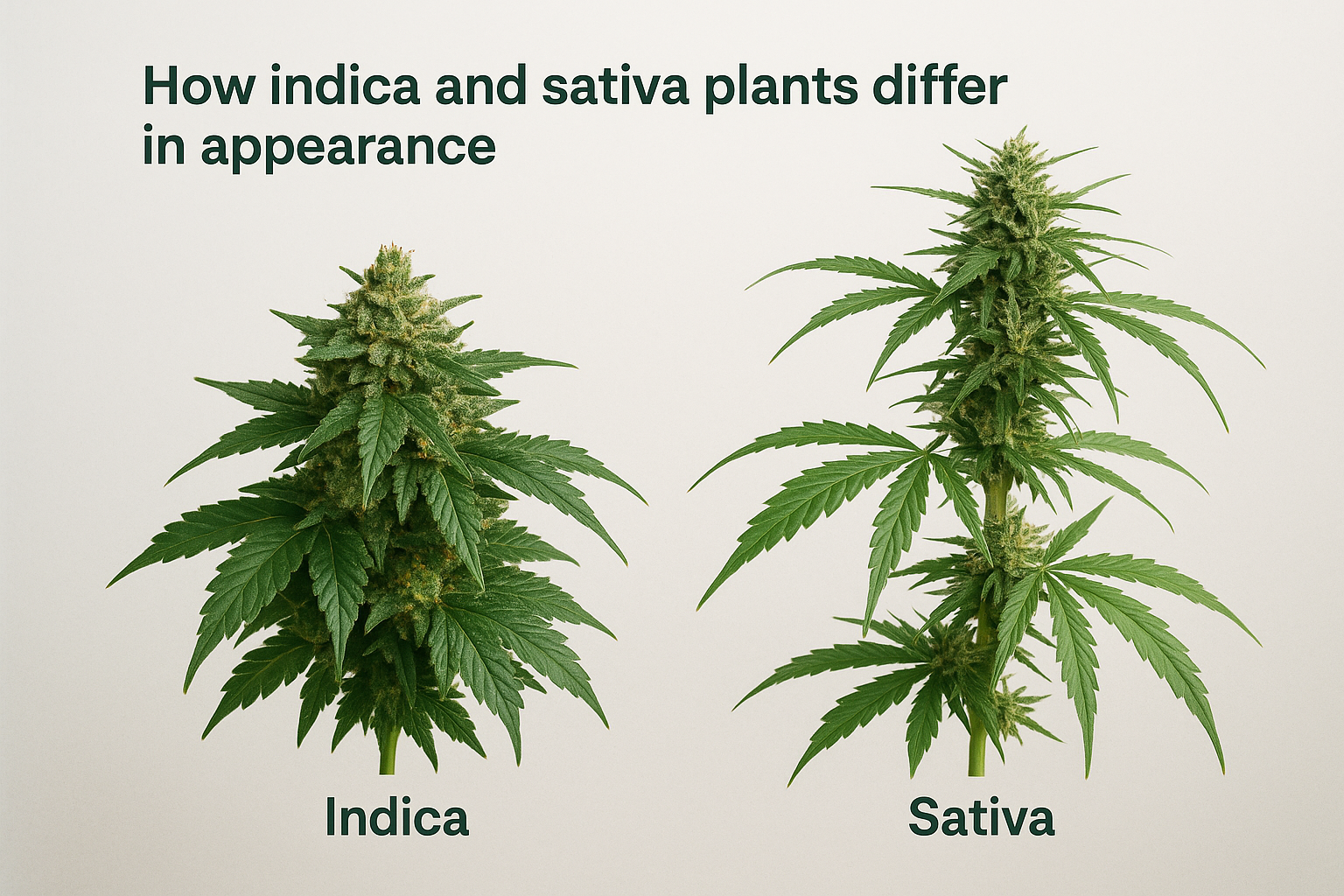
How indica and sativa plants differ in appearance
One of the clearest ways to understand what is the difference between sativa and indica is to look at the plants themselves. Before you ever smoke or feel a strain's effects, the physical structure of each plant type tells a clear story about its origins and growing conditions. These visual differences aren't random - they reflect thousands of years of adaptation to very different environments, and they carry practical implications for growers, producers, and anyone who pays close attention to what they're buying.
Indica plant structure
Indica plants are short, dense, and wide, typically reaching two to four feet in height. Their leaves are broad with short, fat leaflets, giving the plant a full, bushy appearance. This compact structure developed as an adaptation to the harsh, high-altitude conditions of the Hindu Kush mountain region, where short growing seasons and cold temperatures favored plants that could flower quickly and stay low. Indica plants typically flower in eight to nine weeks, making them a practical choice for indoor growers working with limited vertical space.
The buds on indica plants tend to be tight, thick, and densely packed, with a heavy resin coating that helped the plant survive in cold climates. That resin density is also part of why indica strains often carry strong, pungent aromas and why they frequently produce high cannabinoid concentrations relative to their compact size.
Sativa plant structure
Sativa plants grow tall, thin, and loosely branched, often reaching six to twelve feet in height outdoors. Their leaves are long and narrow with slender leaflets, giving the plant an open, airy look compared to the dense structure of an indica. This tall profile reflects sativa's origins in equatorial regions like Colombia, Thailand, and East Africa, where long growing seasons and consistent sunlight allowed plants to stretch large over time.
Sativa plants can take up to sixteen weeks to finish flowering, nearly double the time of most indica strains.
These buds are longer, lighter, and less compact than indica buds, with a fluffier texture and often a more delicate resin layer. The extended flowering time and larger overall structure mean sativa plants demand more space, more light, and considerably more patience from growers.
What these differences mean in practice
For commercial pre-roll producers sourcing bulk cones, knowing your strain type helps you anticipate grind consistency, density, and pack weight when filling RAW cones at scale. A dense, heavy indica grind packs differently than a lighter sativa flower, and understanding those physical traits upfront reduces waste and keeps your production line running efficiently.
How effects really work: THC, CBD, and terpenes
The indica vs. sativa labels give you a starting point, but they don't fully explain why two strains labeled the same way can feel completely different. The real drivers of your experience are cannabinoids and terpenes, the chemical compounds your body actually interacts with when you smoke. Understanding how these work gives you a much more accurate answer to what is the difference between sativa and indica than the label alone ever could.
THC and CBD: the core cannabinoids
THC (tetrahydrocannabinol) is the primary psychoactive compound in cannabis and the main reason you feel high. Higher THC concentrations generally produce stronger psychoactive effects, regardless of whether the strain is labeled sativa or indica. CBD (cannabidiol), on the other hand, is non-psychoactive and tends to moderate the intensity of THC, softening its edge and reducing the likelihood of anxiety or overstimulation.
Sativa-dominant strains historically skew toward higher THC and lower CBD, which contributes to their reputation for energetic, cerebral highs. Indica-dominant strains often carry more balanced ratios of THC to CBD, which may explain why they tend to feel smoother and more body-focused. That said, modern breeding has produced high-THC indicas and high-CBD sativas, so checking the actual cannabinoid data on the product you're buying matters more than the label alone.
Terpenes: the overlooked factor
Terpenes are aromatic compounds found in cannabis and many other plants that directly influence the flavor, smell, and effects of each strain. They work alongside cannabinoids in what researchers call the entourage effect, where the combined action of multiple compounds produces a different result than any single compound working on its own.
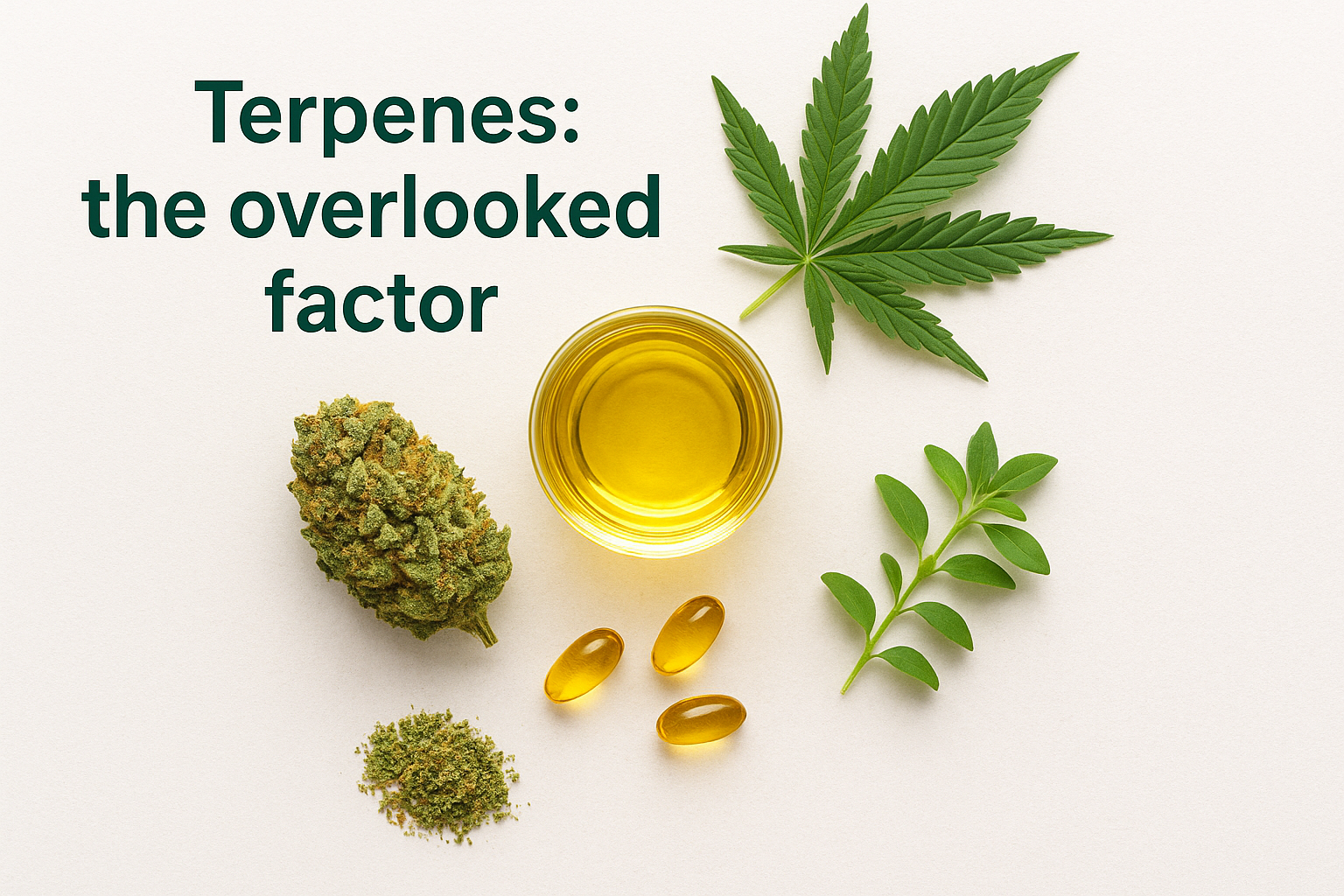
Terpenes may do more to shape your actual experience than the indica or sativa label ever will.
Common terpenes like myrcene (earthy, sedating) appear more frequently in indica-dominant strains, while limonene (citrusy, uplifting) and pinene (piney, focusing) show up more often in sativa-leaning cultivars. When you check a product's terpene profile alongside its THC and CBD numbers, you get a much clearer picture of how that specific strain will actually feel. Dispensaries and quality producers increasingly list terpene data on their packaging, and using that information to guide your purchase is one of the most effective habits you can build as a cannabis consumer.
Common use cases and expected experiences
Knowing what is the difference between sativa and indica becomes most useful when you can match each strain type to a specific situation. The right choice depends on what you're doing, how you're feeling, and what outcome you actually want from the session. Both categories have distinct settings where they perform well, and understanding those patterns gives you a practical framework you can apply every time you pack a cone.
When to reach for a sativa
Sativa-dominant strains tend to fit best into daytime and social contexts where mental engagement is either required or welcome. If you're heading into a creative project, a casual social gathering, or any outdoor activity where staying alert and observant matters, a sativa-leaning strain supports that without the sedative weight that would slow you down. Many users also find that sativa effects pair well with physical activity, making these strains a common choice before hiking, working out, or anything that combines movement with mindfulness.

Sativa strains can occasionally intensify anxiety in sensitive users, so starting with a lower dose in a comfortable setting is the smarter approach if you're newer to this category.
From a medical perspective, people managing depression, fatigue, and attention-related challenges often report that sativa-dominant strains help them feel more motivated and focused without the heaviness that comes with indica use. The mood-lifting effects can make routine tasks feel more manageable when low energy is the main obstacle.
When to reach for an indica
Indica-dominant strains are a natural fit for evenings, rest days, or any situation where physical recovery and mental decompression are the priority. After a physically demanding day or a high-stress work period, the body-relaxing qualities of an indica help release tension that builds up across muscles and joints. Many users specifically choose indica strains to ease into sleep, reporting that the sedating effects reduce the time it takes to fall asleep and improve overall rest quality.
For medical use, indica strains are frequently associated with chronic pain management, muscle spasms, and nausea relief. The calming, full-body effect profile makes these strains well-suited for conditions where the goal is to reduce physical discomfort rather than boost mental output. Packing a RAW cone with an indica-dominant strain for a slow evening session at home is one of the most common ways experienced users put this category to work in a practical, intentional way.
How to choose between indica, sativa, and hybrid
Understanding what is the difference between sativa and indica only gets you halfway there. The other half is knowing how to apply that understanding to an actual purchase decision. Your goal, your environment, and your tolerance level all factor into which category serves you best on any given day, and hybrid strains add another layer of flexibility that most people underuse.
Match your strain type to your goal
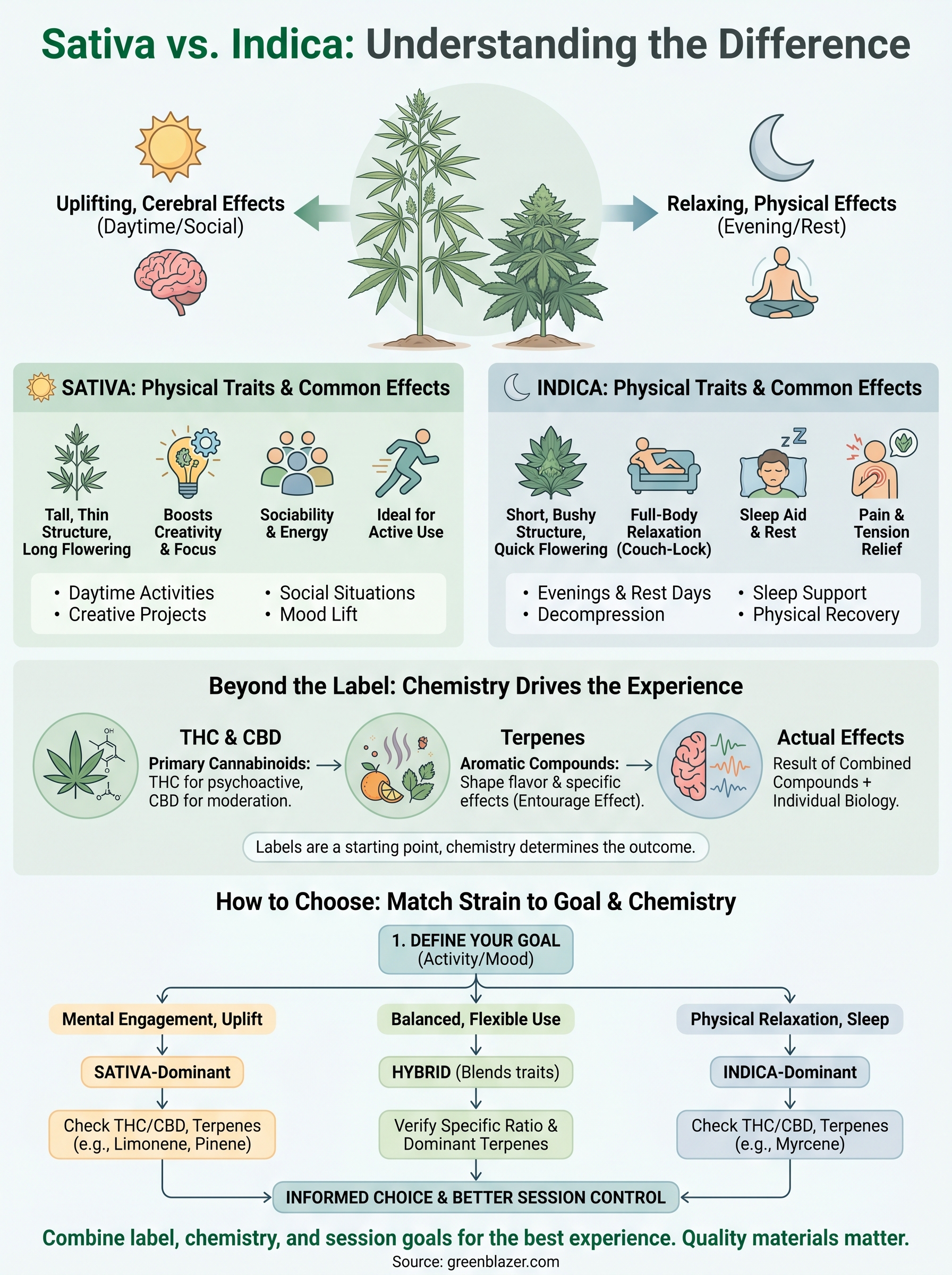
The simplest starting point is asking yourself what you need from the session. If you want mental engagement, creativity, or a mood lift during active hours, a sativa-dominant option fits that goal. If you need your body to relax, tension to release, or your mind to slow down before sleep, an indica-dominant strain is the better fit. Most experienced users develop a habit of matching strain type to time of day and activity, which gives them a consistent, predictable experience rather than a hit-or-miss approach.
Your current mental state matters just as much as your intended activity: if anxiety is already running high, a high-THC sativa can push that further in the wrong direction.
Beyond that, check the THC and CBD percentages alongside the terpene profile before committing to anything. Two sativa-labeled strains can feel completely different if one carries 25% THC and earthy myrcene while the other sits at 15% THC with bright limonene. Reading beyond the label is the single most effective habit you can build as a more informed consumer.
Where hybrids fit in
Hybrids occupy the space between the two poles, and that middle ground is where most commercially available strains actually live today. Breeders develop hybrids to blend desirable traits from both categories, so a sativa-dominant hybrid might deliver mental uplift while keeping the body calm, while an indica-dominant hybrid can relax your muscles without fully sedating your mind. Hybrids give you more control over the specific outcome you're chasing rather than forcing a binary choice.
Practical tips for making the call
When you're standing in a dispensary or browsing an online menu, a quick three-step check works well: look at the indica/sativa label for a general direction, then confirm with the cannabinoid percentages, and finally check the dominant terpenes if that data is available. For commercial pre-roll producers filling RAW cones at volume, this same logic applies to sourcing decisions. Knowing your strain category upfront helps you anticipate grind density, pack weight, and the end-user experience your product delivers at scale.
Final takeaways
Understanding what is the difference between sativa and indica gives you a practical edge every time you choose a strain. Sativa-dominant strains push toward mental engagement and uplift, while indica-dominant strains pull toward physical relaxation and rest. Neither label tells the complete story on its own, so terpene profiles and cannabinoid ratios fill in the gaps and give you a much more accurate picture of what to expect before you ever light up.
Your best approach combines all three data points: the indica/sativa label, the THC and CBD percentages, and the dominant terpenes. That combination removes most of the guesswork and puts the outcome of your session in your hands. Whether you're a casual consumer or a licensed producer packing cones at scale, quality materials matter just as much as strain selection. Check out RAW pre-rolled cones at Green Blazer and start every session with a clean, even burn.
