

If you've ever asked which is stronger, sativa or indica, you're not alone, it's one of the most common questions among cannabis consumers. The short answer? Neither one is inherently stronger. Potency depends on the strain's chemical profile, not whether it's labeled sativa or indica. THC content, terpene composition, and growing conditions all play a bigger role than the plant's physical classification ever could.
That said, sativa and indica do tend to produce different types of effects, which is where the confusion around "strength" usually starts. A heavy indica body high can feel overpowering to one person, while a racing sativa head high might feel more intense to another. Strength is partly subjective.
Here at Green Blazer, we supply RAW pre-rolled cones to both individual smokers and licensed producers across the country, so we hear this debate constantly. Whatever strain you choose to pack into your cone, understanding potency helps you make a better decision. This article breaks down exactly how sativa and indica compare, what actually determines strength, and how to pick the right option for your experience level and preferences.
Why the sativa vs indica question gets misleading
The sativa vs. indica framework has been around for decades, but it was built to describe plant structure, not psychoactive potency. Cannabis botanists originally used these terms to classify plants by their physical traits: sativa plants grow tall and thin with narrow leaves, while indica plants tend to be shorter and bushier with broader leaves. Somewhere along the way, the cannabis industry started using these labels as shorthand for effects, and that's where the confusion was born.
The labels were never about potency
When Carl Linnaeus classified Cannabis sativa in 1753 and Jean-Baptiste Lamarck added Cannabis indica in 1785, neither scientist was measuring THC levels or mapping out how a plant would make someone feel. They were describing geography and morphology. Sativa came from equatorial regions like Southeast Asia and Central America. Indica came from the Hindu Kush mountains. The physical differences between these plants are real, but the leap from "plant shape" to "this type hits harder" is not backed by science.
The terms sativa and indica tell you what a plant looks like, not how it will affect you.
How decades of crossbreeding changed everything
Here's the bigger problem: almost every cannabis strain available today is a hybrid. Decades of selective breeding have blended sativa and indica genetics so thoroughly that a "pure" sativa or indica strain is extremely rare in commercial markets. When you pick up something labeled "sativa," you're almost certainly looking at a hybrid with dominant sativa characteristics, not a genetically pure plant. The label tells you roughly what kind of experience the grower is marketing, not what's actually happening chemically in that flower.
Researchers have noted this for years. A 2015 study published in PLOS ONE found that genetic analysis of cannabis strains did not reliably match their sativa or indica labels. In other words, the names you see on packaging reflect marketing conventions more than they reflect measurable biology. That doesn't make the labels useless, but it does mean you should treat them as rough guides rather than precise chemical descriptions.
Why the effects vary so much between people
Even if you set the labeling problem aside, individual body chemistry plays a massive role in how you experience any cannabis product. Two people can smoke the same strain from the same batch and walk away with completely different experiences. Factors like your tolerance level, endocannabinoid system sensitivity, body weight, and mood all shape the outcome. So when someone tells you sativa is stronger because it gave them a racing heart, that reaction says more about their personal biology than about any universal potency ranking.
Asking which is stronger sativa or indica is a bit like asking whether coffee or tea is more caffeinating without knowing the brew strength, the cup size, or the person drinking it. The category matters less than the specific product and how your body responds to it. This is why cannabis researchers have increasingly focused instead on measurable chemical compounds like THC, CBD, and terpene ratios to predict and communicate effects accurately.
What "stronger" means when you talk about cannabis
When people ask which is stronger sativa or indica, they usually mean one of two things: which type gets them higher, or which one hits harder physically. Those are actually two different questions, and the answer to each depends on what you mean by strong and how you personally experience cannabis. The word "stronger" is doing a lot of work in this conversation, and unpacking it makes everything else clearer.
THC percentage is not the whole story
Most consumers use THC percentage as a proxy for potency, and it's a reasonable starting point. THC is the compound primarily responsible for the psychoactive high, so a flower testing at 28% THC will generally hit harder than one testing at 14%. However, high THC content alone does not predict your experience reliably. CBD, CBN, and other minor cannabinoids interact with THC through what researchers call the entourage effect, meaning the full chemical profile shapes the outcome, not just the THC number.
Chasing the highest THC percentage on the shelf is like judging a meal by its calorie count alone.
Terpenes also play a role that many consumers underestimate. Myrcene, found in many indica-dominant strains, produces sedative effects that can amplify the feeling of being floored, while limonene, more common in sativa-leaning strains, tends to produce uplifting effects. Two strains with identical THC levels can feel completely different because of terpene variation alone.
Physical intensity vs. mental intensity
"Stronger" means something different depending on whether you're talking about body effects or head effects. Indica-leaning strains typically produce heavier physical sensations like muscle relaxation and full-body weight. Sativa-leaning strains tend to produce more cerebral effects, including heightened focus, elevated mood, or at higher doses, anxiety and racing thoughts.
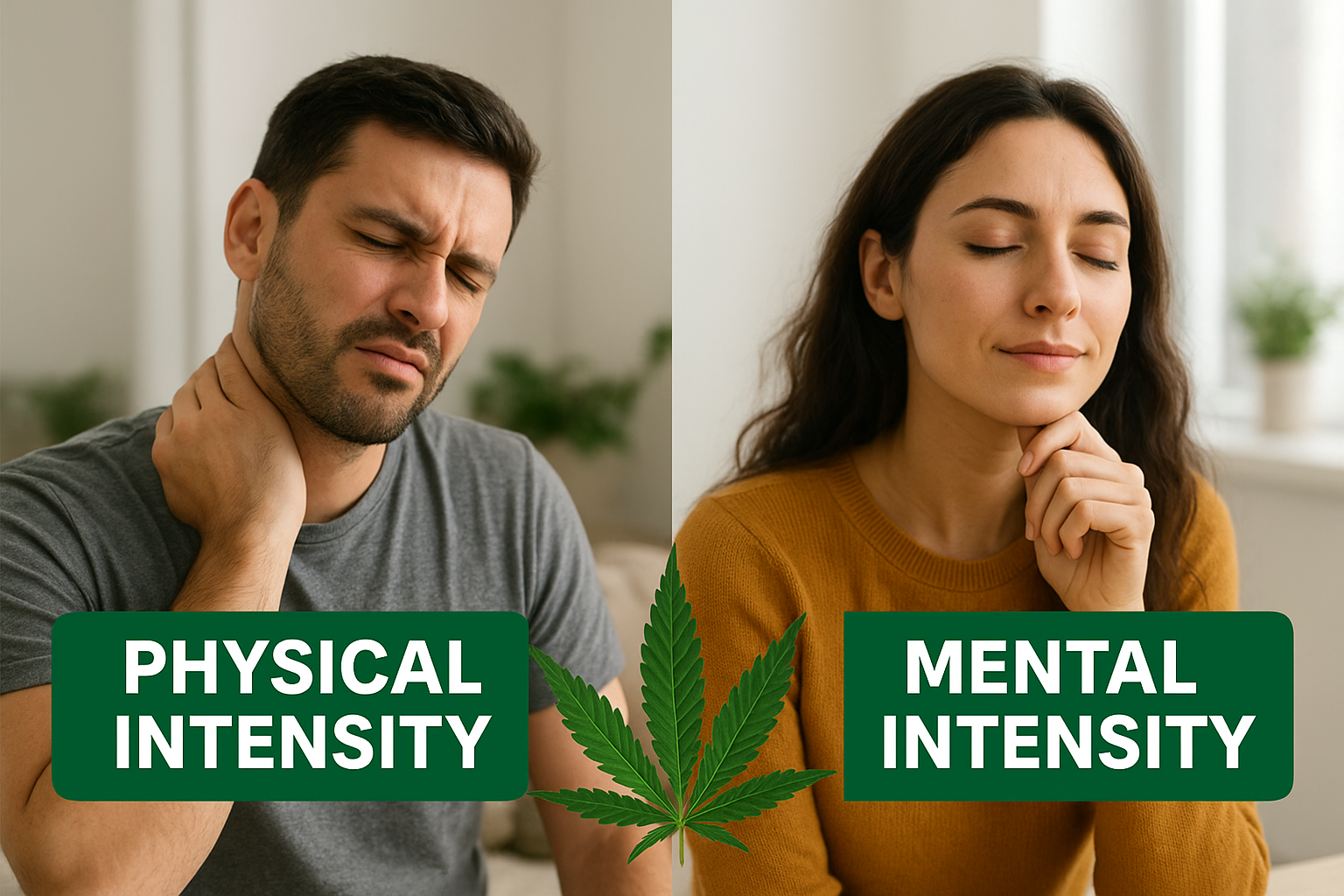
Neither experience is objectively more intense than the other. Your definition of strong shapes which category seems more powerful to you. A person who finds mental stimulation overwhelming will call a sativa stronger. Someone who dislikes sedation will say the same about an indica.
What actually drives potency and effects
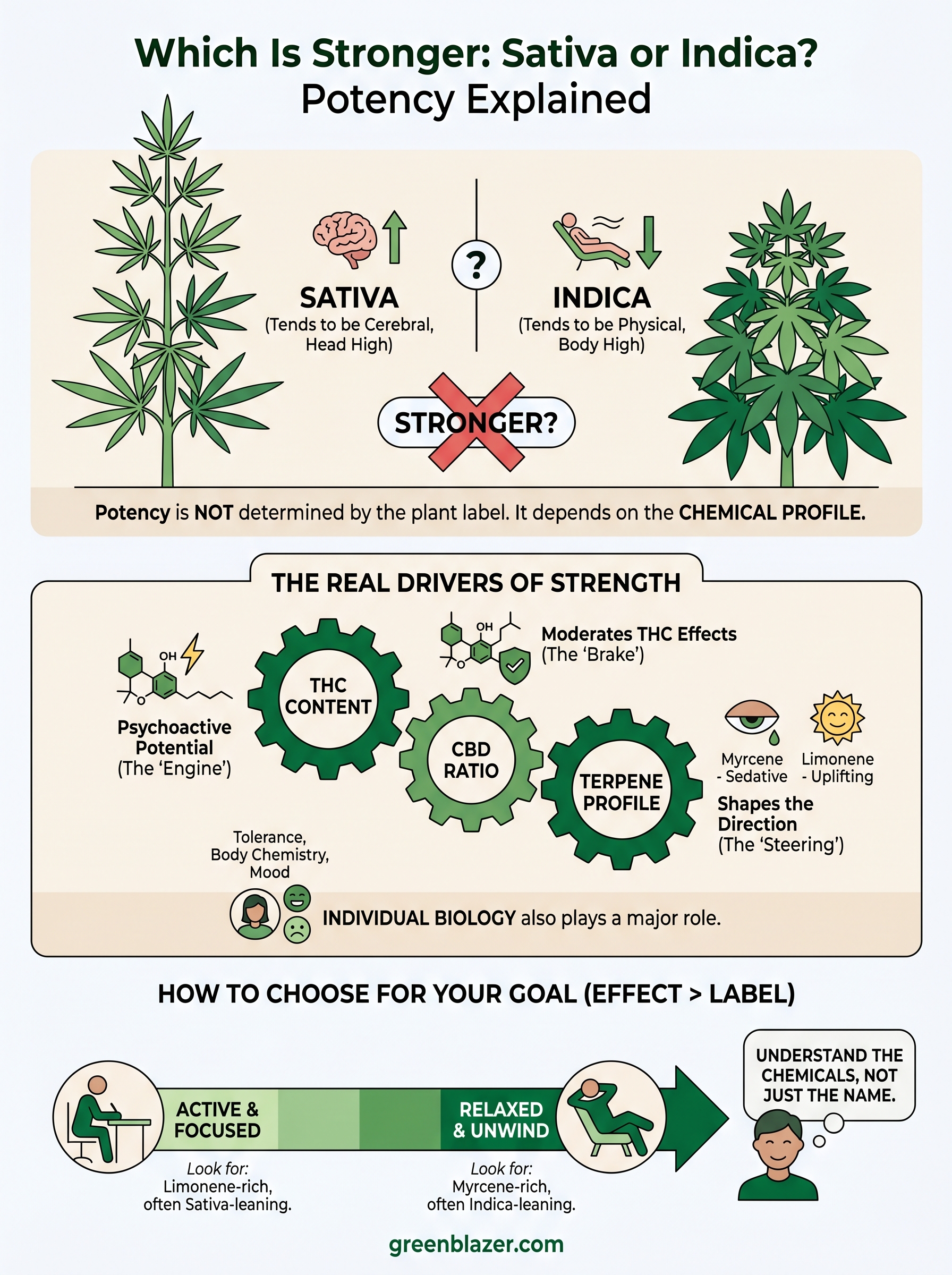
If you want a real answer to which is stronger sativa or indica, shift your focus away from the plant label and toward the cannabinoid and terpene profile of the specific product you're considering. These chemical compounds are what actually determine how a strain affects you, and they vary enormously within both categories.
Cannabinoids set the ceiling
THC percentage is the most straightforward measure of how psychoactive a strain will be. Higher THC content generally means a stronger high, but CBD changes the picture. CBD moderates THC's psychoactive effects, which means a high-THC strain with significant CBD may feel smoother and less intense than a high-THC strain with almost no CBD at all. The ratio between these two compounds matters more than raw THC numbers.
The full cannabinoid profile tells you more about a strain's strength than the sativa or indica label ever will.
CBN and other minor cannabinoids also contribute to the overall experience. A strain high in CBN tends to produce heavier sedation, which is part of why aged flower feels different from fresh product. Your endocannabinoid system processes all of these compounds together, so the interaction between them shapes your experience in ways a single percentage number can't capture.
Terpenes shape the direction of the high
Terpenes are aromatic compounds that do more than give cannabis its smell. They interact with cannabinoids to push the effects in specific directions. Myrcene tends to amplify sedation and body weight. Pinene can sharpen focus and mental clarity. Limonene typically elevates mood and can reduce anxiety. These compounds work alongside THC rather than independently, which is why two strains with identical THC percentages can produce noticeably different experiences.
Growing conditions also affect the final terpene profile significantly. Light exposure, soil quality, and harvesting timing all influence how terpenes develop in the plant. A strain grown in optimal conditions by a skilled cultivator will typically deliver a more consistent and pronounced effect than the same strain grown carelessly.
How to choose between sativa, indica, and hybrid
When figuring out which is stronger sativa or indica for your specific needs, the better question is actually what kind of experience you're trying to have. The sativa/indica/hybrid label gives you a rough starting point, but pairing that with the strain's THC percentage and terpene profile gets you much closer to making the right call for your situation.
Match the effect to your goal
If you want to stay active, socialize, or tap into creative focus, sativa-leaning strains are typically the better fit for that kind of session. If you're looking to physically unwind, ease muscle tension, or wind down before sleep, indica-dominant options tend to deliver those results more reliably. Hybrids sit in between and often work well if you want a balanced experience without leaning too hard in either direction.
Choosing by intended effect rather than by label alone gives you far better results every time.
Your tolerance level should also factor into the decision. New users benefit from starting with lower THC strains regardless of category, because a high-THC sativa can feel just as overwhelming as a potent indica when your system isn't accustomed to those levels yet.
Read the label beyond the category name
When you pick up a product, look past the sativa or indica tag and check the THC and CBD percentages listed on the packaging. A strain at 15% THC with notable CBD will generally feel smoother and more manageable than one sitting at 28% THC with no CBD buffer. If terpene information is available, myrcene-heavy profiles tend to signal sedation while limonene-forward strains typically push toward uplift and mood elevation.
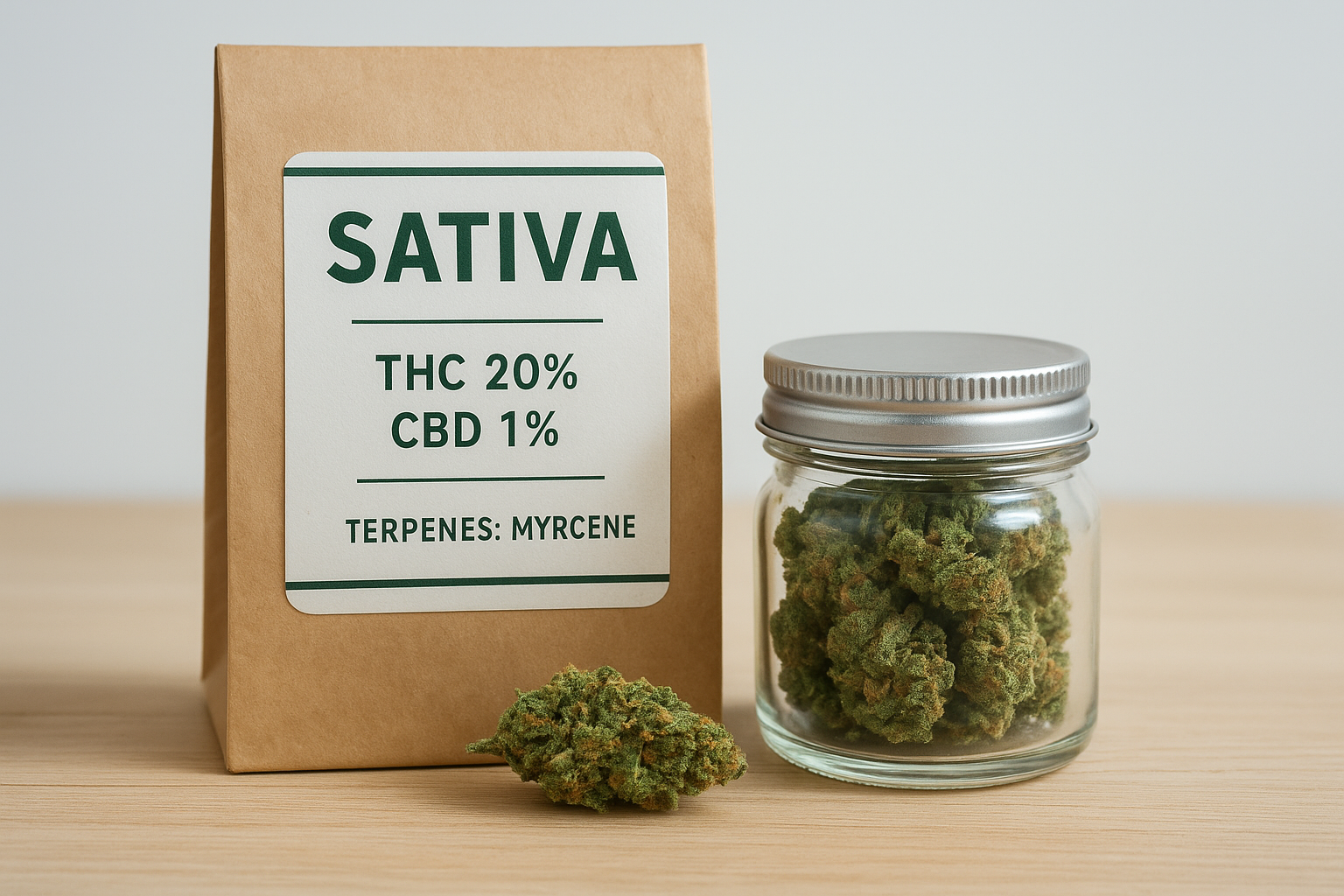
Experienced users can use this detail to dial in their preference with precision. Beginners should prioritize lower THC counts and move upward gradually rather than grabbing whatever tests highest on the shelf, since starting too strong often leads to an unpleasant first experience that puts people off cannabis entirely.
Safety, side effects, and when to skip THC
Before you zero in on which is stronger sativa or indica for your next session, it's worth understanding how both categories can affect you negatively, especially at higher doses. THC at any potency level carries real side effects, and your likelihood of experiencing them goes up when you push your tolerance limits without preparation.
Common side effects to know before you start
High-THC products, whether sativa-leaning or indica-dominant, can trigger anxiety, paranoia, and rapid heart rate in users who are sensitive or inexperienced. Sativa-leaning strains tend to produce more pronounced mental side effects like racing thoughts and restlessness, while heavy indica strains can cause excessive sedation, dizziness, or short-term memory disruption. Neither type is automatically safer than the other at high doses.
Starting low and moving up slowly is the single most effective way to avoid an overwhelming experience.
Dry mouth, dry eyes, and temporary coordination changes are common across both categories and are worth accounting for, particularly if you're consuming in a social setting or need to function afterward. These effects are short-lived but can catch first-time users off guard.
When to avoid THC altogether
Certain situations make THC consumption genuinely risky, regardless of the strain type or potency. If you are pregnant, breastfeeding, or managing a cardiovascular condition, you should skip THC entirely and speak with a healthcare provider before using any cannabis product. People with a personal or family history of psychosis or schizophrenia face elevated risk from THC exposure, since the compound can worsen or trigger symptoms in vulnerable individuals.
You should also avoid consuming THC before driving, operating machinery, or handling tasks that require sharp reaction time. Even a moderate dose can impair your ability to respond quickly and make safe decisions. Mixing THC with alcohol or prescription medications adds another layer of risk, since the interactions between these substances can amplify side effects unpredictably and push your experience well beyond what you intended.
Final takeaways
The question of which is stronger sativa or indica doesn't have a single clean answer because "strength" depends on what you're measuring and how your body responds. THC percentage, CBD ratio, and terpene profile do far more to shape your experience than the sativa or indica label on the packaging. Sativa-leaning strains tend to produce more cerebral, active effects while indica-dominant options lean toward physical relaxation and sedation, but neither category is universally more potent than the other.
Your best move is to read the full chemical profile of whatever you're buying, start at a lower dose if you're less experienced, and adjust from there. Matching the strain's effect profile to your actual goal gives you a much better session than chasing the highest THC number you can find. Whatever strain you choose to load up, browse RAW pre-rolled cones at Green Blazer to make sure your next session runs clean and smooth.
