

The best smoking herbs for beginners are mild, low-flavor leaves that burn evenly. Mullein is the pick if you want a neutral base. Marshmallow leaf gives the smoothest smoke, red raspberry leaf is a tea-like filler, and damiana adds a warm, aromatic note in small amounts. Start with one herb, a few puffs, and a plain blend before anything fancy. No herb is risk-free to inhale, so "mild" here means less irritating, not healthy.
Most lists online throw 20 herbs at you with big health promises. They rarely tell you which herbs are gentle, how much to use, or how to light them. That is a poor starting point. You need a short list, honest limits, and a simple way to try it.
Below you get safety basics first, then four herbs, each with what it does and how to try it. After that come starter blends and a first-session routine. Green Blazer distributes RAW cones, and a pre-rolled cone is the easiest way to try an herb with no rolling skills, so we cover that part too.
What to know before you smoke any herb
Herbal smoke is not harmless. Burning any plant material releases tar and carbon monoxide, and no herb has been shown to be safe to inhale. The herbs in this guide are chosen because they are milder, not because they are good for you.
How risky is herbal smoke?
Tobacco-free does not mean smoke-free. Smoke from any herb irritates the airways, and people with asthma or other lung conditions usually notice it first. If you have a lung or heart condition, take medication, or are pregnant, skip herbal smoking or ask your doctor first. Stop at the first cough, dizziness, or throat burn.
Allergies and mold are the other beginner traps. Damp or badly stored herbs grow mold, and inhaling mold is worse than inhaling the herb. Try one new herb at a time, so that if you react, you know which one caused it.
Tobacco-free does not mean smoke-free, so use every herb lightly and rarely.
What herbs can and cannot do
Most claims about herbal smoke are traditional, not proven. Mullein and damiana have long folk histories, but there is little clinical research on smoking them. Some of the calm people report likely comes from slow breathing and the ritual itself. Herbal cigarettes also do not deliver a nicotine buzz. At most you get a lightheaded feeling from the smoke, and that is not an effect to chase.
The same goes for lungs. No herb cleans a smoker's lungs. Mullein's reputation as a lung herb comes from tea and traditional use, not from smoking it. A herbal blend can help someone replace the hand-to-mouth habit of tobacco, but it does not undo smoke exposure.
Buying and sourcing herbs
You can buy plain dried herbs at grocery stores, herb shops, and online sellers. Buy single-ingredient herbs and check them against this list:
- The label shows one ingredient, with no flavoring, essential oil, or sugar.
- The herb is organic when possible, because you burn whatever residue is on it.
- The leaf is dry and crumbly, smells fresh, and shows no musty odor or visible mold.
- Plain tea bags of raspberry leaf, peppermint, or chamomile work if you empty them out.
- You skip anything you cannot identify, and toxic herbs such as nutmeg or datura.
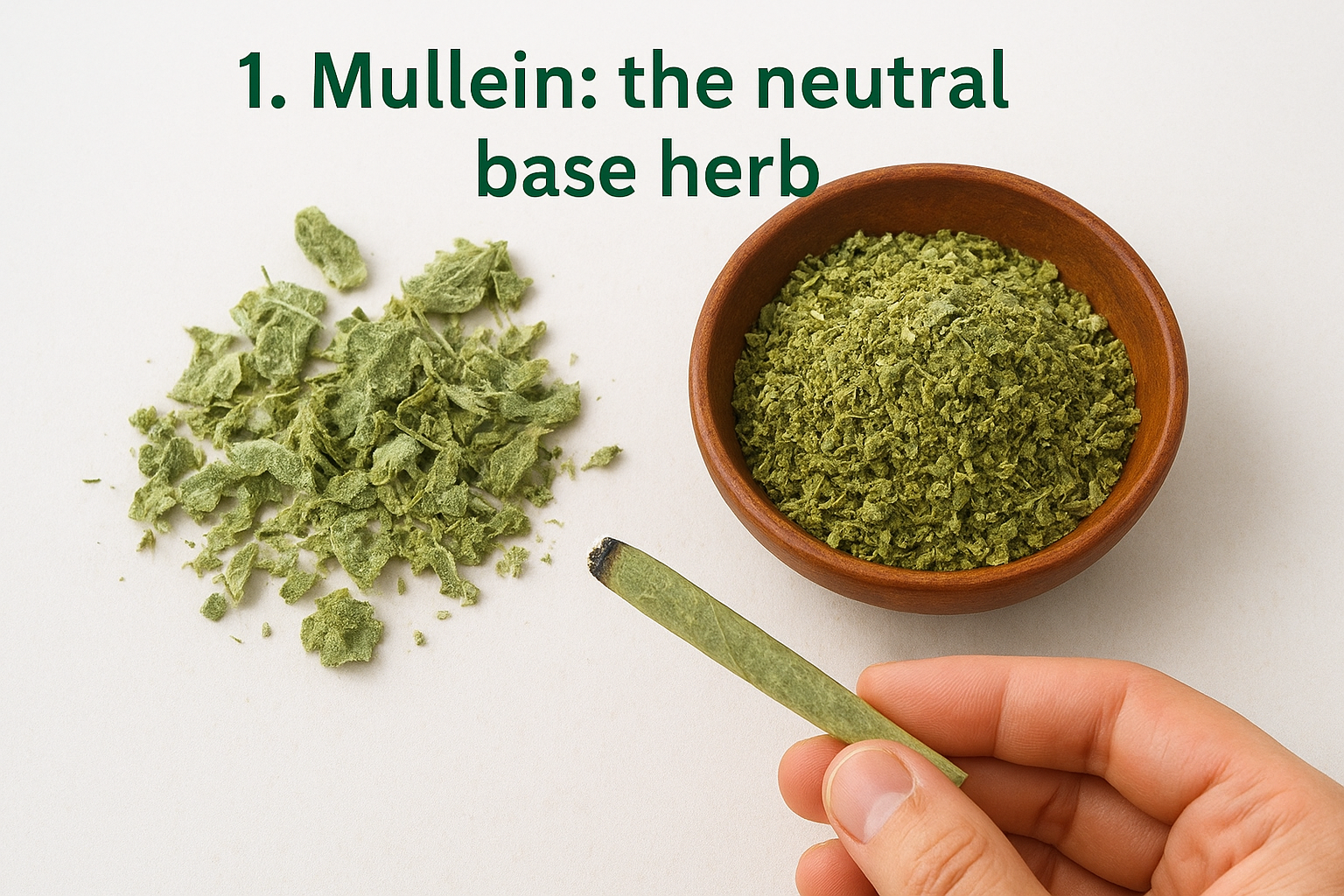
1. Mullein: the neutral base herb
Mullein is the most common starting herb because it is soft, mild, and easy to blend with anything. It is the one to pick if you want a smoke that tastes like very little.
What it does and how it smokes
Mullein leaf is fluffy and light, with a faint, grassy taste. Herbalists have used it traditionally for the respiratory tract, but there is no proof that smoking it helps your lungs. Its real strength is practical: it carries other herbs without overpowering them.
Because it is so light, mullein burns fast if you pack it loosely. Crumble it finely, remove any stems, and fill the cone evenly so it burns at a steady pace. It suits beginners who dislike strong flavors and anyone building a blend.
Mullein is the safest first herb to try because it tastes like almost nothing.
How to start with it
Smoke mullein alone first, so you learn how it burns before you add anything. Then use it as 50 to 70 percent of a blend.
- Use leaf, not stalk or flower.
- Grind it coarse, not to dust.
- Take three or four slow puffs and stop.
2. Marshmallow leaf: the smooth, gentle option
Marshmallow leaf is the pick for beginners who find smoke harsh. It is mild, smooth, and light on the throat compared with most other leaves.
What it does and how it smokes
The leaf is rich in mucilage, a gel-like substance that makes marshmallow tea soothing. That benefit comes from drinking it, and it has not been shown to carry over to smoke. What you can count on is a soft, slightly sweet, neutral smoke that burns evenly.
It works alone or as a base, and it pairs well with rose petals for a lightly floral blend. Make sure you buy the leaf. Marshmallow root is a different product with a different texture, and it is usually sold for teas and powders.
How to start with it
Choose marshmallow leaf if you want the gentlest single herb on this list.
- Crumble the leaf by hand or grind it lightly.
- Mix it 2 to 1 with mullein for a soft starter blend.
- Add a pinch of rose petals once you like the base.
3. Red raspberry leaf: the tea-like blender
Red raspberry leaf is a filler herb that tastes like mild, caffeine-free black tea. It is cheap, easy to find, and forgiving.
What it does and how it smokes
You can buy raspberry leaf tea at most grocery stores, which makes it the easiest herb to test. Its tea reputation is for nutrients and traditional use, but those claims are about drinking it, not smoking it. In a cone, it adds body and a gentle, earthy, slightly tannic flavor.
It burns steadily and mixes well with mullein or marshmallow. It suits beginners who like a tea-like taste and want to stretch a more expensive herb across more sessions.
How to start with it
Use raspberry leaf as a bulk ingredient, not a headline act. Plain tea bags are fine if the label lists only raspberry leaf.
- Empty the bag and break up any large pieces.
- Blend it 2 parts raspberry leaf to 1 part mullein.
- Keep it dry. Tea leaf can hold moisture, so let it air out before you use it.
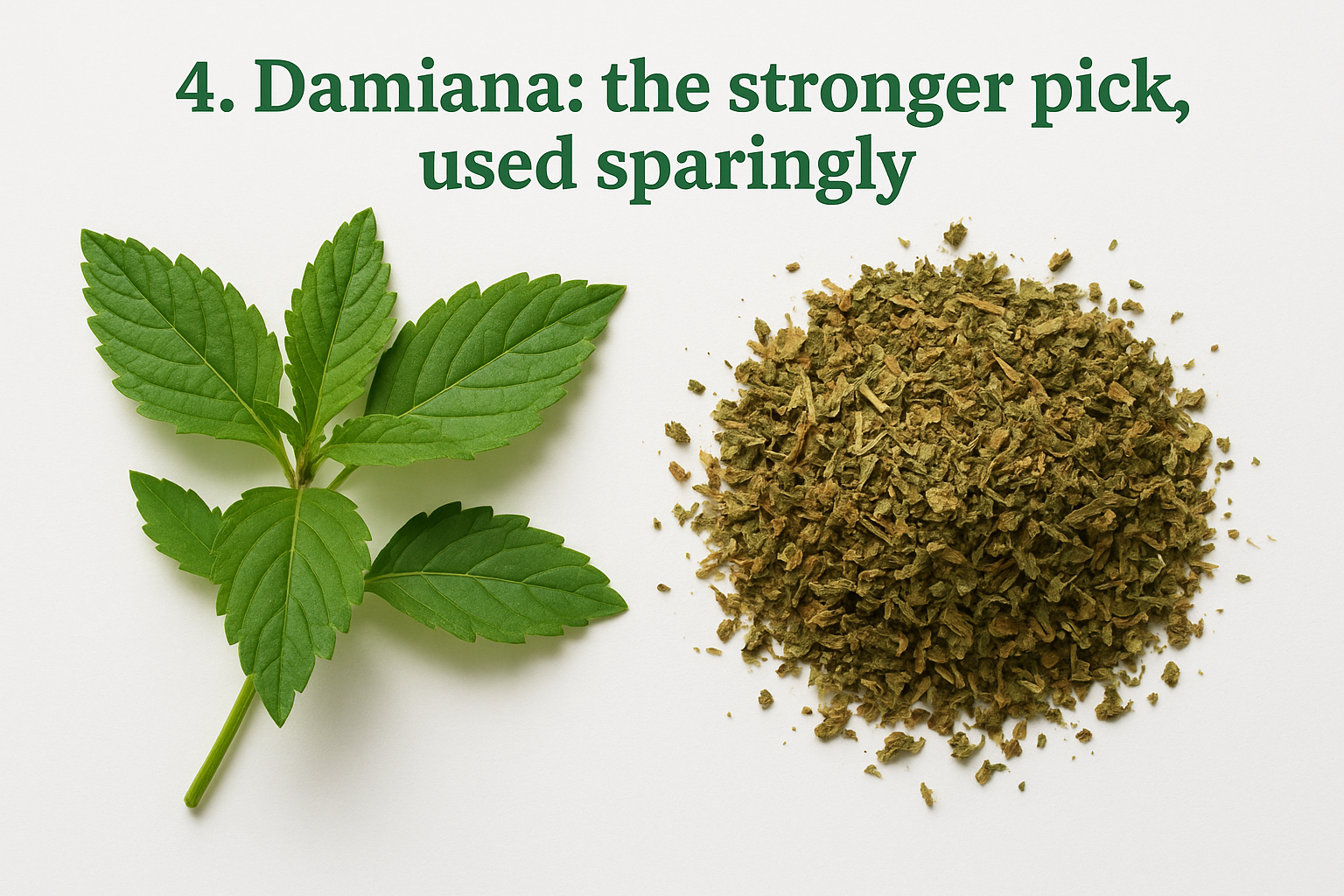
4. Damiana: the stronger pick, used sparingly
Damiana is the one herb here with a real personality, so use it last and use it small. It has a pronounced, aromatic, slightly bitter taste that can dominate a blend.
What it does and how it smokes
Damiana has a traditional reputation for mood and relaxation, and people sometimes call it mildly euphoric. The evidence for smoking it is thin, so treat any effect as light and personal. Expect a strong flavor rather than a strong effect.
Because of the taste, keep damiana to 10 to 20 percent of a blend. Mixed into a neutral base it adds warmth. On its own it can feel harsh for a first-timer, so it suits people who already know how a base herb burns for them.
Add damiana only after you are comfortable with a base herb, and keep it to a small share.
How to start with it
Try it in a blend, not solo, and change one variable at a time.
- Begin with 1 part damiana to 5 parts mullein or marshmallow leaf.
- Smoke only a few puffs.
- Wait a full day before you try a stronger ratio.
How to start: single herbs, blends, and your first session
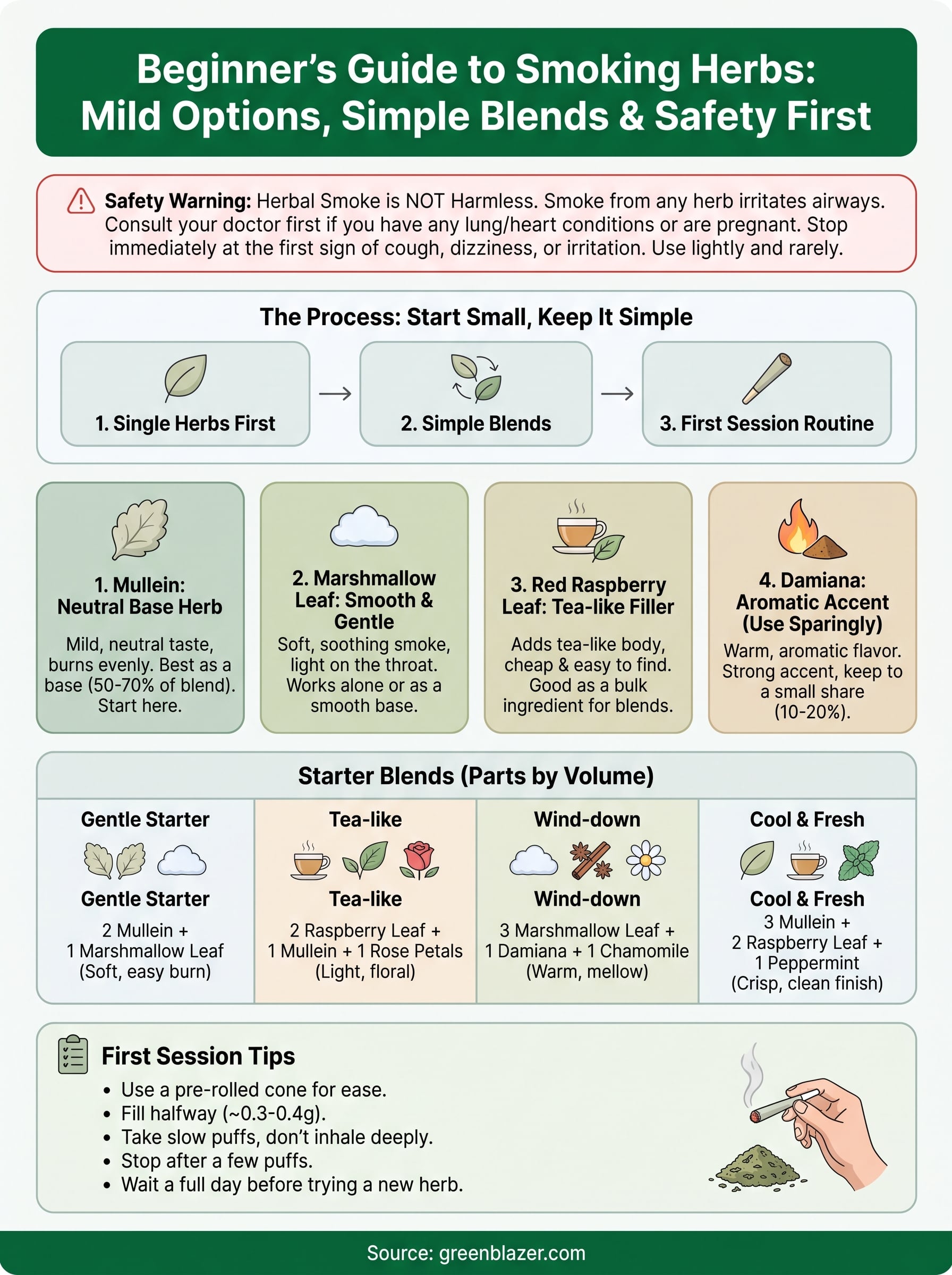
Start with one herb, a small amount, and a few slow puffs, then move to blends once you know how each herb burns. Rushing into a five-herb mix makes it impossible to tell what you like or what bothers you.
Single herbs first, then simple blends
Smoke each herb alone once. That tells you how it tastes and how it burns, and it shows whether you react to it. Then blend using a simple rule: a base herb makes up 50 to 70 percent, and the rest is a flavor or accent herb. Peppermint, chamomile, lavender, and rose petals are common accents. Peppermint is strong, so use only a small pinch.
| Blend | Mix (by parts) | Character |
|---|---|---|
| Gentle starter | 2 mullein, 1 marshmallow leaf | Neutral, soft, easy to burn |
| Tea-like | 2 raspberry leaf, 1 mullein, 1 rose petals | Light, floral, slightly tannic |
| Wind-down | 3 marshmallow leaf, 1 damiana, 1 chamomile | Warm, aromatic, mellow |
| Cool and fresh | 3 mullein, 2 raspberry leaf, 1 peppermint | Crisp, minty, clean finish |
Rolling and lighting your first session
A pre-rolled cone is the simplest way to start because there is nothing to roll. RAW Classic 1-1/4 cones are 83mm long, hold up to 0.75 gram, and are made from unbleached fibers. RAW Organic Hemp 1-1/4 cones use unbleached organic hemp, and both start at $14.99 at Green Blazer. A cone loader at $9.99 fits 1-1/4, King, Lean, and Special sizes and makes filling even. Green Blazer generally sells RAW cones only to buyers 21 and older.
For a worked example, fill a 1-1/4 cone about halfway. That is roughly 0.3 to 0.4 gram, far below its 0.75 gram limit. Then follow these steps:
- Grind the herb coarsely, since fine powder blocks airflow.
- Fill the cone loosely and tamp it lightly.
- Light the edge evenly and take small, slow puffs without deep inhaling.
- Stop after a few puffs and see how you feel before you continue.
- Wait at least a day before you try a new herb or a stronger ratio.
Fill the cone halfway, take a few slow puffs, and stop there on your first session.
Start small and keep it simple
Good herbal smoking for beginners comes down to mild herbs, small amounts, and one change at a time. Mullein, marshmallow leaf, and raspberry leaf make easy bases, and damiana is a small accent once you know your baseline. Buy plain, dry, organic herbs, skip anything with additives, and remember that smoke of any kind carries risk. Stop if your body objects.
If you want the easiest way to try your first herb, a pre-rolled cone removes the hardest part. You can shop RAW organic cones and loaders at Green Blazer and pick the size that suits a few small sessions.
