

If you're new to cannabis, the sativa vs indica for beginners question is probably one of the first things you've Googled. That's a smart place to start. These two categories have shaped how people talk about cannabis for decades, and understanding the basic differences between them can help you pick a strain that matches what you're actually looking for.
But here's the thing: the sativa/indica distinction isn't as straightforward as most people make it sound. There's real nuance worth knowing before you pack your first cone. At Green Blazer, we sell millions of RAW pre-rolled cones to both first-timers and seasoned smokers across the country, so we hear these questions constantly. We figured it was time to break it all down.
This guide covers the key effects, common uses, and practical tips you need to choose between sativa and indica with confidence, no prior experience required.
Why sativa vs indica matters for beginners
When you're new to cannabis, every decision feels high-stakes. You don't have a personal baseline yet, so you have no way to know whether a strain is going to leave you energized and clear-headed or couch-locked and sleepy. That gap in knowledge is exactly where the sativa vs indica framework becomes useful. It gives you a starting point, a rough map for navigating a market that has thousands of products and almost no standardized labeling for new consumers.
The first choice shapes your experience
Your first few sessions with cannabis tend to stick with you. If you pick a strain that produces effects you weren't expecting, like intense sedation when you wanted to stay social, or racing thoughts when you wanted to relax, those early experiences can put you off cannabis entirely. That's a real shame, because the right match between strain type and intended use makes a significant difference in how enjoyable and manageable those first sessions feel.
Picking a strain with intention from the start is one of the simplest things you can do to improve your first experience with cannabis.
Sativa and indica labels, whatever their biological limitations, still communicate something meaningful about expected effects. Most dispensaries and retailers organize their products this way. Most growers and manufacturers use these terms on packaging. Learning what the labels mean before you buy puts you ahead of most first-time shoppers, who often grab whatever looks familiar or whatever is on sale.
Why beginners get confused
The sativa vs indica for beginners conversation gets muddied fast once you start reading about it online. Some articles claim the distinction is completely meaningless, while others treat it like a precise science. Neither extreme is accurate. The reality sits somewhere in the middle, and understanding that helps you use these categories correctly.
Cannabis plants do have measurable genetic and chemical differences between broad categories. The problem is that decades of crossbreeding have blurred those lines significantly. Most products you'll find today are hybrids that lean one direction or the other rather than pure expressions of either type. That doesn't make the labels useless. It just means you should treat them as a general guide rather than a guarantee.
What actually matters for you as a beginner is this: sativa and indica labels, combined with cannabinoid and terpene information on product packaging, give you enough to make a smarter first choice than random selection. You don't need a biology degree to use this framework well. You just need to understand what each label is generally trying to tell you, and that's exactly what the next section breaks down.
Sativa, indica, and hybrid basics
Before you can make sense of the sativa vs indica for beginners conversation, you need a clear picture of what these terms actually refer to. At their core, sativa and indica are two broad plant categories that grew in different parts of the world and developed distinct chemical and physical characteristics over time. Hybrids came later, as growers began crossbreeding plants to combine traits from both types into targeted effect profiles.
The difference between sativa and indica
Sativa plants originally came from warm, equatorial climates like Central America, Southeast Asia, and parts of Africa. They grow tall and thin with narrow leaves. Indica plants come from cooler, mountainous regions like the Hindu Kush range in Afghanistan and Pakistan, and they grow shorter and bushier with broader leaves. Those physical differences matter because they correspond to distinct chemical profiles, which is what drives the variation in effects you'll read about in the next section.
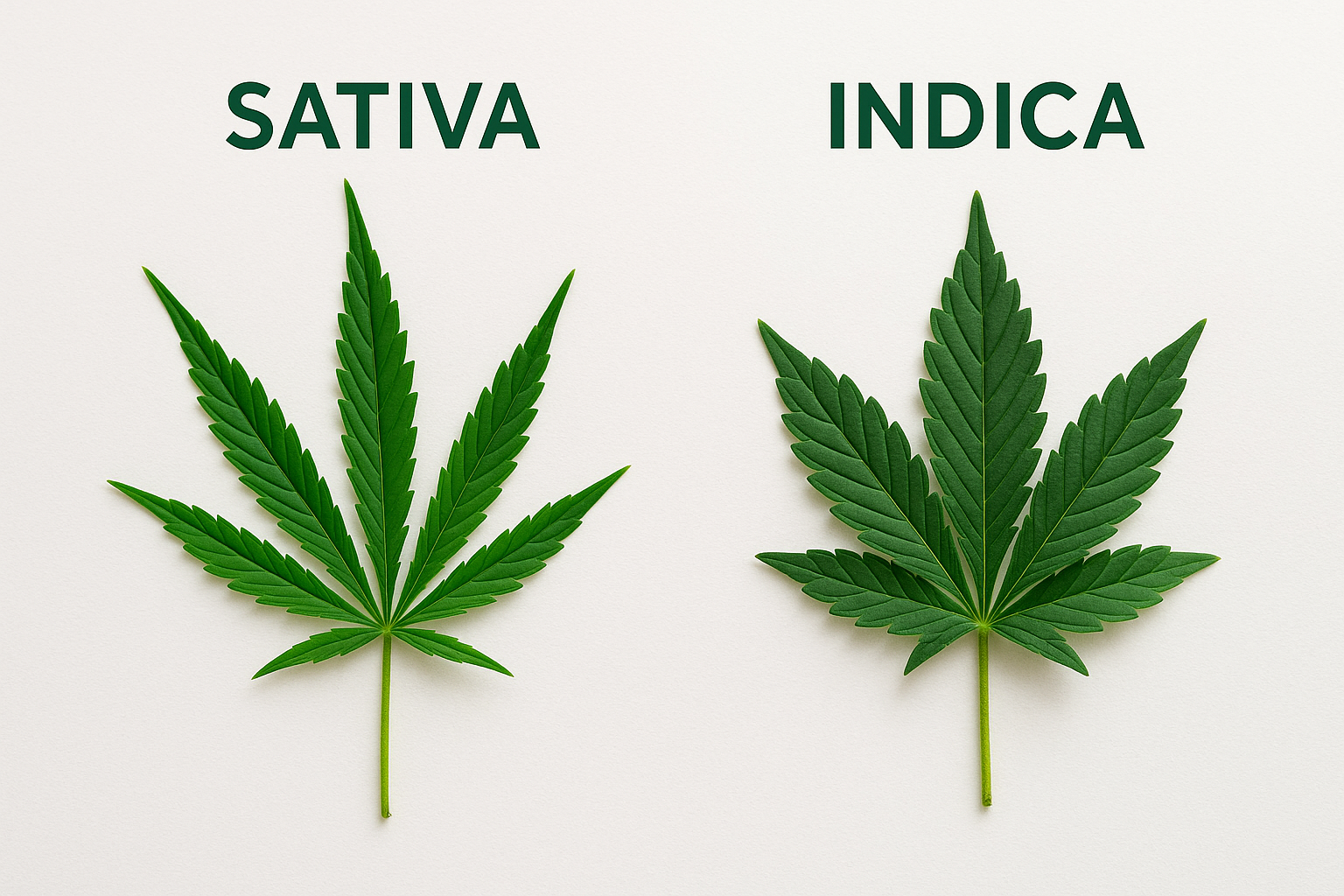
The plant's geographic origin gives you a rough preview of what kind of experience to expect before you ever look at a product label.
| Feature | Sativa | Indica |
|---|---|---|
| Origin | Equatorial regions | Mountain regions |
| Plant shape | Tall with narrow leaves | Short with broad leaves |
| Common effect direction | Uplifting, cerebral | Relaxing, body-focused |
| Typical use time | Daytime | Evening or nighttime |
Where hybrids fit in
Most products on today's market are hybrids that draw from both sativa and indica genetics. Growers develop them to hit specific effect profiles, so you'll regularly see labels like "sativa-dominant" or "indica-dominant" rather than a pure classification. That's not a problem for you as a beginner. It just means the pure sativa or pure indica you read about in older guides is largely theoretical in today's commercial market.
When you spot a hybrid on a shelf or product page, focus on which type dominates. A sativa-dominant hybrid still leans toward energy and focus, while an indica-dominant hybrid still leans toward calm and physical relaxation. That dominant label gives you enough direction to make a confident first choice.
What effects you can actually expect
Understanding the sativa vs indica for beginners framework is only useful if you know what each type actually feels like once you're using it. Effects vary from person to person depending on tolerance, body chemistry, and dosage, but the patterns below reflect what most new users report.
What sativa actually feels like
Sativa-leaning products tend to produce a more mental and energizing experience. You'll often notice a lift in mood, an increase in focus, and a sense of creative energy. Some people describe it as feeling more talkative or alert than usual. For daytime use or social situations, many beginners find this effect easier to manage because it doesn't interfere with normal functioning the way heavier sedation can.
Sativa tends to keep you in your head, which is great for creativity but can amplify anxiety if you take too much.
Common sativa effects to know before your first session:
- Elevated mood and sociability
- Sharper focus on creative tasks
- Increased energy and motivation
- Possible uptick in appetite
- Mild increase in heart rate at higher doses
What indica actually feels like
Indica-leaning products move in the opposite direction. The effects land more in your body than your mind, and you'll typically feel a heaviness or warmth spread through your muscles, a slowing of your thoughts, and a strong pull toward rest. This is what most people mean when they reference a "body high." For evening wind-down or sleep support, indica is the more natural fit because it works with the body's natural tendency to relax.
New users sometimes underestimate how sedating a solid indica can be. Starting with a low dose matters more here than it does with sativa, because the couch-lock effect can feel uncomfortable and disorienting if you go too hard too fast. That full-body weight is pleasant at the right amount, but it becomes overwhelming quickly when you push past your limit.
How to choose your first product and dose
Once you understand the sativa vs indica for beginners framework, the next step is applying it to an actual purchase. Two factors drive a good first choice: what effect you're after and how much product you actually consume in one session. Getting both right from the start matters more than finding the perfect strain.
Start with your intended experience
The simplest way to narrow down your first product is to ask yourself one question: what do you want to feel, and when are you using it? If you're planning a daytime session where you still need to function, or you want something that keeps you social and engaged, a sativa-dominant option is the logical starting point. If you're winding down after work, struggling to sleep, or looking for full-body relaxation, an indica-dominant product gives you a better shot at getting there.

Your intended setting and timing matter as much as the strain type itself when you're picking your first product.
Beyond the sativa/indica label, check the THC percentage on the packaging. First-time users do better with products in the 10-15% THC range rather than jumping straight into high-potency options. Lower THC gives you room to feel the effects without getting overwhelmed quickly.
Keep your dose small at first
The most common beginner mistake is taking too much too fast before you understand how your body responds. Whether you're using a pre-rolled cone, a pipe, or any other method, your approach should be the same: take one or two draws, then wait at least 15 minutes before deciding if you need more.
Your tolerance builds over time, and what feels mild to an experienced user can hit a first-timer very hard. Starting low and going slow is not about being overly cautious. It's about staying in control of your experience so you actually enjoy it and want to come back for a second session on your own terms.
Safety, side effects, and legality basics
No matter where you land on the sativa vs indica for beginners question, knowing the safety basics before your first session keeps the experience manageable. Cannabis is well-tolerated by most adults, but it still produces real physiological and psychological effects that you should understand before you commit to a product.
Common side effects to watch for
Both sativa and indica can produce side effects, and first-time users are more vulnerable to them because they have no established tolerance. The most common ones are predictable and temporary, but they can feel alarming if you're not expecting them. Knowing what's normal helps you stay calm if something catches you off guard.
Most side effects from cannabis are dose-related, which means you have direct control over how likely they are to appear.
Watch for these side effects in your first few sessions:
- Dry mouth and dry eyes, which are the most common and easy to manage with water and eye drops
- Increased heart rate, especially with sativa-leaning products at higher doses
- Temporary anxiety or paranoia, more common with high-THC strains when you take too much
- Dizziness or lightheadedness, usually a sign that you've consumed more than your body is ready for
- Short-term memory impairment during the session itself
If any of these hit harder than expected, find a comfortable spot, drink water, and wait. The effects are temporary and will pass.
Know the law before you buy
Cannabis laws vary significantly by state, and what's legal in Nevada is not necessarily legal where you live. Before you purchase anything, confirm that recreational or medical cannabis is legal in your state and that you meet the minimum age requirement, which is 21 for recreational use in most states. Purchasing from a licensed dispensary or authorized retailer protects you legally and ensures the product you're getting has been tested for safety and accurate labeling. Check your state's official government website for current regulations before you make any purchase.
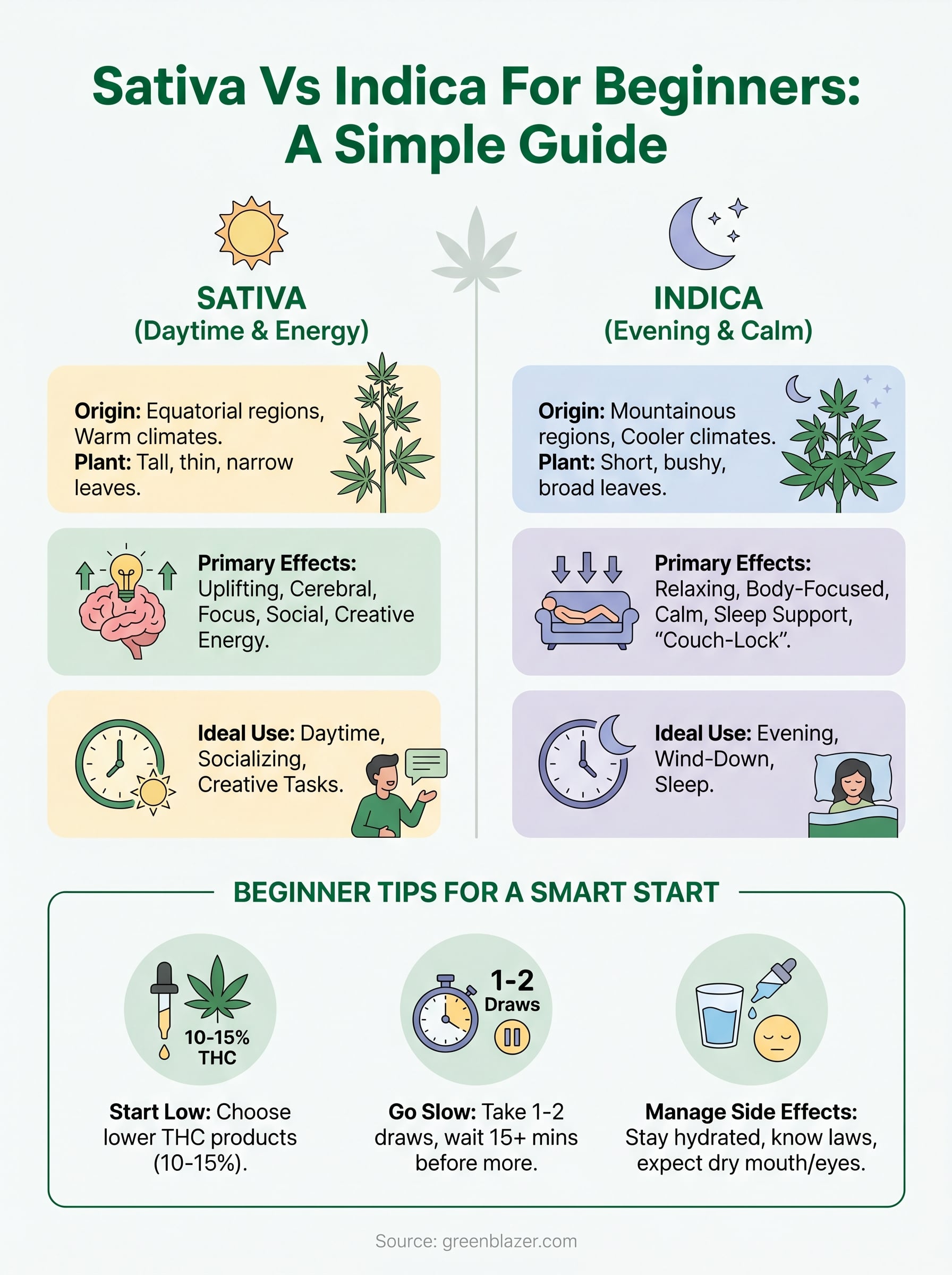
A simple way to decide today
The sativa vs indica for beginners decision doesn't need to be complicated. Pick one question: do you want to feel energized and social, or relaxed and calm? If you want energy, start with a sativa-dominant product at a low THC percentage. If you want to wind down, go indica-dominant. That single choice, made with intention, puts you ahead of most first-time buyers who grab whatever looks familiar on the shelf.
Your first session sets a baseline for everything that follows. Start with one or two draws, wait before taking more, and pay attention to how your body responds to the effects. That feedback teaches you more than any guide can. Once you know what you're looking for, getting the right product is straightforward. When you're ready to stock up, RAW pre-rolled cones from Green Blazer make the experience simple, clean, and consistent from your very first session.
