

If you've ever wondered what does sativa feel like, you're asking one of the most common questions in cannabis culture, and for good reason. Sativa strains have a reputation that sets them apart from their indica counterparts, and understanding the difference before you light up can shape your entire experience.
Sativa is generally associated with a cerebral, uplifting high that hits your head more than your body. Think energy, creative sparks, heightened focus, and a mood lift that makes it a popular choice for daytime use. But the actual experience is more nuanced than a simple label, and several factors, from terpene profiles to your own tolerance, influence what you'll feel.
This guide breaks down the physical sensations, mental effects, and real-world scenarios where sativa shines. At Green Blazer, we supply the RAW cones that countless smokers pack with their favorite sativa strains, so we hear firsthand what people experience and prefer. Whether you're choosing your first strain or comparing options for a specific vibe, this article gives you a clear picture of what to expect.
Why sativa can feel so different from indica
The short answer is that sativa and indica plants have been bred for different effects over generations, and the chemical makeup of each reflects that history. When you ask what does sativa feel like compared to indica, you're really asking how two distinct collections of cannabinoids, terpenes, and plant compounds hit your brain and body differently. The distinction isn't a marketing gimmick, but it's also not as clean as most product labels suggest.
The plant science behind the difference
Cannabis scientists and botanists have long noted that sativa plants typically grow taller and thinner, with narrow leaves, originating from equatorial regions like Colombia, Thailand, and parts of Africa. Indica plants come from harsher, mountainous climates like the Hindu Kush region, growing shorter and bushier. Those environmental origins shaped each plant's chemical profile over thousands of years.
Sativa strains tend to carry higher THC concentrations relative to CBD, which pushes the effect toward your head rather than your body. The result is a more stimulating, mentally active experience. Indica strains often have a more balanced THC-to-CBD ratio, contributing to the heavier, sedating body sensation most people describe as a "couch lock" effect. That fundamental difference in cannabinoid ratios is one of the clearest reasons the two plant types feel so distinct.
The origin environment of a cannabis plant shapes its chemistry, and that chemistry shapes what you feel when you consume it.
Why terpenes matter as much as THC
Terpenes are the aromatic compounds found in cannabis and many other plants. They do more than create scent and flavor. Research suggests terpenes interact with cannabinoids in a process often called the entourage effect, meaning they can amplify or soften the impact of THC and CBD depending on which terpenes are present. Sativa strains commonly feature terpenes like limonene and pinene, both associated with alertness, mood elevation, and mental clarity.
Limonene also appears in citrus peels, and studies have linked it to reduced anxiety and improved mood. Pinene is found in pine needles and has been associated with increased focus. When those terpenes work alongside a high-THC sativa profile, they reinforce the energizing, cerebral experience sativa is known for. Indica strains, by contrast, often carry more myrcene, which is associated with sedation and physical relaxation rather than mental stimulation.
How your biology shapes the experience
Even with the same strain, two people can feel completely different effects. Your body weight, metabolism, tolerance history, and even your stress levels at the time of consumption all influence the outcome. A first-time user might feel overwhelmed by a potent sativa, while someone with years of experience could feel a clean, productive buzz from the exact same product.
Your endocannabinoid system, which is the network of receptors in your body that cannabis interacts with, is unique to you. Some people have naturally higher receptor sensitivity, which means they feel stronger effects from smaller amounts. Others metabolize THC quickly and need more to feel anything significant. Knowing your own baseline is the first step toward choosing a sativa that works with your body rather than against it. Starting with a lower-THC sativa and adjusting from there gives you much better control over the outcome than jumping straight into a high-potency strain.
What a sativa high feels like in your mind and body
Understanding what does sativa feel like on a practical level means separating the mental effects from the physical ones, because sativa works on both. The experience tends to arrive quickly, especially when you smoke or vape, and it announces itself in your head first. Most people describe an almost immediate shift in mental pace, like someone turned up the volume on their thoughts in a good way.
The mental effects
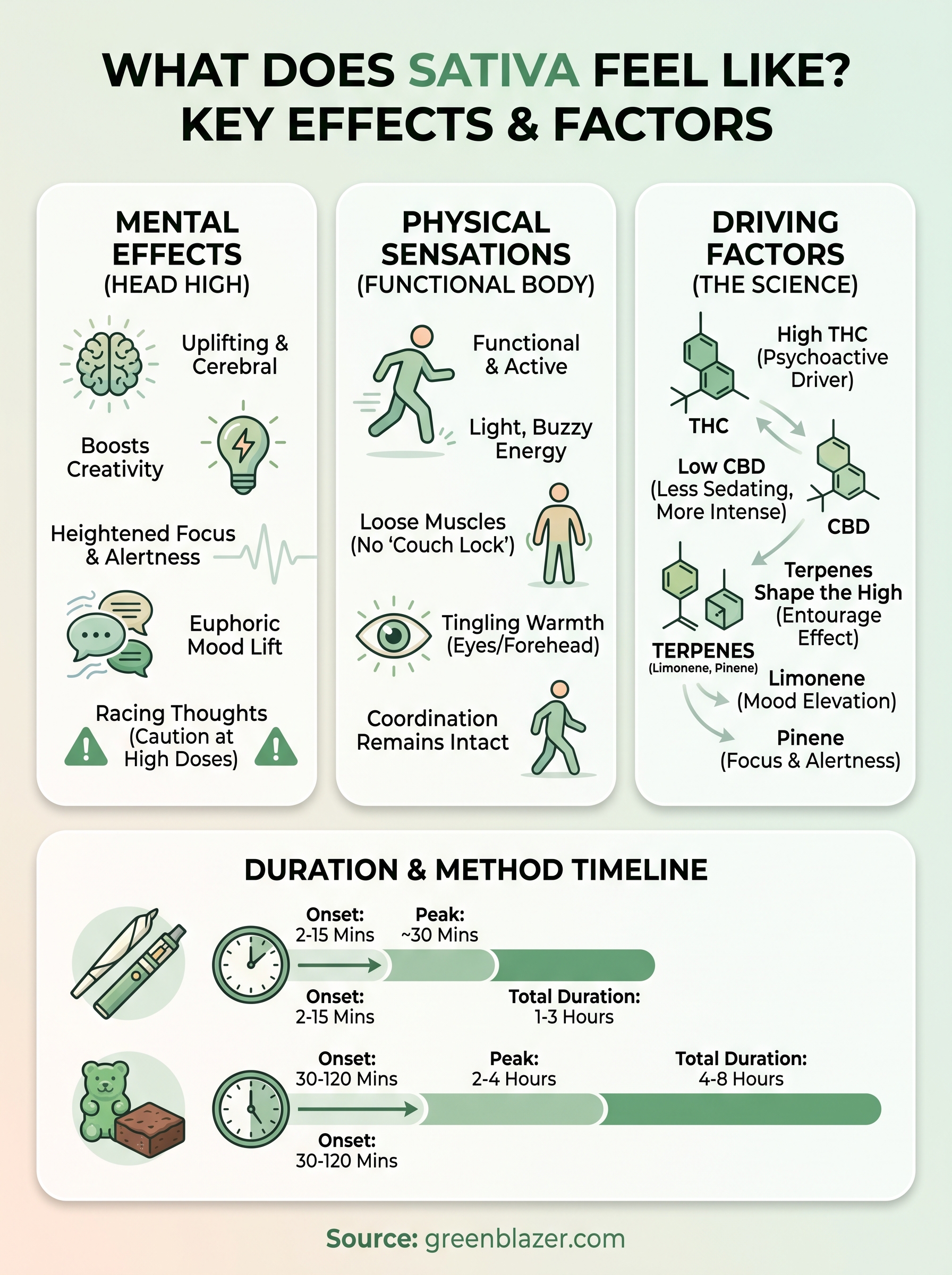
Your thoughts move faster and more freely with a sativa high. Many people report that creative connections feel easier to make, conversations flow more naturally, and tasks that normally feel tedious become genuinely interesting. Music sounds more vivid, visual details pop more sharply, and focus can sharpen around subjects you already care about. For some, this produces a feeling of mild euphoria, a general sense that everything is going well, even if nothing specific has changed.

Sativa's mental lift is often described as thinking in color rather than black and white.
That said, the same mental acceleration that helps some people focus can make others feel anxious or scattered, particularly at higher doses. Racing thoughts without a clear outlet can tip from enjoyable to uncomfortable fast. Knowing your threshold matters here.
The physical sensations
Your body stays largely functional during a sativa high, which is one of its clearest differences from indica. You won't feel pinned to the couch or heavy in your limbs. Instead, many people notice a light, almost buzzy energy that makes moving around feel easy and even appealing. Some describe a subtle warmth or tingling behind the eyes and across the forehead, which fades as the high settles in.
Physical relaxation does exist in the sativa experience, but it's secondary. Your muscles stay loose without going slack, and your coordination generally stays intact far better than it would with a heavy indica. For that reason, sativa tends to suit activities like walking, social events, working on a creative project, or anything that benefits from both mental engagement and physical presence at the same time.
What actually drives the feeling: THC, CBD, terpenes
When you ask what does sativa feel like, the answer traces back to three chemical variables: THC, CBD, and terpenes. These compounds don't work in isolation. They interact with each other and with your body's own receptors to produce the full experience you feel. Understanding each one gives you a practical framework for choosing strains that actually match what you're after.
THC and CBD: the two main levers
THC is the primary compound responsible for the psychoactive effects you feel from cannabis. It binds to receptors in your brain and triggers the release of dopamine, which produces euphoria, heightened sensory awareness, and the mental acceleration that sativa users typically seek. Sativa strains tend to carry higher THC concentrations with minimal CBD, which is a direct reason the high skews cerebral rather than physical.
CBD works differently. It doesn't produce a high on its own, but it does soften the intensity of THC when both compounds are present. Strains with a meaningful CBD content tend to produce a more grounded, manageable experience with less risk of the anxiety or paranoia that can accompany a pure high-THC sativa. If you find that sativa strains push your thoughts too fast or make you feel edgy, looking for products with at least some CBD content gives you a more balanced outcome.
The ratio of THC to CBD in your strain matters more than the THC number alone.
Terpenes: the overlooked factor
Terpenes are the aromatic compounds that give each cannabis strain its distinct smell and flavor profile, but their role goes well beyond scent. Research points to what scientists call the entourage effect, where terpenes interact with cannabinoids to shape the overall high. Sativa strains commonly carry limonene, which is associated with mood elevation and reduced anxiety, and pinene, which is linked to focus and mental alertness. Both terpenes reinforce the uplifting character sativa is known for.
Myrcene, by contrast, appears heavily in indica strains and promotes sedation and physical relaxation. When you read a terpene profile on a product label, you're looking at real chemistry that predicts how the strain will behave. Checking for limonene and pinene in a sativa gives you a reliable signal that the energizing, clear-headed experience you want is actually built into the product.
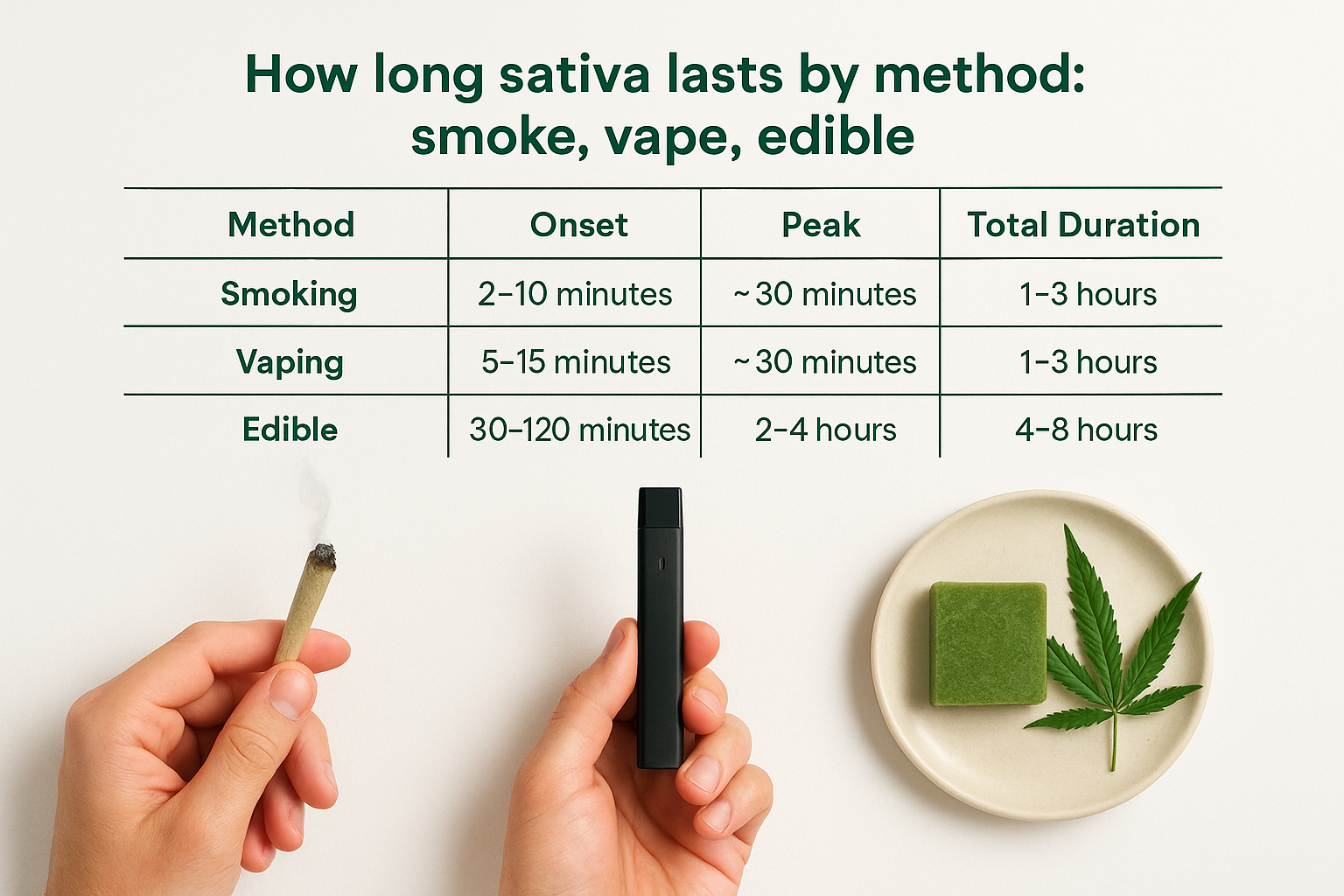
How long sativa lasts by method: smoke, vape, edible
Understanding what does sativa feel like over time is just as important as knowing what it feels like at its peak. The delivery method you choose changes not just how quickly the high arrives but also how long it stays with you. Knowing those windows in advance helps you plan your schedule and avoid being caught off-guard by effects that run longer than expected.
| Method | Onset | Peak | Total Duration |
|---|---|---|---|
| Smoking | 2-10 minutes | ~30 minutes | 1-3 hours |
| Vaping | 5-15 minutes | ~30 minutes | 1-3 hours |
| Edible | 30-120 minutes | 2-4 hours | 4-8 hours |
Smoking
When you smoke a sativa through a pre-rolled cone, the onset hits within two to ten minutes after your first inhale. Your lungs absorb THC directly into your bloodstream, which is why the effects land fast. The high usually peaks around the 30-minute mark and then tapers over one to three hours, depending on your tolerance and the potency of the strain.
Smoking gives you the most control over your session because you can stop at any point and gauge exactly where you are before continuing.
Most people find the experience winds down naturally, which makes it easy to time around a specific activity or social event without worrying about lingering effects.
Vaping
Vaping delivers a similarly fast onset to smoking, usually within five to fifteen minutes, but the experience often feels cleaner because there is no combustion involved. The overall duration sits in a similar range, roughly one to three hours for most users. Higher-temperature vaping extracts more THC at once, which can push both intensity and duration slightly higher than a standard smoking session, so keeping your device at a moderate temperature setting gives you more predictable results.
Edibles
Edibles run on a completely different timeline. Because your digestive system processes the THC rather than your lungs, onset takes anywhere from 30 minutes to two hours. Once the high arrives, it tends to hit harder and last significantly longer, often four to eight hours for most people.
A sativa edible still carries that cerebral, uplifting character, but the extended window means you need to plan your day around it. Starting with a low dose and waiting at least two hours before taking more keeps the experience in a range you can actually enjoy.
How to get the sativa vibe you want without overdoing it
Knowing what does sativa feel like in theory is useful, but managing the experience in practice takes a bit of strategy. Sativa's energizing, cerebral effects can tip into anxiety or restlessness if you push the dose too hard, too fast. Treating your first sessions with any new strain as a calibration exercise rather than a target to hit keeps you in control of the outcome.
Start low and pace yourself
Your tolerance and sensitivity are unique to you, and no strain label tells the whole story about how your body will respond. Start with a smaller amount than you think you need, especially if you're trying a new strain or haven't used cannabis recently. Give yourself enough time between rounds to let the effects settle before deciding whether to continue.
Taking a measured first approach costs you nothing, but jumping in too hard can turn a session you were looking forward to into one you want to end early.
A few practical rules that keep the experience where you want it:
- Wait at least 15 minutes after smoking or vaping before taking more
- Choose strains in the 15-20% THC range if you're newer to sativa
- Avoid high-potency concentrates until you have a clear baseline with flower
- Keep water and a light snack nearby to stay grounded if the effects feel stronger than expected
Match the strain to the activity
Sativa works best when you have a clear purpose or environment that fits the energy it produces. Pairing a mentally stimulating strain with a creative project, a walk outside, or a social setting gives that cerebral lift somewhere productive to go. Using sativa while sitting still with nothing engaging in front of you can amplify restlessness rather than focus.
Checking the terpene profile before you buy helps you predict how a specific strain will actually feel. Strains heavy in limonene and pinene tend to deliver the clean, alert experience most sativa users are after. Strains with a significant myrcene presence alongside THC might feel heavier than a label suggests, even when marketed as sativa. Reading that profile takes two minutes and helps you choose products that match your session from the start.
Key takeaways and next steps
Understanding what does sativa feel like comes down to a few core factors: the THC-to-CBD ratio, the terpene profile, and your own body's response. Sativa delivers a cerebral, energizing high that works best when you match it to the right activity, start with a manageable dose, and pay attention to how your system reacts rather than chasing a number on a label. The mental lift, creative spark, and functional body feel that define sativa all come from that interplay of compounds working together.
Your delivery method shapes how long the experience lasts, and choosing between smoking, vaping, or edibles gives you real control over the timeline. Strains rich in limonene and pinene consistently produce the alert, uplifted experience most sativa users are after.
When you're ready to pack your next session, RAW pre-rolled cones from Green Blazer give you a clean, consistent burn that lets the strain you picked do exactly what it was meant to do.
